
Providence Therapy in California for Sibling Conflict Over an Aging Parent
Online therapy in California for siblings arguing about an aging parent, caregiver burden, eldercare decisions, and family communication. Verify Providence benefits.
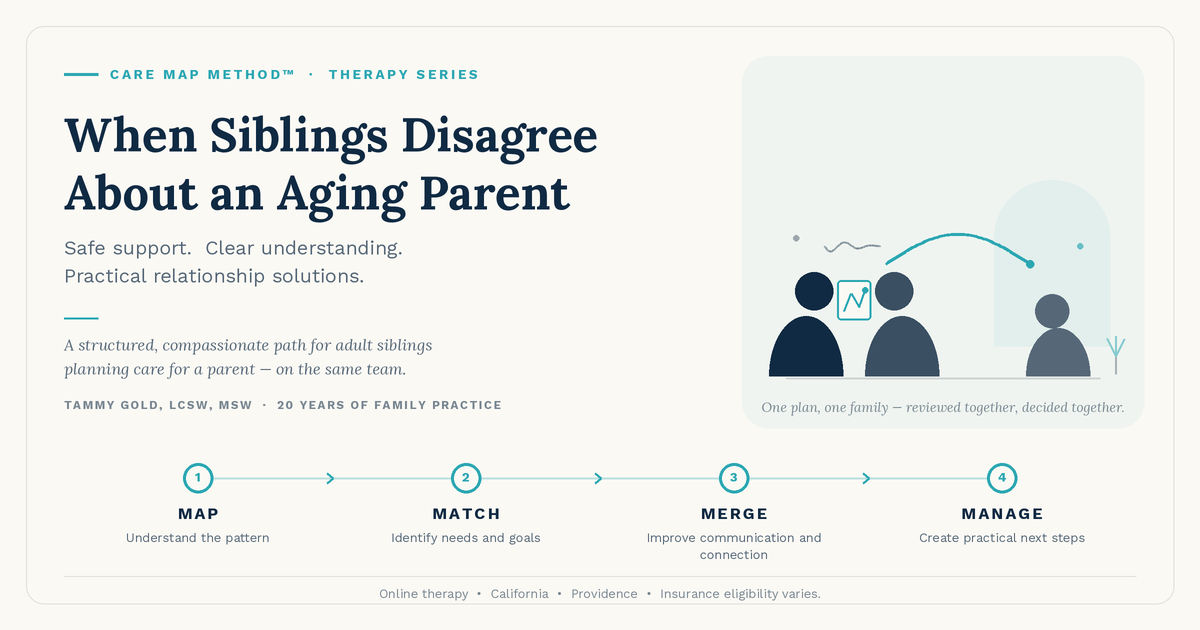
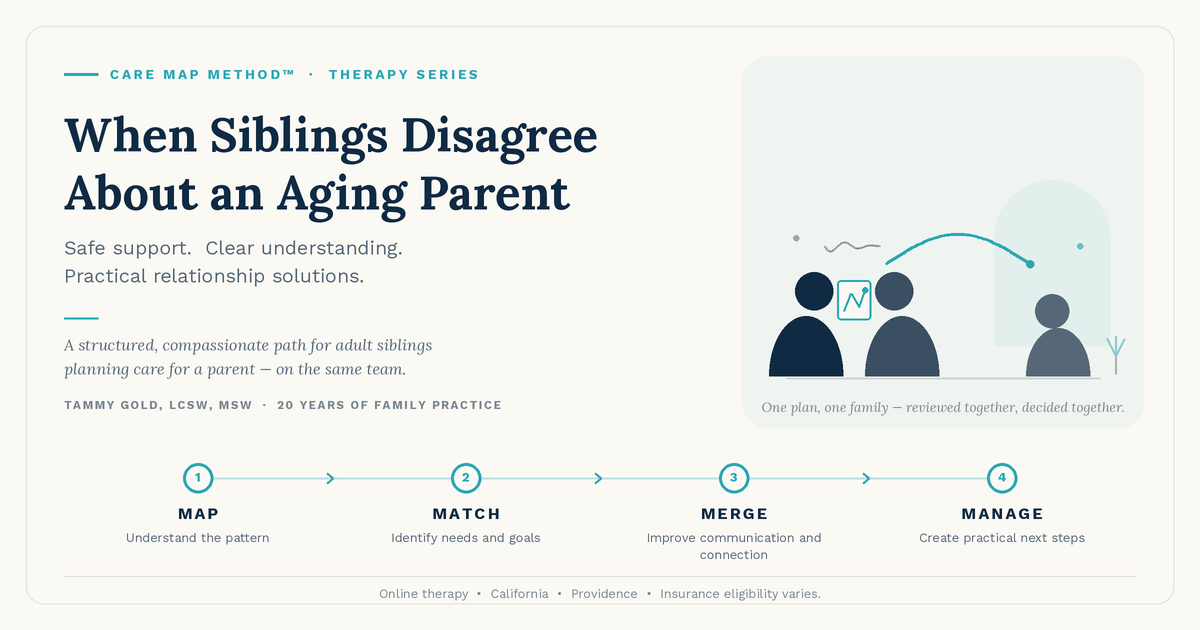
Providence therapy in California for sibling conflict, aging-parent care decisions, caregiver stress, and family communication.
Providence Therapy in California for Sibling Conflict Over an Aging Parent
A parent’s decline can reopen old sibling roles and create urgent disagreements about safety, money, housing, medical care, driving, and who should do what. One sibling may feel abandoned with the work. Another may feel criticized or excluded. Everyone may believe they are protecting the parent, yet the family becomes less able to make decisions together.
You do not have to carry this alone. My goal is to provide a warm, confidential, and nonjudgmental space where you can unpack what is happening without shame, blame, or pressure. Therapy can offer emotional support and practical direction at the same time.
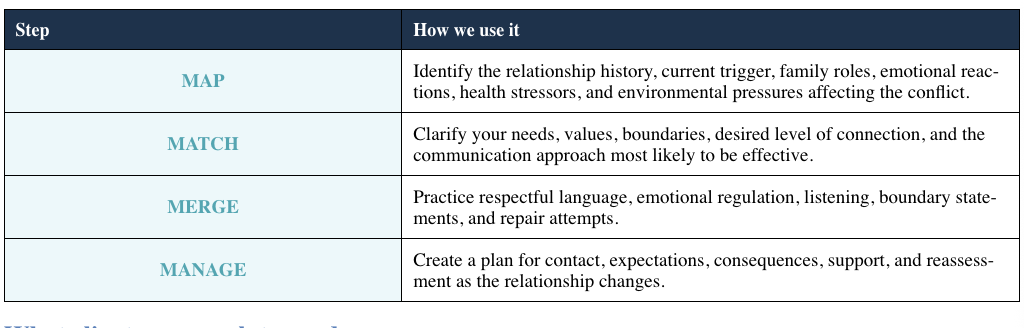
Therapy creates a structured space to separate the care problem from the sibling history. We identify facts, fears, capacities, and practical limits. Each person’s concern can be heard while the family develops clearer communication, roles, and next steps. The goal is not perfect agreement; it is a safer, more workable process.
ONLINE THERAPY IN CALIFORNIA
Insurance may be available through Headway depending on your plan, eligibility, state, and session type. Verify benefits before booking.
What clients can work toward
Reduce blame among siblings
Clarify realistic roles and responsibilities
Make decisions from the full care picture
Protect the parent and the sibling relationships
Therapy is not only a place to talk about what went wrong. It is a place to feel heard, understand the pattern, practice healthier responses, and build a plan that can be used in daily life. Progress depends on the circumstances and cannot be guaranteed, but the work can become clearer, more intentional, and more supported.
Frequently asked questions
Can therapy help siblings agree about eldercare?
Therapy may not produce complete agreement, but it can improve communication, clarify facts and capacities, reduce blame, and create a more workable decision process.
Does Providence cover this type of therapy?
Benefits vary by plan, clinical eligibility, state, and platform. Verify current coverage before scheduling.
Can I attend without my siblings?
Yes. Individual therapy can help you manage caregiver stress, set limits, prepare conversations, and decide what you can realistically provide.
How do we divide caregiving fairly?
Fair does not always mean equal. Roles should reflect time, distance, finances, skills, health, and willingness. A structured care map can make those differences visible.
What if a parent refuses help?
Therapy can help the family assess risk, respect autonomy where possible, communicate concerns, and decide what actions are appropriate within legal and ethical limits.
When is specialized eldercare guidance needed?
Professional medical, legal, financial, or care-management expertise may be needed for capacity, safety, placement, benefits, or complex medical decisions.
Final booking call to action
You deserve one place where you can be honest without worrying about judgment, shame, or blame. Together, we can understand what is happening, identify what needs to change, and create practical steps toward a healthier relationship and a more manageable life.
Verify your insurance and request an online therapy appointment through my Psychology Today / Headway booking path.
Providence therapy in California for sibling conflict, aging-parent care decisions, caregiver stress, and family
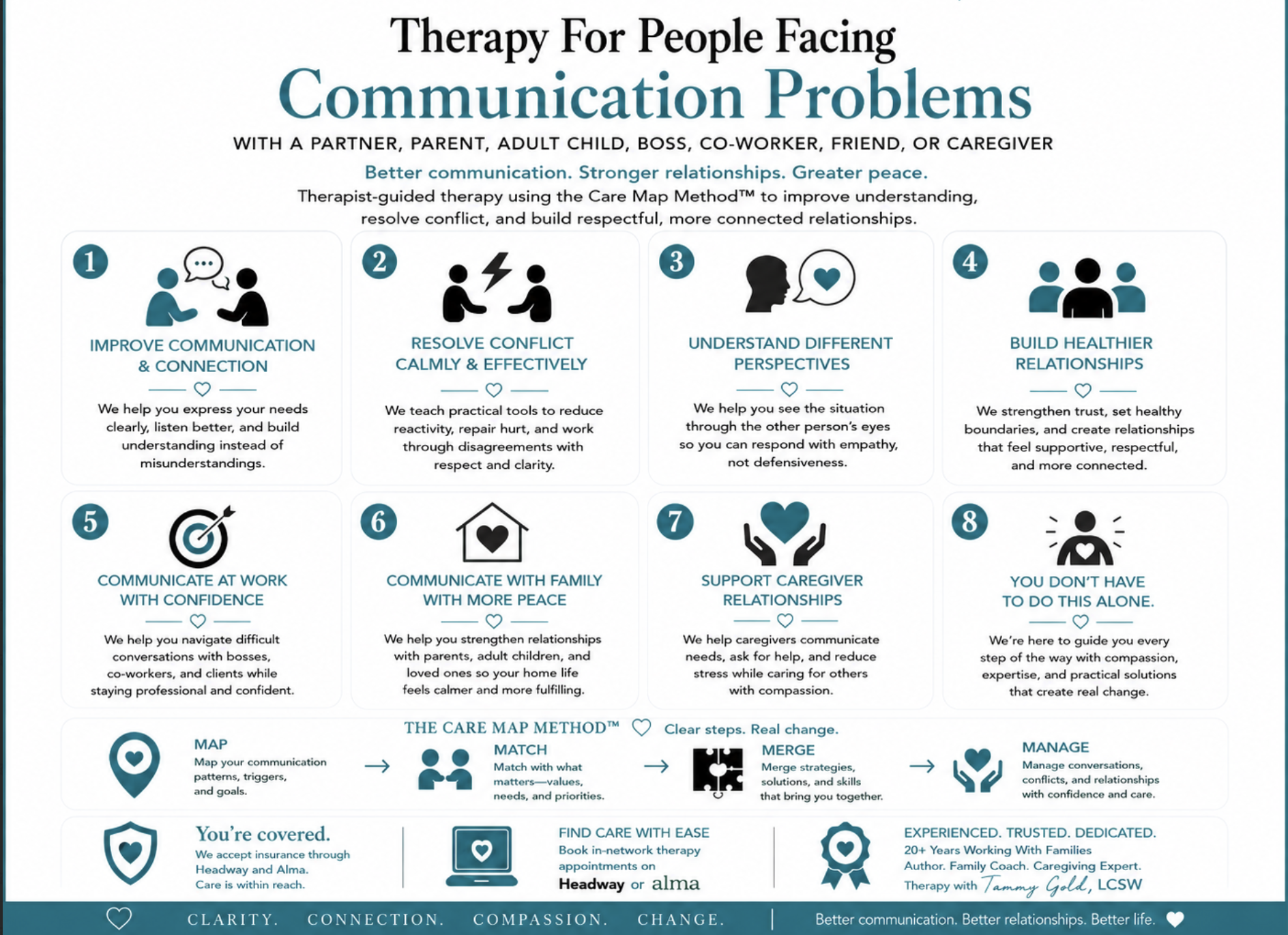
Therapy for Communication Problems With a Partner, Parent, Adult Child, Boss or Caregiver
Therapy for clients struggling to communicate with a partner, parent, adult child, sibling, boss, coworker, nanny, daycare provider, caregiver or senior care professional.
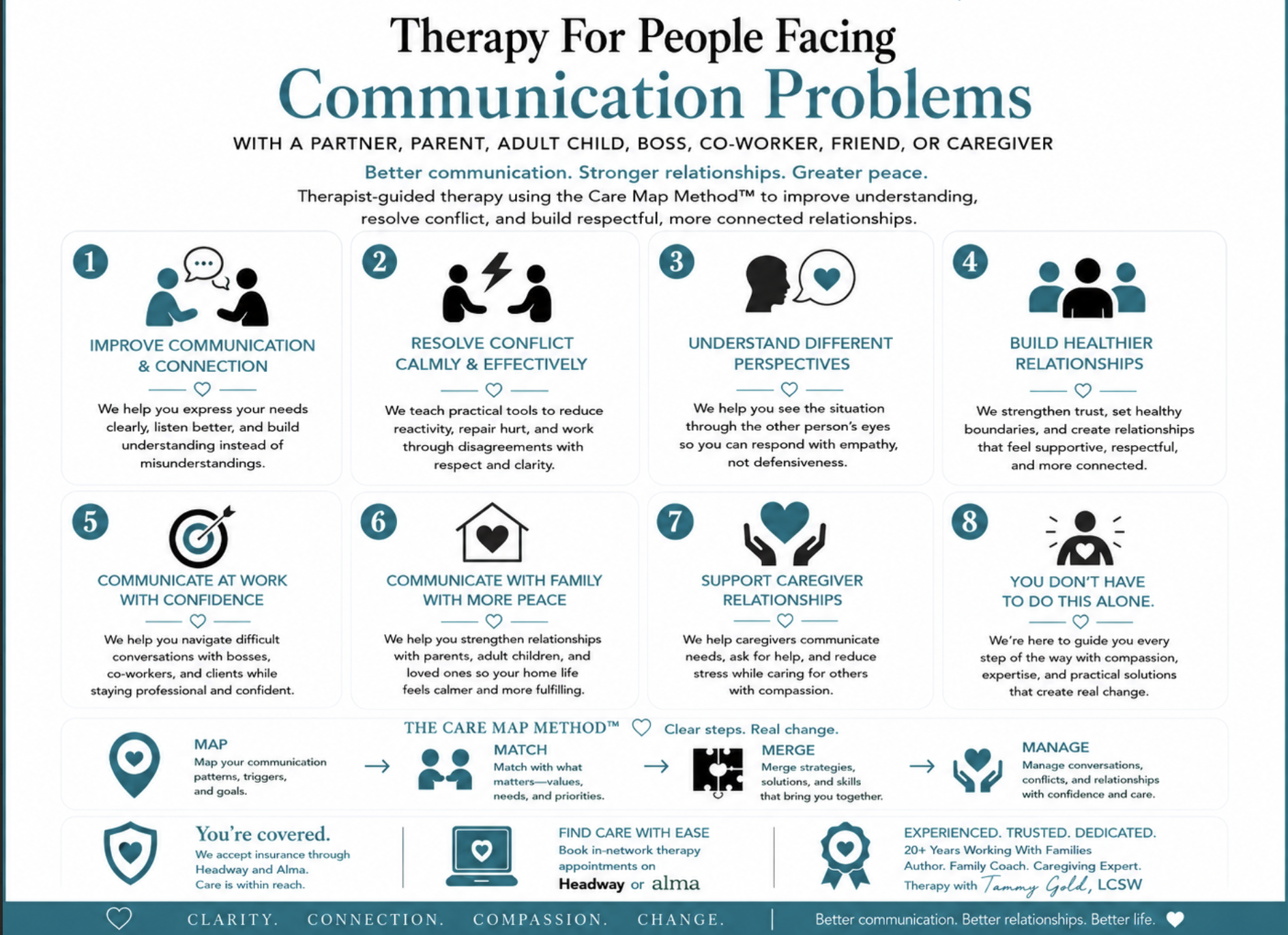
Therapy for Communication Problems With Important People in Your Life
Communication problems can happen in any important relationship: with a partner, child, adult child, parent, sibling, friend, boss, coworker, neighbor, co-parent, nanny, daycare provider, caregiver or senior care professional. When communication breaks down, people often feel misunderstood, defensive, resentful, anxious or emotionally exhausted.
I am Tammy Gold, LCSW. I offer online therapy for clients in California, New Jersey and Oregon. Depending on your plan and eligibility, insurance may be available through Headway or Alma.
My Psychology Today profile links to booking and insurance options through Headway.
When communication becomes stressful
You may know what you feel but not how to say it. You may worry that speaking honestly will create conflict. You may shut down, over-explain, apologize, become reactive or avoid the conversation altogether. Therapy can help you understand the pattern and find more effective words.
The goal is not to make you perfect. The goal is to help you communicate with more clarity, compassion and confidence.
How sessions help
Using the Care Map Method™, we Map what is causing the communication breakdown, Match the needs and triggers underneath it, Merge better language and listening, and Manage boundaries or next steps.
This approach is especially helpful for clients dealing with family conflict, parenting stress, divorce, co-parenting, work stress, caregiver management, childcare situations or eldercare decisions.
Request a session
If you are struggling with communication in an important relationship, visit my Psychology Today profile to request a session. My profile links to booking and insurance options through Headway.
What types of relationship concerns do you help with?
I help clients with couples and marriage concerns, communication problems, parenting stress, family conflict, divorce, co-parenting, adult children, sibling relationships, caregiver stress, workplace relationships, boundaries, and major life transitions.
What makes your approach to relationship therapy different?
My approach combines a warm, supportive, nonjudgmental therapeutic space with a structured process. We use the Care Map Method™ to understand what is driving the problem, identify needs and patterns, strengthen communication, and create practical next steps.
Will therapy be a safe and nonjudgmental space?
Yes. My goal is to provide one place where clients can speak honestly without shame, blame, criticism, or pressure. Clients can unpack feelings, understand patterns, and receive compassionate support and practical guidance.
Is therapy only for couples?
No. Individual therapy can help improve relationships with a spouse, partner, child, parent, sibling, adult child, friend, coworker, boss, caregiver, or other important person—even when that person does not attend therapy.
Do you provide couples counseling?
Yes. Couples work may address repeated arguments, communication problems, emotional disconnection, parenting disagreements, trust, boundaries, divorce decisions, and co-parenting. Insurance coverage for couples or family sessions varies by plan.
What happens during the first therapy session?
We discuss what is bringing you to therapy, what feels most important, what you want to change, and what has or has not helped before. We begin mapping the biological, emotional, social, and environmental factors affecting the situation and identify initial priorities.
Do you only listen, or will I receive practical tools?
Therapy includes emotional support and space to process feelings, but it is also solution-focused. Clients may receive communication tools, scripts, boundary language, reflection questions, relationship strategies, and practical next steps.
Do you offer online therapy?
Yes. Online therapy is available to clients physically located in California, New Jersey, or Oregon at the time of the session.
What insurance plans do you accept?
Insurance availability varies by state, plan, eligibility, and booking platform. Prospective clients should use the booking or insurance-verification link to confirm current coverage before scheduling.
How do I schedule therapy?
Use the Psychology Today or designated booking link on the page to view availability, confirm insurance eligibility, and request a therapy appointment.

Empty Nest Syndrome: Finding Purpose During Life’s Next Chapter
When children leave home, parents may experience grief, identity changes, relationship strain, and uncertainty about what comes next. Therapy can help make this transition meaningful.

When a child leaves for college, moves out, marries, or becomes more independent, parents often feel proud and relieved. They may also feel grief, loneliness, anxiety, or a surprising loss of direction.
These reactions can coexist. Loving your child's independence does not prevent you from missing the daily relationship, familiar routines, and identity that active parenting provided.
Why the empty nest can feel like a real loss
Parenting structures time, attention, relationships, and the physical home for many years. School calendars, meals, activities, transportation, and emotional support create a daily rhythm. When that rhythm changes, the absence can be felt in ordinary moments: a quiet kitchen, an unused bedroom, or a weekend with no one to drive anywhere.
The loss is not only of proximity. It may include the loss of a role in which you felt needed and competent. Even when the transition is developmentally healthy, it can require genuine grieving.
Common empty-nest experiences
Parents may notice:
Sadness or tearfulness that seems disproportionate to the event
Anxiety about the child’s safety, choices, or adjustment
Compulsive checking, texting, or monitoring
Difficulty sleeping or concentrating
A sense that the home or marriage feels unfamiliar
Uncertainty about personal goals or identity
Resentment when the adult child appears distant
Conflict with a partner who is adjusting differently
Relief followed by guilt for feeling relieved
When partners experience the transition differently
One partner may feel devastated while the other feels energized by new freedom. One may want frequent contact with the child; the other may emphasize independence. These differences can create conflict if each person interprets the other's response as uncaring or excessive.
Couples may also discover that years of child-centered routines allowed them to avoid unresolved issues. The quieter home can expose emotional distance, unequal labor, or uncertainty about what they enjoy together. This does not necessarily mean the relationship is failing. It means the couple may need to build a new version of the relationship rather than waiting for the old one to return.
Letting the parent-child relationship evolve
Adult children still need connection, but the form of support changes. The parent's task gradually shifts from direct management to availability, consultation, and respect for autonomy.
This transition can be difficult when worry is high. Frequent advice or checking may feel like love to the parent but like mistrust to the adult child. Therapy can help parents tolerate uncertainty while maintaining a warm, appropriate connection.
The empty nest and women’s identity
Women are often encouraged to invest deeply in caregiving and then expected to transition smoothly when daily caregiving decreases. The resulting identity questions can be significant: Who am I when I am not organizing everyone else's life? What do I want beyond being needed?
These questions are not selfish. They are part of constructing a fuller identity that can include parenting without being limited to it.
When aging parents enter the picture
For many adults, the empty nest is not an uncomplicated release from caregiving. As children become independent, aging parents may begin to need more support.
This can create a rapid shift from one caregiving system to another, leaving little time to recover or consider personal goals. It is important to avoid automatically filling every newly available hour with eldercare. A sustainable plan should account for the adult child's independence, the older parent's needs, and the midlife adult's own health and future.
Rebuilding purpose without forcing a reinvention
You do not need to identify a dramatic new purpose immediately. Purpose can be rebuilt gradually through relationships, work, creativity, learning, service, health, travel, or simple routines that belong to you.
Start by noticing what was postponed during intensive parenting. Some interests will still matter; others will not. The goal is not to recreate your pre-parenting self but to discover what fits now.
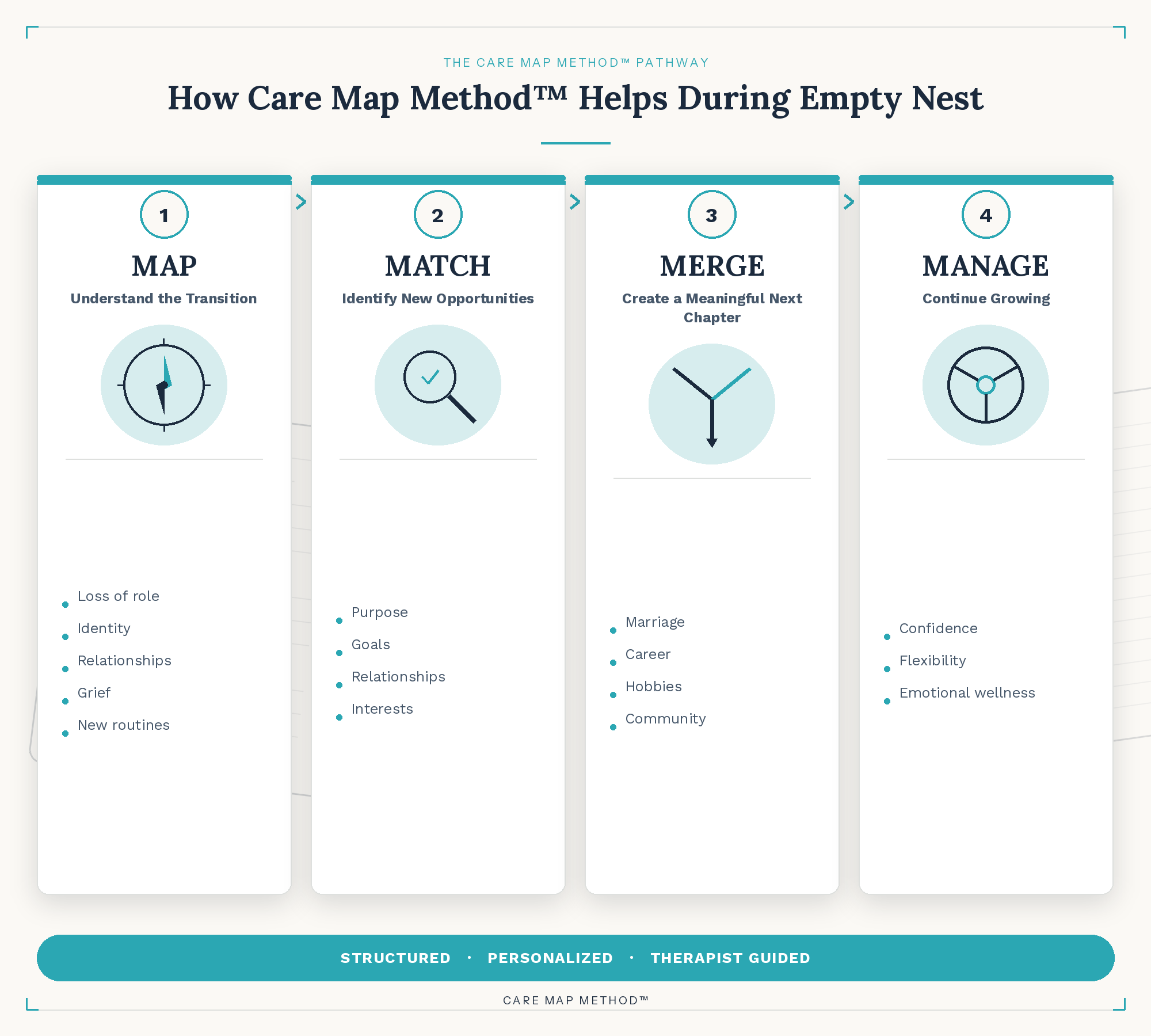
A practical transition map
Consider mapping four areas:
Biological: sleep, health, movement, and energy during the transition
Emotional: grief, relief, anxiety, pride, regret, and changing identity
Social: friendships, partnership, community, and the evolving relationship with the adult child
Environmental: changes to the home, schedule, finances, work, and caregiving responsibilities
How therapy can help
Therapy can provide support when the transition brings persistent sadness, anxiety, relationship conflict, or a sense of emptiness. It can help parents process grief, adjust communication with adult children, strengthen a partnership, and clarify what they want from the next stage of life.
The work is not about erasing attachment. It is about allowing the relationship with your child to mature while expanding your own life.
The next chapter can hold more than one truth
You can miss the version of family life that has ended and still welcome what comes next. You can be proud of your child and feel lonely. You can appreciate new freedom and feel uncertain about how to use it.
A healthy transition does not require choosing one emotion. It requires making room for the full experience while gradually building a life that remains connected, purposeful, and your own.
Ready for support?
If the empty-nest transition has brought grief, anxiety, relationship strain, or uncertainty about your identity, therapy can help you move into the next chapter with greater clarity. Tammy Gold, MSW, LCSW, CEC, provides confidential virtual therapy for adults located in California, New Jersey, and Oregon.
Book through Psychology Today: https://www.psychologytoday.com/us/therapists/tamara-jill-gold-los-angeles-ca/1713403
Learn more: CareMapMethod.com
About Tammy Gold
Tammy Gold, MSW, LCSW, CEC, is the founder of Care Map Method™, a licensed clinical social worker in California, New Jersey, and Oregon, a certified coach, and the author of Secrets of the Nanny Whisperer. Her work centers on relationships, caregiving, burnout, parenting transitions, workplace stress, women’s midlife concerns, and practical support during major life changes.
Educational notice: This article is for general educational purposes and is not a substitute for individualized medical or mental health care. If you are experiencing an emergency or immediate safety concern, contact emergency services or an appropriate crisis resource in your area.