

Eldercare Coaching, Placement, and Care Management
Find and Manage the Right Care for Your Loved One
Eldercare decisions are often made during crisis — leading to rushed, overwhelming choices.
Care Map Method™ helps families plan, select, and manage eldercare with a structured clinical approach.
What We Help With
Care Options
In-home caregivers
Assisted living
Memory care
Adult day programs
Respite care
Placement & Selection
Facility tours and evaluations
Interviewing caregivers and agencies
Trial periods and transitions
Onboarding & Management
Setting expectations and routines
Communication with care teams
Monitoring care quality
Adjusting as needs change
Get our Eldercare Selection Guide
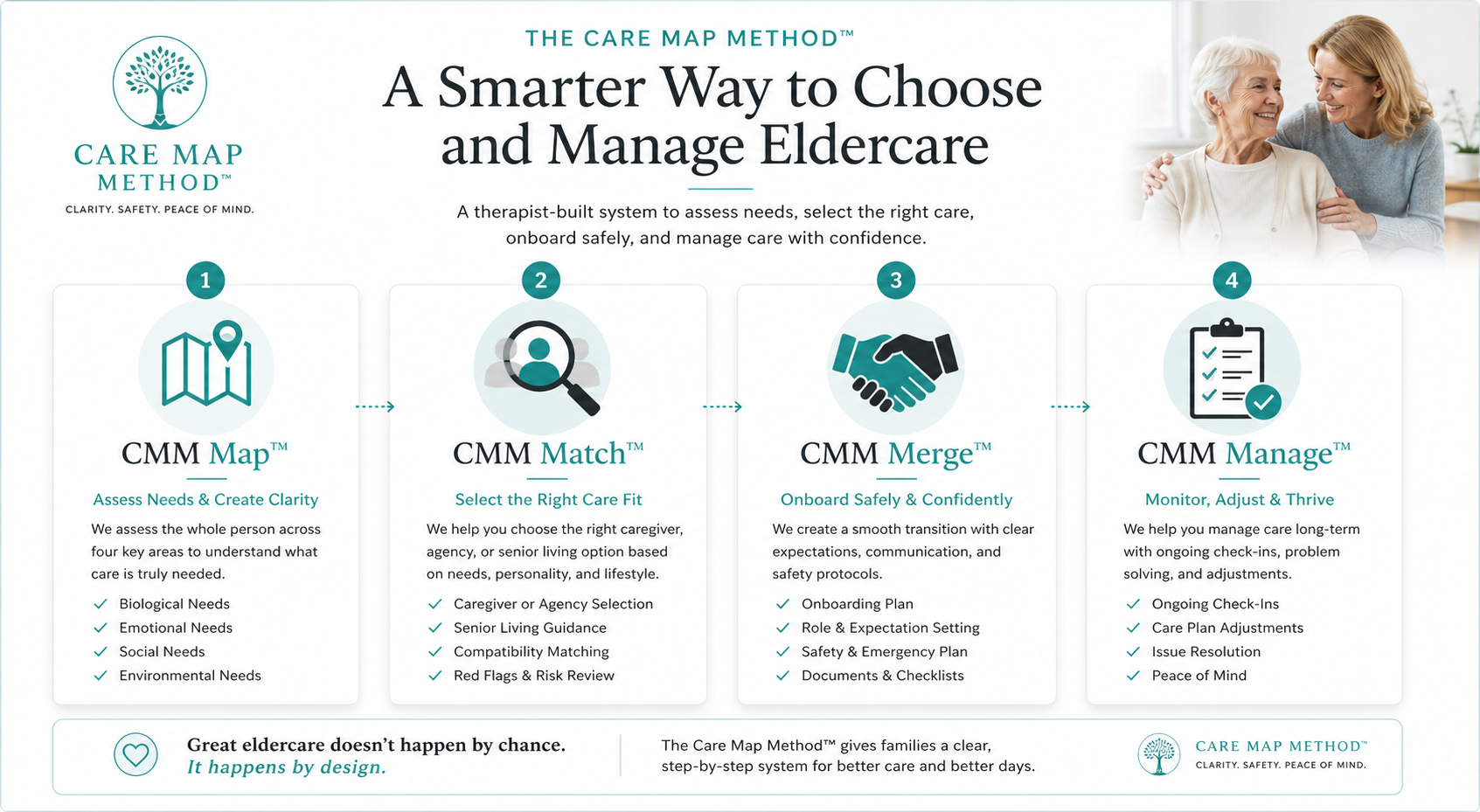
The Care Map Method™ in Eldercare
We guide families through:
Map → Match → Merge → Manage
Map: Assess full needs
Match: Choose the right care
Merge: Onboard successfully
Manage: Ensure ongoing success
Outcomes
Better care matches
Safer transitions
Reduced crisis decision-making
Ongoing support and oversight
Frequently Asked Questions About Eldercare Coaching
What is eldercare coaching?
Eldercare coaching helps families understand, assess, and navigate the many decisions involved in caring for an aging parent or loved one. Coaching provides guidance, education, support, and a personalized plan based on the family's unique needs.
How is eldercare coaching different from therapy?
Therapy focuses on mental health diagnosis and treatment. Eldercare coaching focuses on education, caregiving decisions, family dynamics, care planning, and practical solutions.
Can you help me determine whether my parent needs more support?
Yes. We evaluate emotional, developmental, biological, and environmental needs to help identify areas where additional support may be beneficial.
Can you help with assisted living decisions?
Yes. We help families evaluate whether aging in place, home care, assisted living, or other care options may be the best fit.
Can you help me hire a caregiver?
Yes. Through the Care Match™ process, families receive guidance on identifying, evaluating, interviewing, and selecting caregivers.
What if my parent refuses help?
Resistance is common. We help families understand the emotional and developmental factors behind resistance and create strategies for productive conversations.
Are sessions virtual?
Yes. Sessions are available virtually.
Do you work with adult children?
Yes. Many clients are adult children caring for aging parents.
How do I get started?
Schedule an initial consultation to discuss your family's needs and goals.
How do I choose between home care, assisted living, memory care, and other senior-care options?
The right option depends on safety, medical needs, cognition, mobility, emotional wellbeing, social connection, daily functioning, home environment, family capacity, and finances.
What should I ask an in-home caregiver or agency?
Ask about training, background checks, supervision, experience, emergency procedures, scheduling, communication, dementia experience, medication policies, backup coverage, documentation, and how concerns are handled.
What should families look for during a facility tour?
Look at staffing, resident engagement, cleanliness, safety, communication, care planning, meals, activities, medication management, staff turnover, emergency procedures, family access, and how residents are treated.
Can you help compare several facilities or agencies?
Yes. We can create structured comparison criteria based on your loved one’s actual biological, emotional, social, and environmental needs.
What is a senior-care trial or transition plan?
It is a structured process for testing a caregiver arrangement or preparing a senior for a new care environment, with clear expectations, communication, observations, and follow-up.
Can you help us onboard a new caregiver?
Yes. Onboarding may include routines, preferences, safety needs, communication expectations, family roles, emergency procedures, documentation, and measures of success.
How do we know whether a caregiver arrangement is working?
Look at safety, reliability, communication, emotional fit, quality of care, respect, follow-through, changes in the senior’s wellbeing, and whether family stress is improving or worsening.
Can you help if care is already going badly?
Yes. We can identify the breakdown, clarify immediate risks, create communication steps, determine whether repair is realistic, and plan a safer transition when necessary.

Tammy Gold, LCSW — Therapist, Author, Parenting and Caregiving Expert
Care Map Method™ was developed by Tammy Gold, a licensed clinical social worker with:
Over 20 years of experience in child development and family systems
Expertise in parenting, childcare, and eldercare
A background in therapy, coaching, and caregiver training
A published author and recognized caregiving expert
Her work bridges a major gap:
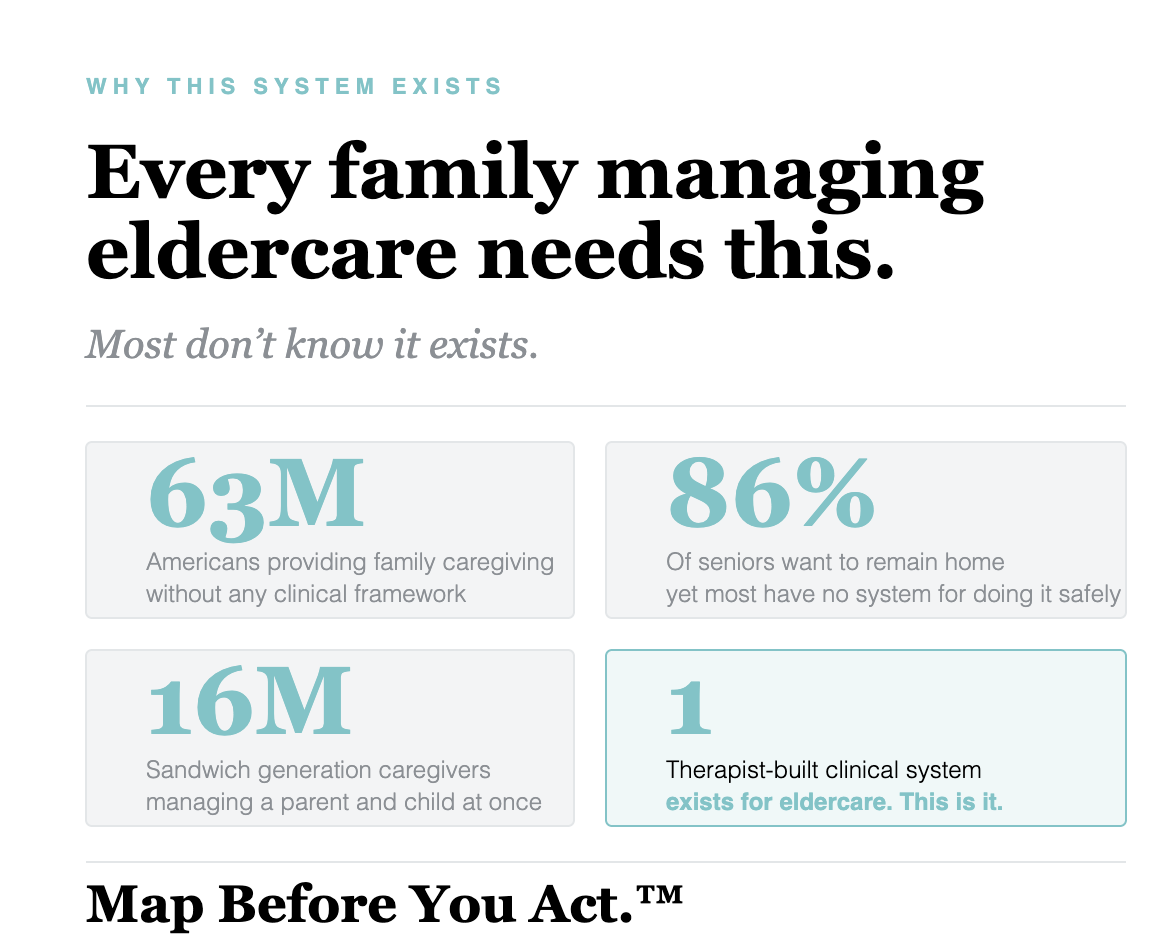
Caregiving has lacked a structured, clinical system—until now.