


How to Onboard a New Nanny: The First 30 Days
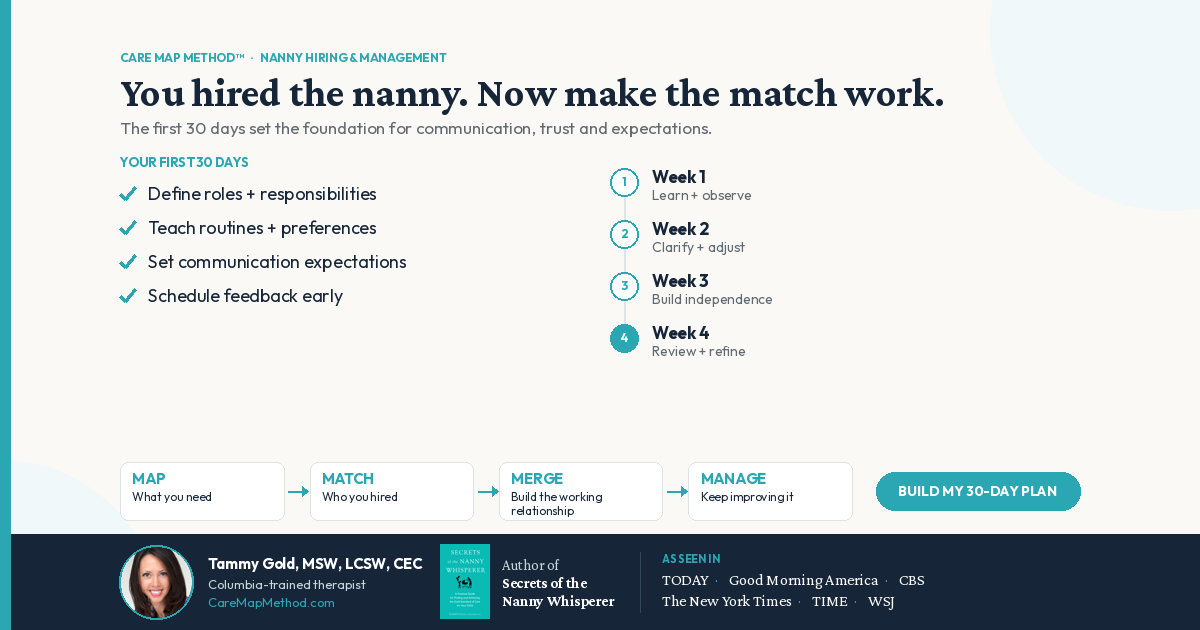
A strong nanny hire can still struggle without clear onboarding. Use the first 30 days to teach routines, establish communication and turn expectations into a workable family-caregiver system
Hiring is only the beginning
Families sometimes invest weeks finding a nanny and then treat the first day as if the new caregiver should already know how everything works. Even experienced nannies need to learn your child, home, routines, preferences and communication style.
Week one: orient
Review emergency information, household access, routines, food, sleep, transportation, activities, supplies, discipline approach and the practical details of the role. Explain what the nanny can decide independently and what requires parent approval.
Create a communication rhythm
Decide what you want communicated during the day, what belongs in an end-of-day update and what requires an immediate call. Too little communication creates anxiety; constant messaging can make it difficult for the nanny to work independently.
Give feedback early and specifically
If something matters, address it while it is still small. Describe the behavior or expectation clearly rather than assuming the nanny understands a vague comment such as “be more proactive.” Also identify what is going well.
Expect adjustment
A new nanny and child may need time to learn each other. Parents also need to adjust to sharing caregiving responsibility. Not every awkward moment is evidence of a bad match.
MERGE → MANAGE
The first month is the transition from MERGE to MANAGE. You are integrating the caregiver into the family system and then building sustainable routines for communication, feedback and changing needs.
The 30-day Care Map review
At the end of the first month, revisit the original needs map. What is working? What is unclear? What needs to change? This keeps the employment relationship responsive instead of waiting for frustration to accumulate.
How the Care Map Method™ Helps
MAP → MATCH → MERGE → MANAGE gives parents a repeatable decision system instead of relying on urgency, charisma or guesswork.
MAP: Define the child, family, role, routines, values, expectations and non-negotiables.
MATCH: Compare the candidate’s demonstrated experience, temperament, judgment and working style with the mapped needs.
MERGE: Use the trial and onboarding period to integrate nanny, child and parents into one functioning care system.
MANAGE: Create clear communication, feedback, boundaries and periodic reassessment as the child and job evolve.
Already found candidates—or not sure where to begin? I can help you prepare the interview, evaluate fit, structure screening and references, plan the trial, onboard your nanny and create a practical management system.
Book Nanny Expert Call Today So I Can Help Answer→
What should I teach a nanny on the first day?
How much should I check in during the first week?
When should I give a new nanny feedback?
What should a 30-day nanny review cover?
How long does it take a child to adjust to a new nanny?
What if the nanny is good but our communication is not working?


Finding the right nanny is only the beginning.
Hiring a nanny is only the beginning. These five first-week steps help parents and professional nannies establish clearer routines, expectations, communication and trust from the start.
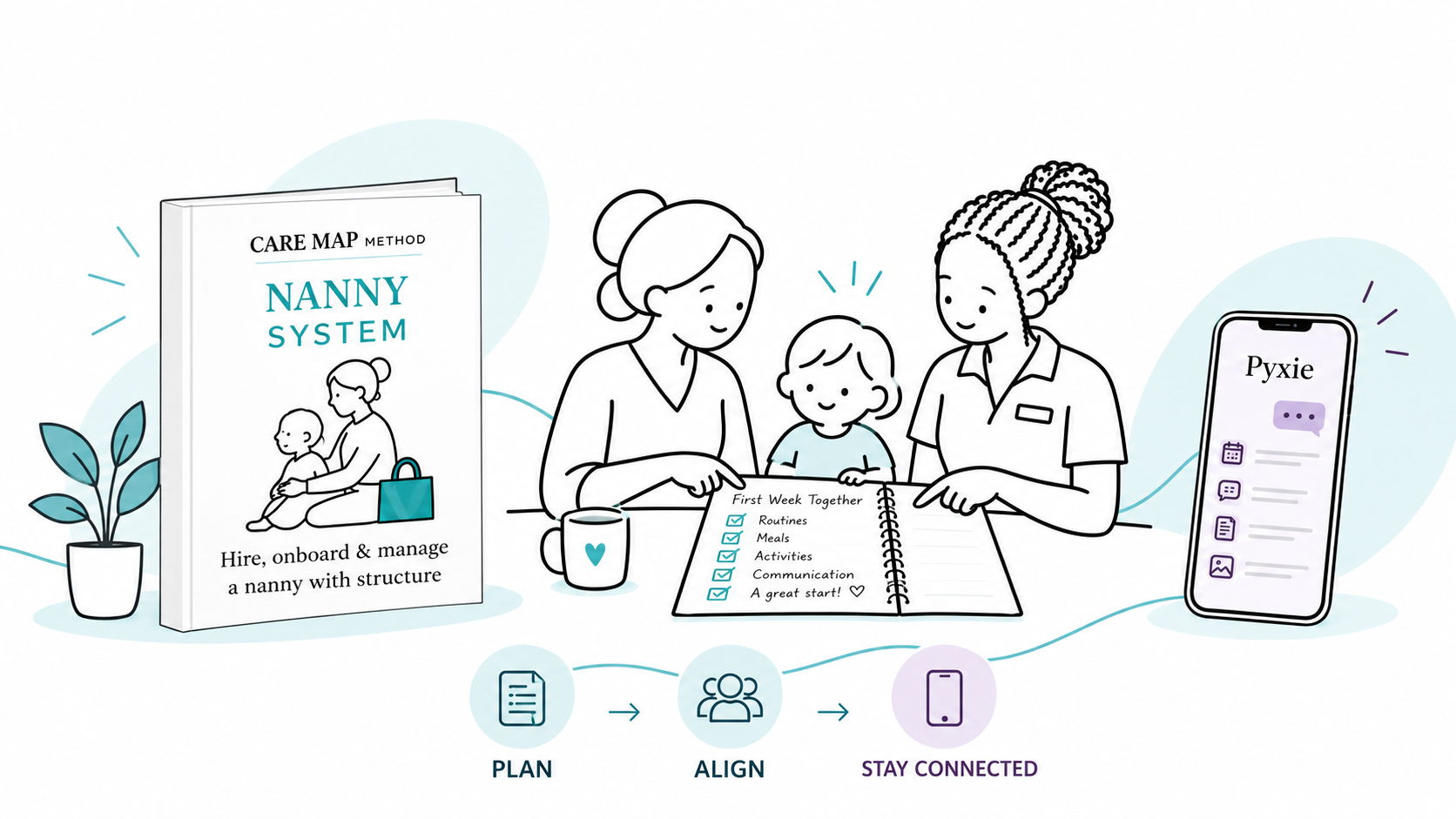
Parent and professional nanny use the CMM Nanny System and Pyxie app to plan routines, expectations and communication for their first week together.
Five Things to Do After You Hire a Nanny
Hiring the right nanny is an important first step—but the relationship still needs a thoughtful beginning. These five Care Map Method™ steps can help your family and nanny create clarity, trust, and a stronger first week together.
1. Map your child’s real needs
Before creating a list of tasks, consider your child’s complete needs: biological, emotional, social, and environmental. Share important information about routines, temperament, comfort, sleep, meals, transitions, activities, and the home environment.
A nanny needs to understand not only what to do, but what helps your child feel secure and function well.
2. Clarify expectations before the first day
Discuss the practical details that are often left unspoken: schedule, responsibilities, household boundaries, transportation, phone use, outings, meals, visitors, photos, safety procedures, and what should happen when plans change.
Clear expectations are not micromanagement. They give both adults a dependable starting point.
3. Build the first-week plan together
Parents know their child and household. Experienced nannies bring professional observations, judgment, and ideas. Invite your nanny to ask questions and contribute to the plan.
The goal is not to hand over a long instruction manual. It is to create shared context that both adults understand and can realistically use.
4. Agree on how you will communicate
Decide what should be shared immediately, what belongs in the daily handoff, and what can wait for a scheduled conversation. Choose one dependable place for routines, updates, questions, and changes so important information is not scattered across texts, notes, and memory.
Good communication should keep everyone informed without making the nanny feel constantly monitored.
5. Schedule a seven-day check-in
Do not let small misunderstandings become recurring frustrations. At the end of the first week, ask:
What is working well?
What has been different from what we expected?
What does the nanny need from the family?
What does the family need clarified?
What should we change for the following week?
The first plan does not have to be perfect. It needs to be clear enough to use—and flexible enough to improve.
Turn These Five Steps Into a Working System
The CMM Nanny System helps you plan the relationship. Pyxie helps your family and nanny keep that shared plan organized and useful in daily life.
Practical guidance from Tammy Gold, MSW, LCSW, CEC
Tammy Gold is a licensed therapist, certified coach, caregiving author, and author of Secrets of the Nanny Whisperer. For more than 20 years, she has helped families understand caregiving relationships, clarify expectations, and navigate the human side of care.
Her independently developed CMM Nanny System is being made available as a limited complimentary resource for eligible participants in this Pyxie trial.
Eligibility
This free trial may be right for you if:
you have already hired a professional nanny;
you are willing to complete Pyxie onboarding;
you want clearer routines, communication, and expectations; and
you agree to provide brief feedback about the experience.
This trial is not a nanny-placement service, background-check service, payroll service, monitoring service, emergency service, or substitute for legal, employment, medical, or mental-health advice.
Give your new caregiving relationship a clearer start.
Download Pyxie free and receive the CMM Nanny System as your complimentary trial bonus.