

How to Onboard a New Nanny: The First 30 Days
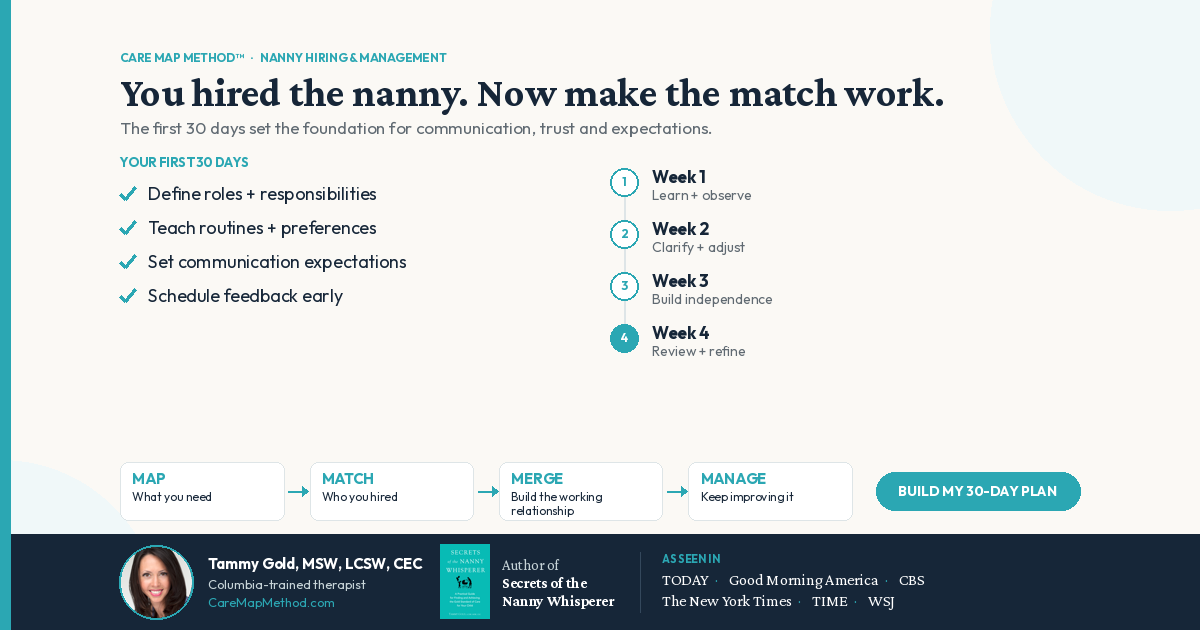
Hiring is only the beginning
Families sometimes invest weeks finding a nanny and then treat the first day as if the new caregiver should already know how everything works. Even experienced nannies need to learn your child, home, routines, preferences and communication style.
Week one: orient
Review emergency information, household access, routines, food, sleep, transportation, activities, supplies, discipline approach and the practical details of the role. Explain what the nanny can decide independently and what requires parent approval.
Create a communication rhythm
Decide what you want communicated during the day, what belongs in an end-of-day update and what requires an immediate call. Too little communication creates anxiety; constant messaging can make it difficult for the nanny to work independently.
Give feedback early and specifically
If something matters, address it while it is still small. Describe the behavior or expectation clearly rather than assuming the nanny understands a vague comment such as “be more proactive.” Also identify what is going well.
Expect adjustment
A new nanny and child may need time to learn each other. Parents also need to adjust to sharing caregiving responsibility. Not every awkward moment is evidence of a bad match.
MERGE → MANAGE
The first month is the transition from MERGE to MANAGE. You are integrating the caregiver into the family system and then building sustainable routines for communication, feedback and changing needs.
The 30-day Care Map review
At the end of the first month, revisit the original needs map. What is working? What is unclear? What needs to change? This keeps the employment relationship responsive instead of waiting for frustration to accumulate.
How the Care Map Method™ Helps
MAP → MATCH → MERGE → MANAGE gives parents a repeatable decision system instead of relying on urgency, charisma or guesswork.
MAP: Define the child, family, role, routines, values, expectations and non-negotiables.
MATCH: Compare the candidate’s demonstrated experience, temperament, judgment and working style with the mapped needs.
MERGE: Use the trial and onboarding period to integrate nanny, child and parents into one functioning care system.
MANAGE: Create clear communication, feedback, boundaries and periodic reassessment as the child and job evolve.
Already found candidates—or not sure where to begin? I can help you prepare the interview, evaluate fit, structure screening and references, plan the trial, onboard your nanny and create a practical management system.
Book Nanny Expert Call Today So I Can Help Answer→
What should I teach a nanny on the first day?
How much should I check in during the first week?
When should I give a new nanny feedback?
What should a 30-day nanny review cover?
How long does it take a child to adjust to a new nanny?
What if the nanny is good but our communication is not working?