

Care Map Method therapy for setting work boundaries, workload limits and professional communication
HOW DO I SET BOUNDARIES AT WORK WITHOUT HURTING MY CAREER?
The goal is not to become less committed. It is to make capacity, priorities and expectations clearer.
What therapy can help you work on:
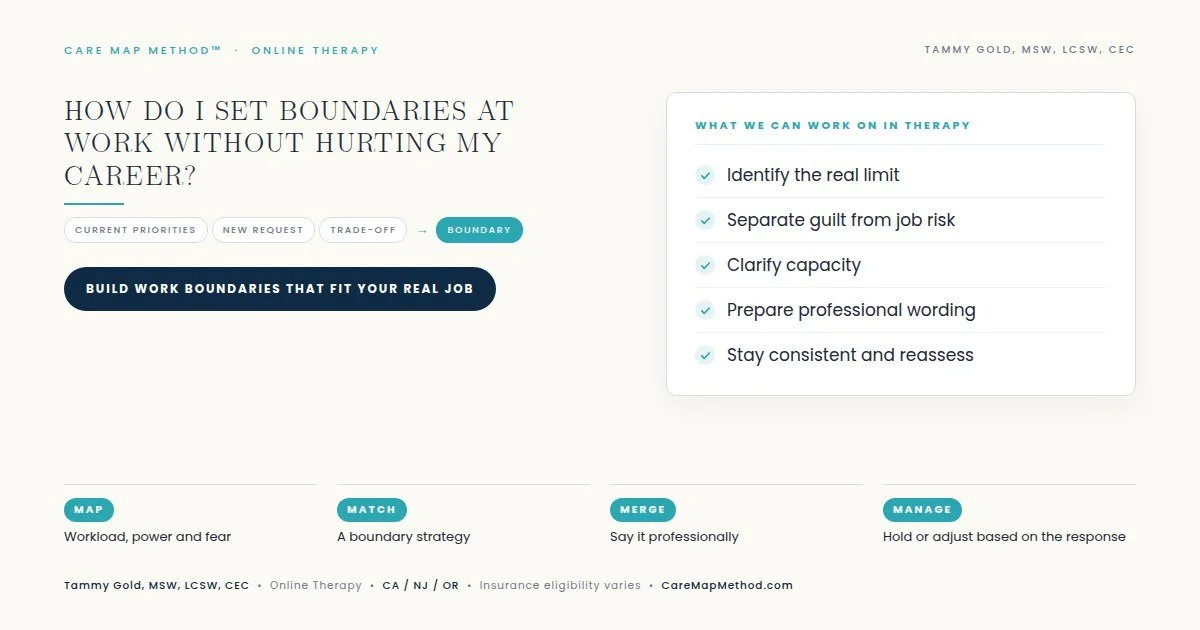
• Identify where your limits are actually being crossed
• Separate fear of disapproval from realistic career risk
• Turn “no” into capacity and priority language
• Prepare for pushback from a boss or coworker
• Stay consistent without becoming rigid or overexplaining
BUILD WORK BOUNDARIES THAT FIT YOUR REAL JOB
Work boundaries are not simple because work has stakes
Your livelihood, reputation and advancement may be involved. Advice that works in a friendship may be inappropriate with a supervisor. Good workplace boundaries therefore need to be specific, professional and grounded in your actual role.
People-pleasing can make every request feel mandatory
If being dependable is central to your identity, you may volunteer before checking capacity, answer instantly or absorb work that was never clearly yours. The resentment arrives later.
Care Map Method™
MAP the request, power dynamic, workload and feared consequence.
MATCH the issue with the right boundary or prioritization conversation.
MERGE it into professional language.
MANAGE reactions and maintain the boundary consistently enough to learn whether it works.
A boundary is not a guarantee that everyone will like it
The purpose is clarity. We can work on tolerating discomfort while staying mindful of real job expectations and consequences.
What We Can Work On
Identify where your limits are actually being crossed
Separate fear of disapproval from realistic career risk
Turn “no” into capacity and priority language
Prepare for pushback from a boss or coworker
Stay consistent without becoming rigid or overexplaining
Care Map Method™
MAP the problem and pattern. MATCH the needs with the right clinical strategies. MERGE insight into real conversations, boundaries and behavior. MANAGE what happens next and adjust as the situation changes.
How do I say no to more work without looking unhelpful?
Often the most professional approach is to make capacity and trade-offs visible: clarify current priorities, ask what should move and avoid promising work that cannot realistically be completed.
Can boundaries hurt my career?
Workplace context matters, and no therapist can guarantee how an employer will respond. We can help you think through the power dynamics, job expectations and wording so the boundary is deliberate rather than reactive.
Why do I feel guilty setting work boundaries?
You may equate availability with competence, loyalty or safety. Therapy can help separate healthy commitment from over-responsibility and fear-driven people pleasing.
What if my boss ignores my boundary?
Repeatedly ignored limits provide information. We can reassess the wording, organizational expectations, documentation, escalation options and whether the environment is sustainable.
How do I set boundaries with coworkers who constantly need help?
Clarify what support is appropriate, when you are available and what work you are responsible for. A boundary can include redirecting requests or scheduling help rather than responding immediately.
Can therapy help me practice the actual conversation?
Yes. We can write and rehearse concise language, anticipate objections and work on the emotional response that makes it hard to follow through.
BUILD WORK BOUNDARIES THAT FIT YOUR REAL JOB
Check insurance eligibility and request an online therapy appointment. Therapy is available to eligible clients in California, New Jersey and Oregon; coverage and benefits vary by plan.