

Workplace Stress & Difficult Boss Therapy
Work stress can follow you home. Get personalized therapy for difficult bosses, coworker conflict, boundaries, burnout and career stress.
Online Therapy for Workplace Stress, Difficult Bosses & Conflict
A difficult boss, tense coworker relationship, or high-conflict workplace can take up far more emotional space than the hours you spend at work. You may leave a meeting but continue replaying it all evening. You may second-guess what you said, anticipate the next conflict, dread opening email, or feel your confidence shrinking in a job where you once felt capable. When work stress starts affecting sleep, relationships, mood, or your sense of self, therapy can help you separate the problem from your identity and create a more workable plan.
Check insurance & book online therapy
When work conflict follows you home
Workplace conflict is rarely just about one uncomfortable conversation. It can involve power differences, unclear expectations, criticism, exclusion, poor communication, people-pleasing, burnout, or fear of losing income. The emotional impact can be especially strong when you feel trapped between protecting your job and protecting yourself.
You may notice that you are rehearsing conversations before they happen, checking messages late at night, avoiding a coworker, becoming unusually reactive, or carrying work tension into your home life. Sometimes the hardest part is not knowing whether the problem is the environment, your own response, or both. Therapy gives you a confidential place to sort through those layers without being judged or rushed into a decision.
How therapy can help with a boss or coworker problem
My approach is active, supportive, and solution-focused. We make room for the frustration, anger, fear, embarrassment, or exhaustion you are carrying, but we also work toward concrete change. Together we can identify what is actually happening, which parts are within your control, and what would make the situation more manageable.
That might include preparing for a difficult conversation, setting a boundary, improving assertive communication, deciding what to document, reducing emotional reactivity, or evaluating whether a role still fits your needs. Therapy can also help you distinguish a temporary conflict from a more entrenched pattern that may require a larger career decision.
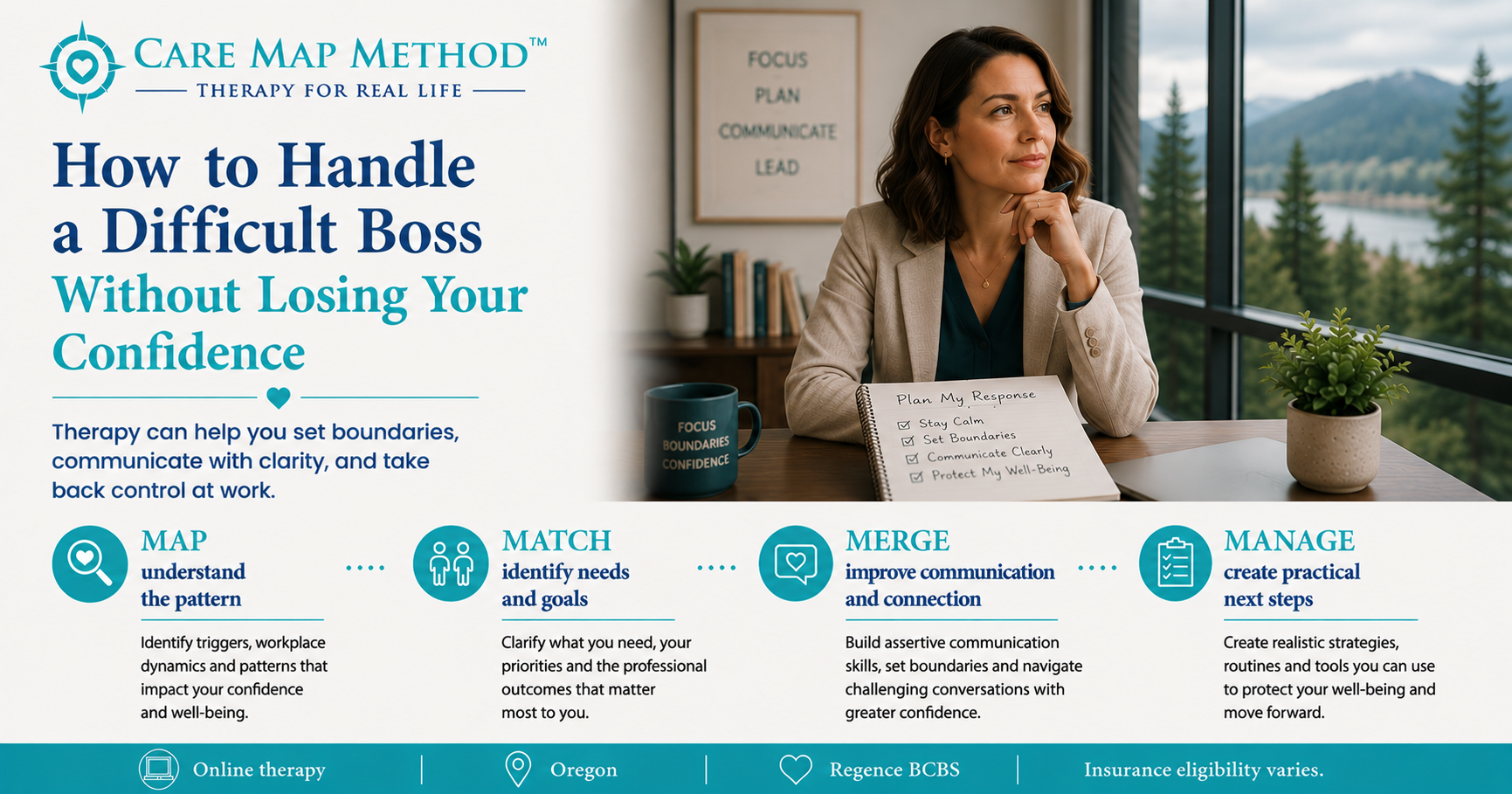
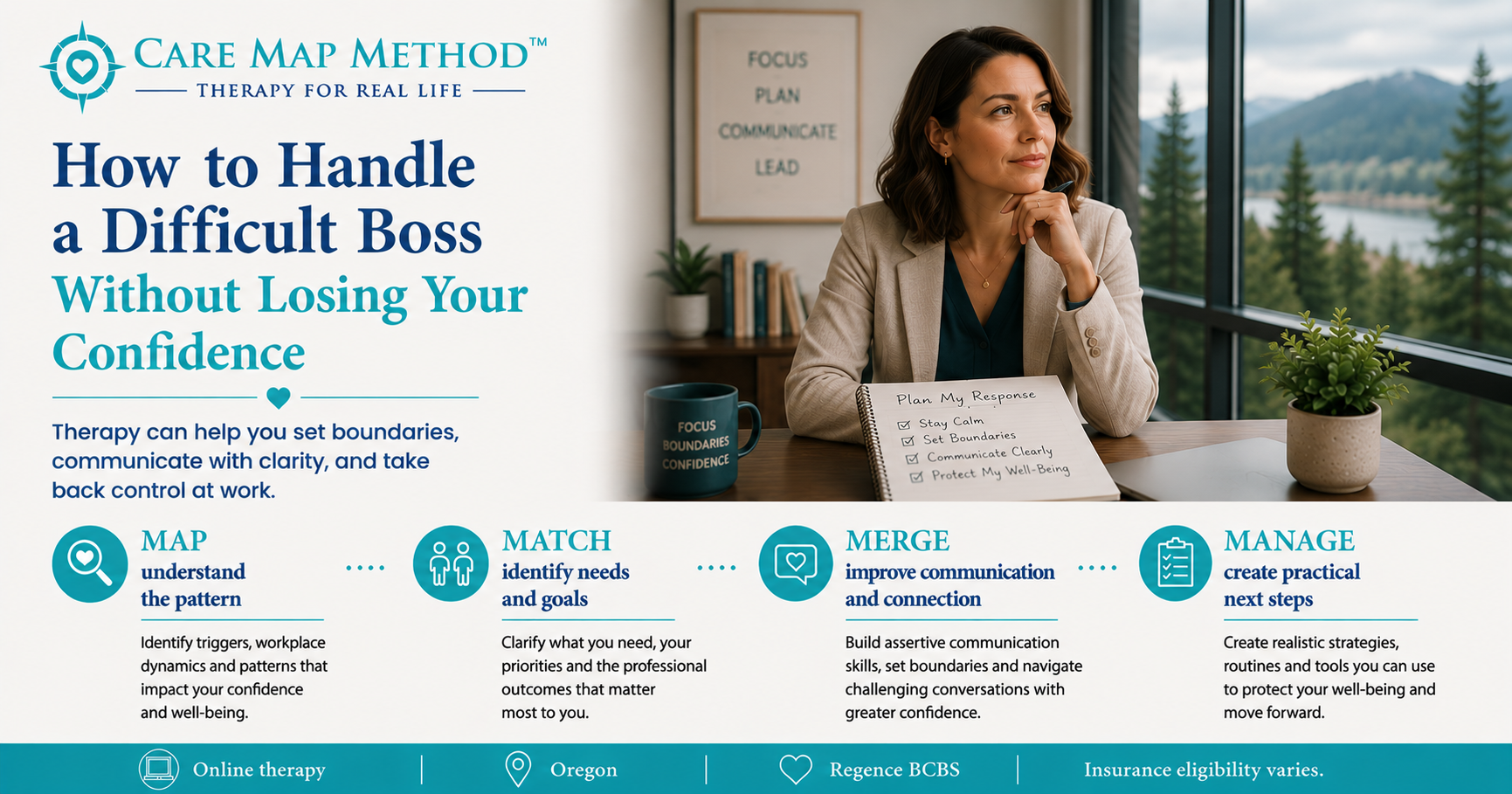
The Care Map Method: Map • Match • Merge • Manage
MAP — Understand the pattern. We identify the specific triggers, workplace dynamics, communication patterns, and emotional responses that are keeping the stress active.
MATCH — Identify needs and goals. We clarify what you need from work, what you can realistically influence, what boundaries matter, and what a healthier professional outcome would look like.
MERGE — Improve communication and connection. We develop practical language for difficult conversations, boundary-setting, managing up, giving or receiving feedback, and responding without escalating the situation.
MANAGE — Create practical next steps. We turn insight into a plan you can actually use: scripts, coping strategies, decision points, routines, and follow-through that help you protect your well-being while navigating work.
You do not have to wait until work becomes unbearable
Therapy is not only for a crisis. It can be useful when you know something at work is taking too much out of you and you want support before you burn out, resign impulsively, or let one difficult relationship define your confidence. The goal is not to tell you what to do. It is to help you think more clearly, respond more intentionally, and feel less alone while you decide what comes next.
Online therapy and insurance in Oregon
I provide online psychotherapy for clients who are physically located in states where I am licensed and available to practice. I work with selected insurance plans through Headway. Coverage, eligibility, copays, deductibles and network participation vary by plan and member. Use the Headway booking link to verify benefits before scheduling.
Ready for support and a plan?
If this situation is affecting your mood, sleep, work, relationships or sense of stability, you do not have to wait until it becomes a crisis. Therapy can be a safe, nonjudgmental place to unload what you are carrying while also developing tangible tools and a clearer path forward. Use the Headway link to check insurance eligibility and current appointment availability.
FAQ
Do you offer therapy for problems with a boss or coworker?
Yes. Therapy can focus specifically on workplace relationships, difficult bosses, coworker conflict, communication, boundaries, confidence and the emotional impact of work stress.
Can therapy help me decide whether to stay in or leave a job?
Yes. Therapy can help you clarify what is happening, what is changeable, what you need, and how the job is affecting your well-being so you can make a more grounded decision.
How can therapy help with workplace boundaries?
We can work on identifying the boundary, understanding what makes it hard to hold, and developing practical language and follow-through for difficult conversations.
Can I use insurance for online therapy?
I work with selected insurance plans through Headway. Eligibility, benefits and out-of-pocket costs vary by state and plan and should be verified before booking.
Do you provide online therapy throughout Oregon?
I provide telehealth for clients who are physically located in states where I am licensed and available to practice. Current availability can be confirmed through the booking process.
Online Therapy for Workplace Stress, Difficult Bosses & Conflict
Work stress can follow you home. Get personalized therapy for difficult bosses, coworker conflict, boundaries, burnout and career stress.
Online therapy for workplace stress, difficult bosses, coworker conflict, boundaries and burnout in CA, NJ and Oregon Check insurance eligibility and book online.
Online Therapy for Workplace Stress, Difficult Bosses & Conflict
A difficult boss, a tense coworker relationship, or a politically complicated workplace can take up far more mental space than the hours you spend at work. You may replay conversations, second-guess what you said, worry about your reputation, or feel stuck between speaking up and staying quiet. Therapy can give you a structured place to understand what is happening, how it is affecting you, and what choices are realistically available.
Check Insurance Eligibility & Book Online Therapy → Via HEADWAY
What You May Be Dealing With
You dread meetings, emails or interactions with a particular person.
You replay workplace conversations long after the workday ends.
You feel micromanaged, criticized, excluded or undervalued.
You are unsure how to set a boundary without making the situation worse.
Coworker conflict is affecting your confidence, sleep, mood or concentration.
You are trying to decide whether to address the situation, escalate it, change roles or leave.
You are burned out from carrying too much responsibility or emotional labor.
You want to communicate more clearly without becoming reactive or shutting down.
How Therapy Can Help
Therapy is not about giving you a one-size-fits-all script for dealing with a difficult person. The work starts by understanding the specific relationship, the power dynamics, your emotional reactions, your goals and the risks involved. Together, we can identify patterns, strengthen boundaries, prepare for difficult conversations, work on emotional regulation, and clarify what is within your control. If a job decision is part of the problem, therapy can also help you separate fear, exhaustion and frustration from the practical factors that matter to your next step.
The Care Map Method™ in Therapy
Care Map Method™ is a structured way to organize the people, needs, stressors and choices involved in a complex real-life situation. In psychotherapy, it is used only as an organizing framework within individualized clinical care—not as a substitute for assessment, diagnosis or treatment planning.
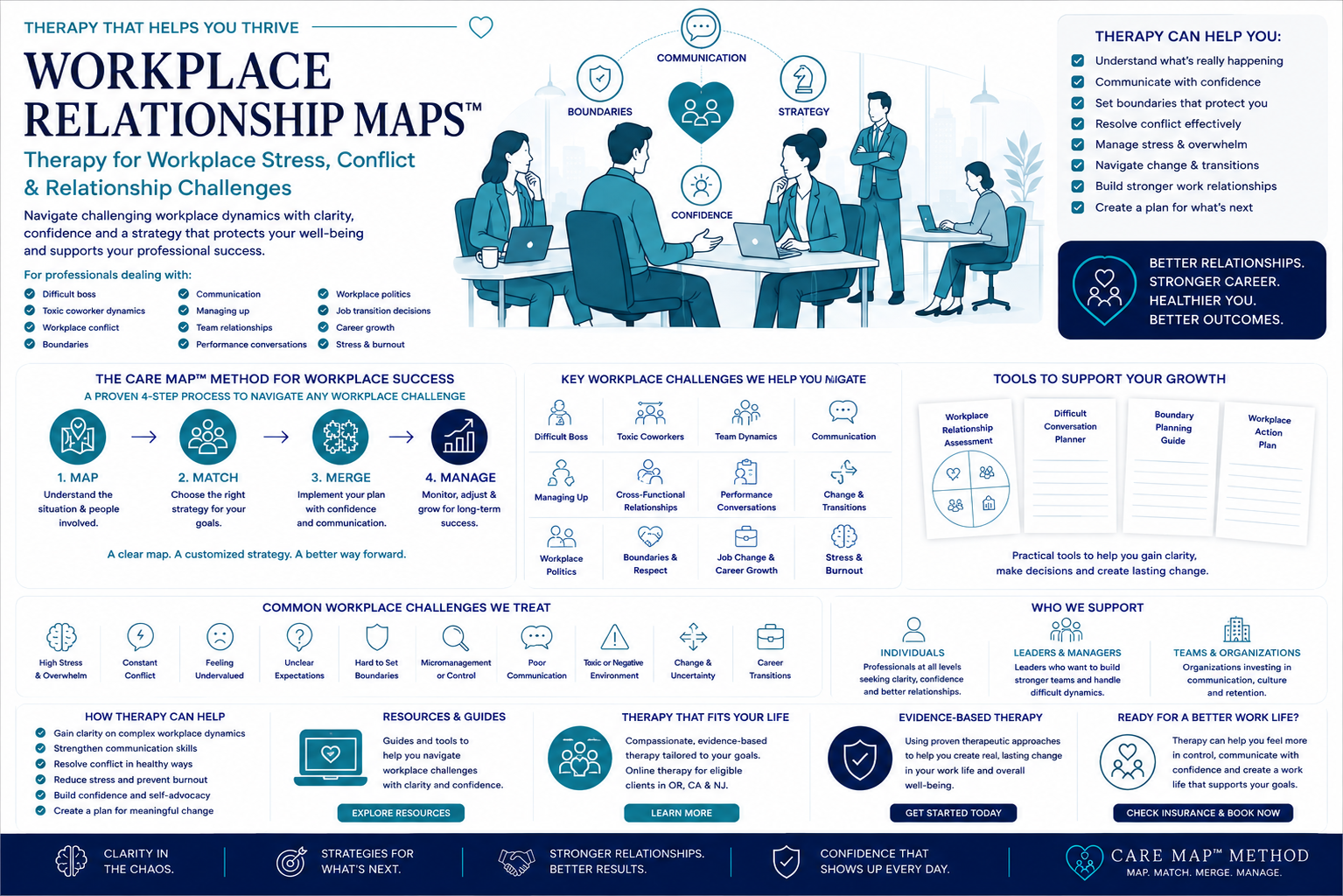
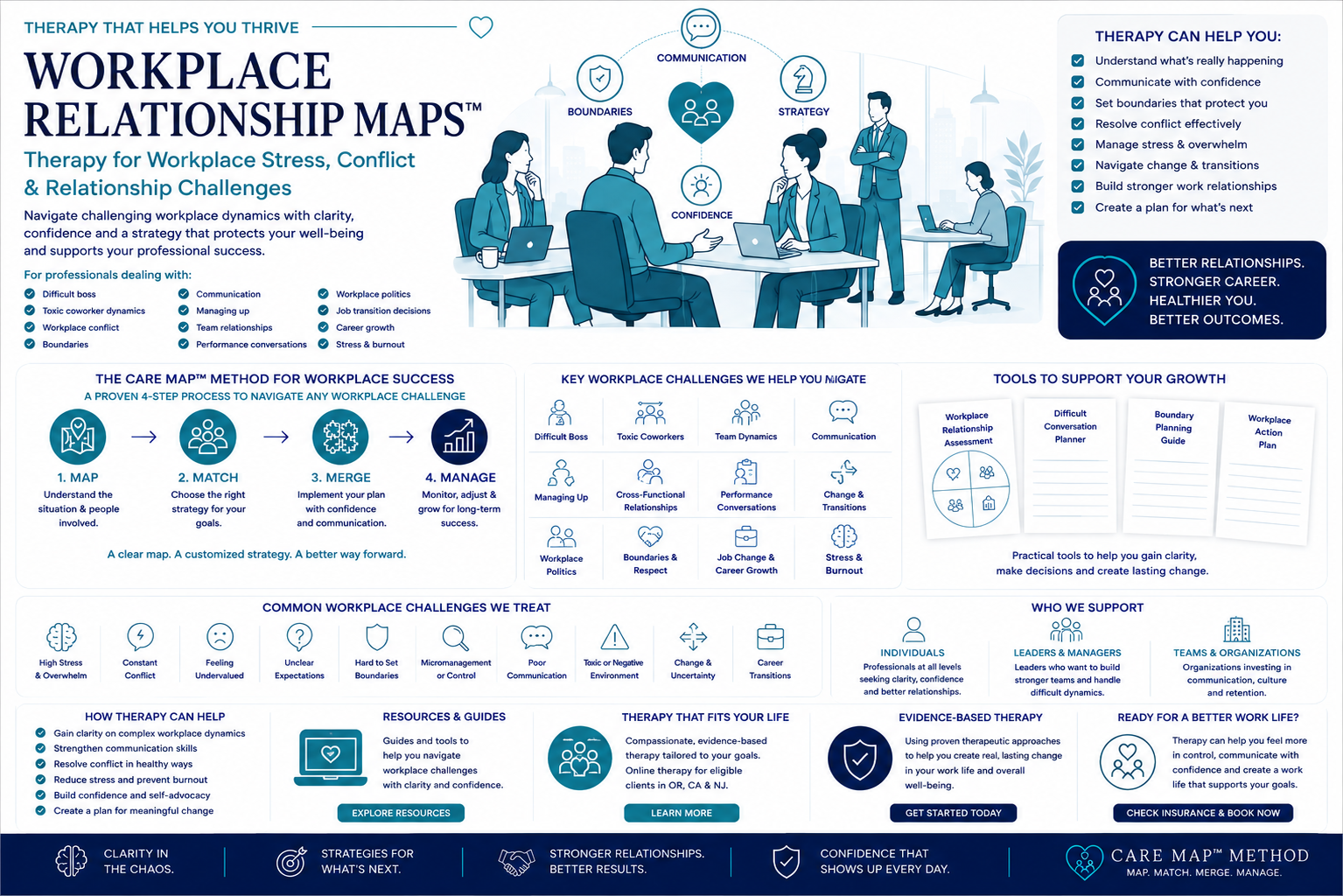
MAP — Identify the people, pressures, triggers, history and emotional impact of the workplace situation.
MATCH — Identify coping strategies, communication approaches, boundaries and decision-making tools that fit the situation.
MERGE — Practice how to apply those strategies in real conversations, meetings, routines and workdays.
MANAGE — Review what changes, what does not, and how you want to respond as the situation evolves.
Why Work With Tammy Gold
Tammy Gold is a licensed therapist, author and nationally recognized parenting, relationship and caregiving expert with more than 20 years of experience helping people navigate complex interpersonal situations. Her Care Map Method™ provides a structured way to organize the people, needs, stressors and choices involved in a real-life problem while keeping psychotherapy individualized to the client.
Insurance & Online Therapy
Online therapy is available for clients located in states where Tammy is licensed and accepting clients. Selected insurance plans are accepted through Headway. Coverage, copays, deductibles, coinsurance and eligibility vary by plan and member.
Use the Headway booking link to check current insurance eligibility and available appointment times. Do not publish contracted reimbursement amounts on the website.
Oregon: Providence Health Plan • Aetna • Regence BlueCross BlueShield of Oregon • Carelon Behavioral Health • Providence Medicare Advantage.
California: Providence Health Plan • Aetna • Carelon Behavioral Health • Anthem Blue Cross California.
New Jersey: Providence Health Plan • Aetna • Carelon Behavioral Health.
Always verify current participation before publishing.
Frequently Asked Questions
Do you offer therapy for problems with a boss or coworker?
Yes. Individual therapy can focus on the emotional and relational impact of a difficult workplace situation, including communication, boundaries, anxiety, burnout, confidence and decision-making.
Can therapy help me decide whether to stay in or leave a job?
Therapy can help you clarify what is driving the decision, identify your priorities, examine recurring patterns and think through the emotional consequences of different options. The decision remains yours.
How can therapy help with workplace boundaries?
Therapy can help you identify where boundaries are unclear, understand why asserting them feels difficult, and develop more sustainable ways to communicate limits while managing the emotions that come with doing so.
Can I use insurance for online therapy?
Selected insurance plans are accepted through Headway. Eligibility and out-of-pocket costs depend on your individual plan. Use the booking link to verify current benefits.
Do you provide online therapy throughout New Jersey, California, or Oregon?
Telehealth sessions are available to appropriate clients located in states where Tammy is licensed and currently accepting clients. Availability can be confirmed through the booking process.
Work problems do not have to occupy every part of your life. If you want a structured place to understand the relationship, reduce the emotional spillover and decide what comes next, check your insurance eligibility and book an online therapy session through Headway.
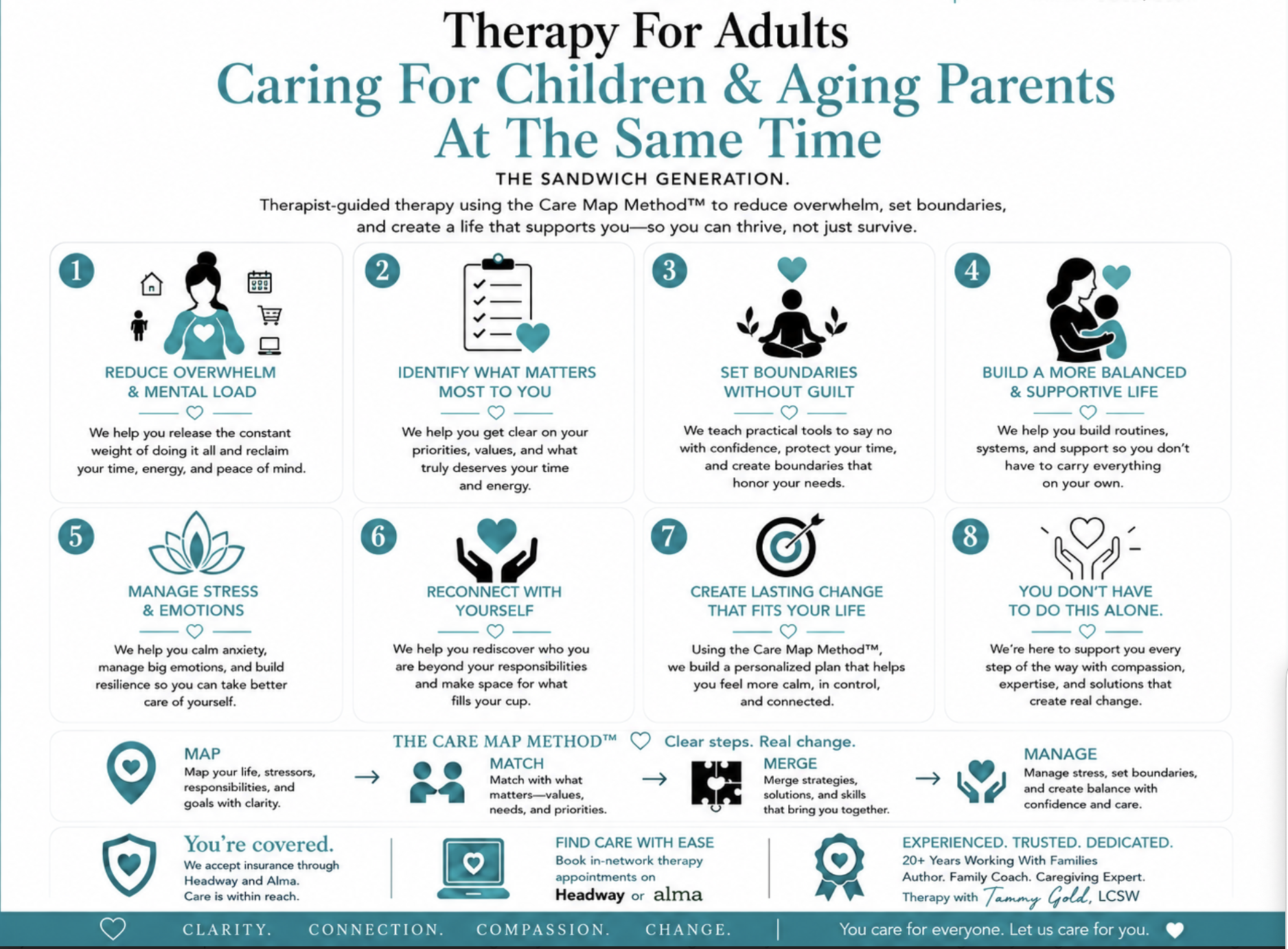
Therapy for Adult Children Caring for Aging Parents While Raising Their Own Family
Therapy for adult children in the sandwich generation who are raising children while caring for aging parents, managing siblings, caregiving decisions and family stress.
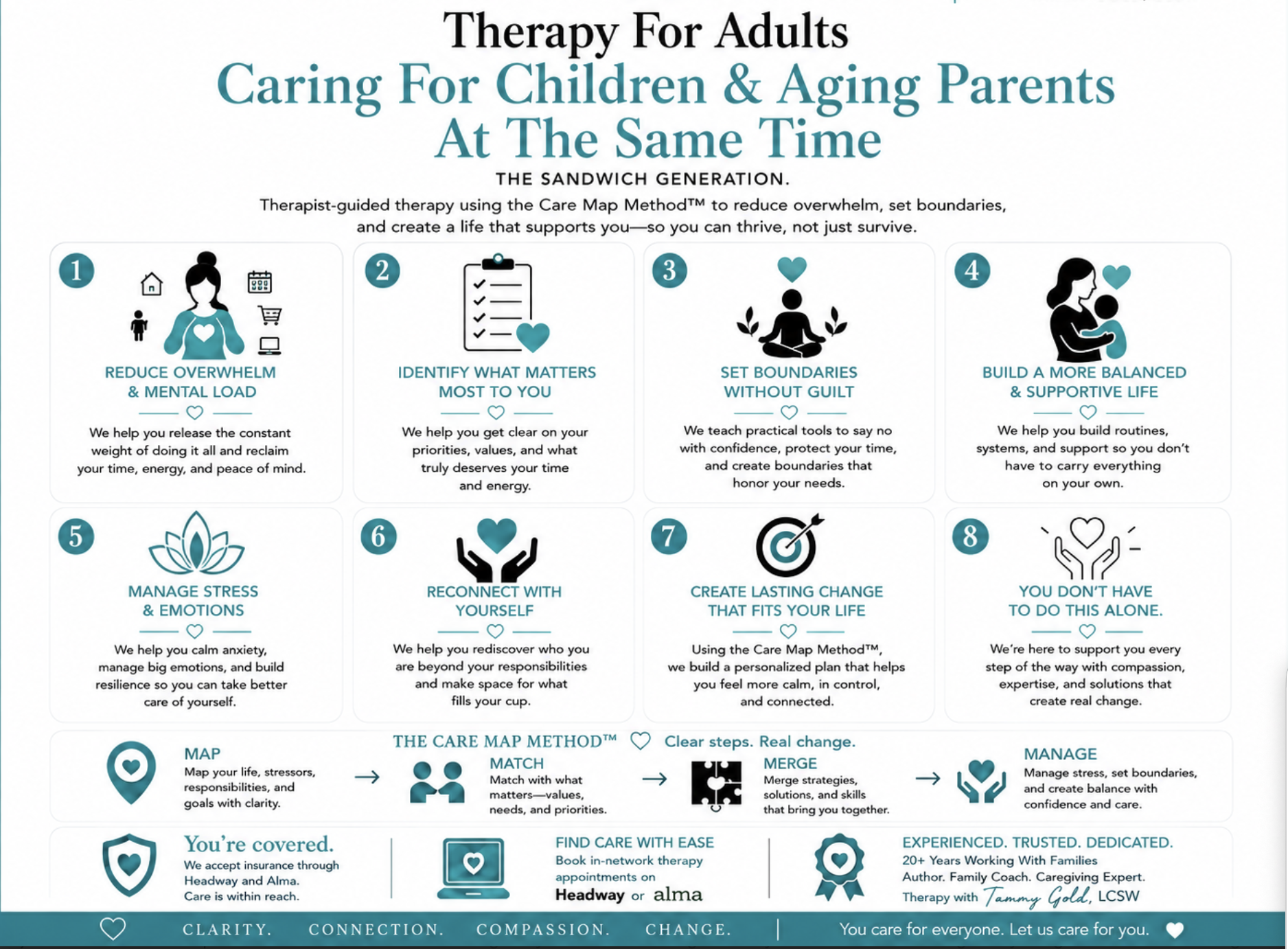
Therapy for Adult Children Caring for Aging Parents While Raising Their Own Family
Caring for aging parents while raising children can create intense emotional pressure. You may be managing your parent’s needs, sibling conflict, eldercare decisions, your own children, work, marriage, finances and the feeling that everyone needs you at once.
I am Tammy Gold, LCSW, a therapist, author and caregiving expert. I offer online therapy for clients in California, New Jersey and Oregon. Depending on your plan and eligibility, insurance may be available through Headway or Alma.
My Psychology Today profile links to booking and insurance options through Headway.
The emotional weight of caregiving
Many adult children feel guilt, resentment, grief, fear, exhaustion and confusion. You may be trying to make good decisions for an aging parent while also feeling pressure from siblings, caregivers, facilities, medical providers or extended family.
Therapy gives you one safe place to talk openly about what you are carrying without being judged.
How the Care Map Method™ helps
Through the Care Map Method™, we Map your parent’s needs and your needs, Match the right supports, Merge communication among family members and care providers, and Manage the plan so it feels more sustainable.
This work combines emotional support with practical problem-solving. The goal is to help you feel less alone, communicate more clearly, set boundaries and make decisions with more steadiness.
Request a session
If you are caring for an aging parent while managing children, work, siblings, marriage or family conflict, visit my Psychology Today profile to request a session. My profile links to booking and insurance options through Headway.
What are common signs of caregiver burnout?
Signs may include exhaustion, irritability, resentment, guilt, sleep problems, reduced concentration, withdrawal, health changes, hopelessness, and feeling unable to keep up with care demands.
How can therapy help caregiver burnout?
Therapy can help caregivers process emotions, identify unsustainable demands, set boundaries, communicate with family, ask for help, and develop a more realistic care plan.
Is it normal to feel resentful while caregiving?
Yes. Resentment can develop when responsibilities are excessive, support is limited, boundaries are unclear, or the caregiver’s own needs are repeatedly postponed. Feeling resentment does not mean you do not love the person.
What if my siblings will not help?
Therapy or coaching can help you clarify what you need, prepare a family conversation, define responsibilities, set limits, and decide what you can realistically continue providing.
How do I know when more professional care is needed?
Consider changes in safety, cognition, mobility, medication, nutrition, hygiene, isolation, wandering, falls, caregiver capacity, and whether current arrangements are sustainable.
Can I care for someone without losing myself?
That is a central goal. Sustainable caregiving requires support, boundaries, realistic expectations, shared responsibility where possible, and attention to the caregiver’s health and identity.
What Care Map worksheet pairs with caregiver burnout?
A Caregiver Burnout Snapshot, Family Capacity Assessment, Weekly Care Plan, Boundary Planner, or Biological-Emotional-Social-Environmental Care Map can help organize the situation.
When is caregiver burnout an emergency?
Seek urgent professional help when there is immediate danger, inability to provide safe care, abuse or neglect concerns, severe medical or psychiatric symptoms, or thoughts of harming yourself or someone else.