

Therapy for Adult Children Caring for Aging Parents While Raising Their Own Family
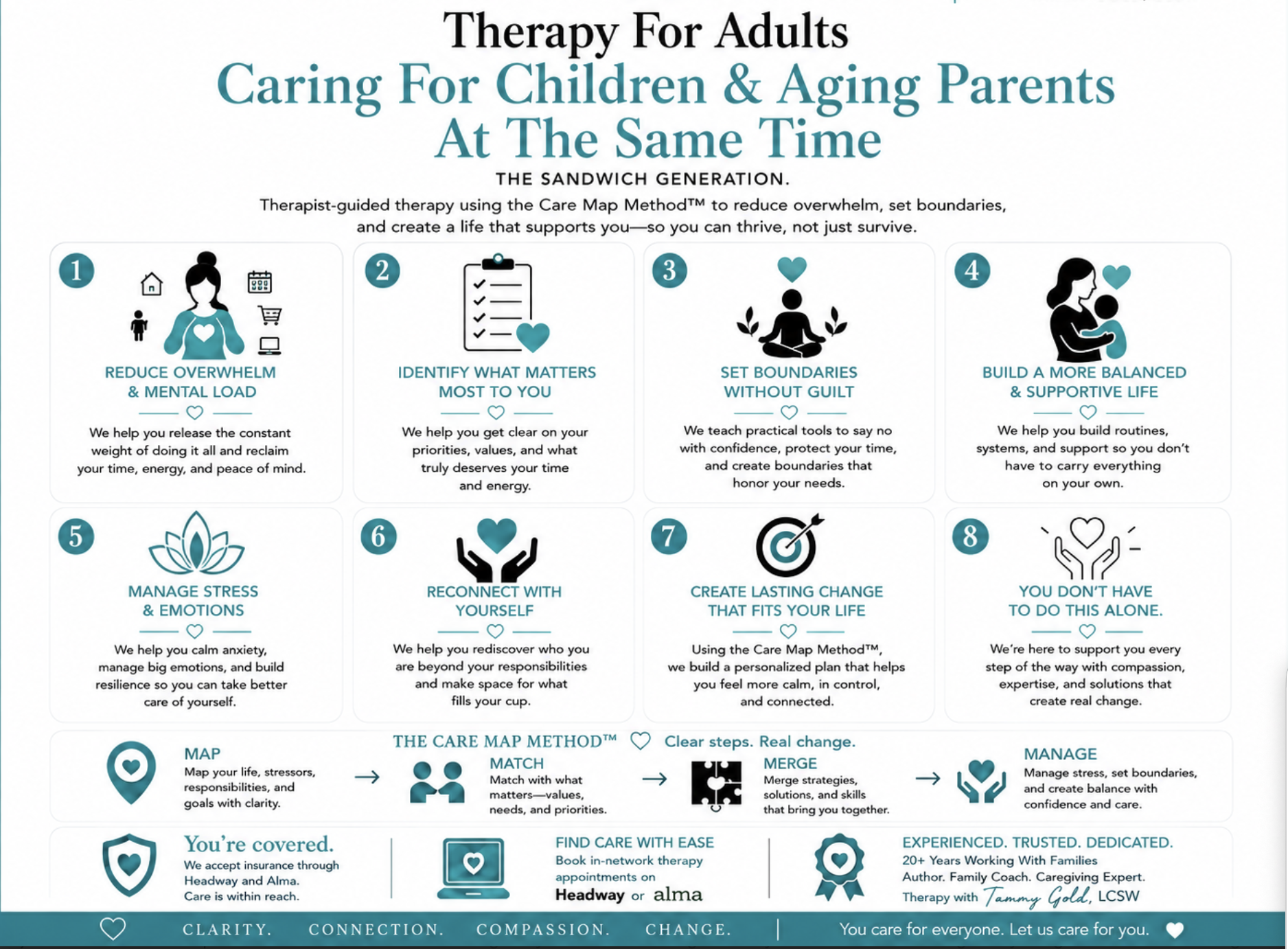
Therapy for Adult Children Caring for Aging Parents While Raising Their Own Family
Caring for aging parents while raising children can create intense emotional pressure. You may be managing your parent’s needs, sibling conflict, eldercare decisions, your own children, work, marriage, finances and the feeling that everyone needs you at once.
I am Tammy Gold, LCSW, a therapist, author and caregiving expert. I offer online therapy for clients in California, New Jersey and Oregon. Depending on your plan and eligibility, insurance may be available through Headway or Alma.
My Psychology Today profile links to booking and insurance options through Headway.
The emotional weight of caregiving
Many adult children feel guilt, resentment, grief, fear, exhaustion and confusion. You may be trying to make good decisions for an aging parent while also feeling pressure from siblings, caregivers, facilities, medical providers or extended family.
Therapy gives you one safe place to talk openly about what you are carrying without being judged.
How the Care Map Method™ helps
Through the Care Map Method™, we Map your parent’s needs and your needs, Match the right supports, Merge communication among family members and care providers, and Manage the plan so it feels more sustainable.
This work combines emotional support with practical problem-solving. The goal is to help you feel less alone, communicate more clearly, set boundaries and make decisions with more steadiness.
Request a session
If you are caring for an aging parent while managing children, work, siblings, marriage or family conflict, visit my Psychology Today profile to request a session. My profile links to booking and insurance options through Headway.
What are common signs of caregiver burnout?
Signs may include exhaustion, irritability, resentment, guilt, sleep problems, reduced concentration, withdrawal, health changes, hopelessness, and feeling unable to keep up with care demands.
How can therapy help caregiver burnout?
Therapy can help caregivers process emotions, identify unsustainable demands, set boundaries, communicate with family, ask for help, and develop a more realistic care plan.
Is it normal to feel resentful while caregiving?
Yes. Resentment can develop when responsibilities are excessive, support is limited, boundaries are unclear, or the caregiver’s own needs are repeatedly postponed. Feeling resentment does not mean you do not love the person.
What if my siblings will not help?
Therapy or coaching can help you clarify what you need, prepare a family conversation, define responsibilities, set limits, and decide what you can realistically continue providing.
How do I know when more professional care is needed?
Consider changes in safety, cognition, mobility, medication, nutrition, hygiene, isolation, wandering, falls, caregiver capacity, and whether current arrangements are sustainable.
Can I care for someone without losing myself?
That is a central goal. Sustainable caregiving requires support, boundaries, realistic expectations, shared responsibility where possible, and attention to the caregiver’s health and identity.
What Care Map worksheet pairs with caregiver burnout?
A Caregiver Burnout Snapshot, Family Capacity Assessment, Weekly Care Plan, Boundary Planner, or Biological-Emotional-Social-Environmental Care Map can help organize the situation.
When is caregiver burnout an emergency?
Seek urgent professional help when there is immediate danger, inability to provide safe care, abuse or neglect concerns, severe medical or psychiatric symptoms, or thoughts of harming yourself or someone else.