

Therapy for Caregiver Guilt in Oregon
Feeling guilty about limits or senior-care decisions? Explore individual online therapy in Oregon and check Providence Health Plan eligibility through Headway.
You know you cannot do everything your parent needs. Still, saying no, hiring help, or considering a different care setting can feel like a betrayal. You may be judging yourself for limits that are necessary.
I am Tammy Gold, LCSW. I offer individual online therapy for adults located in Oregon. Providence Health Plan appears on my Headway profile; please check your exact plan and eligibility before booking.
Check insurance and booking through Headway
Separate the care need from the guilt
Guilt can sound like a clear instruction: “A good daughter would do more.” In therapy, we can slow that thought down. What does your parent need? What can you provide safely and sustainably? What support is missing? We can explore the emotional distress around caregiving without assuming every request must become your responsibility.
Make room for a difficult decision
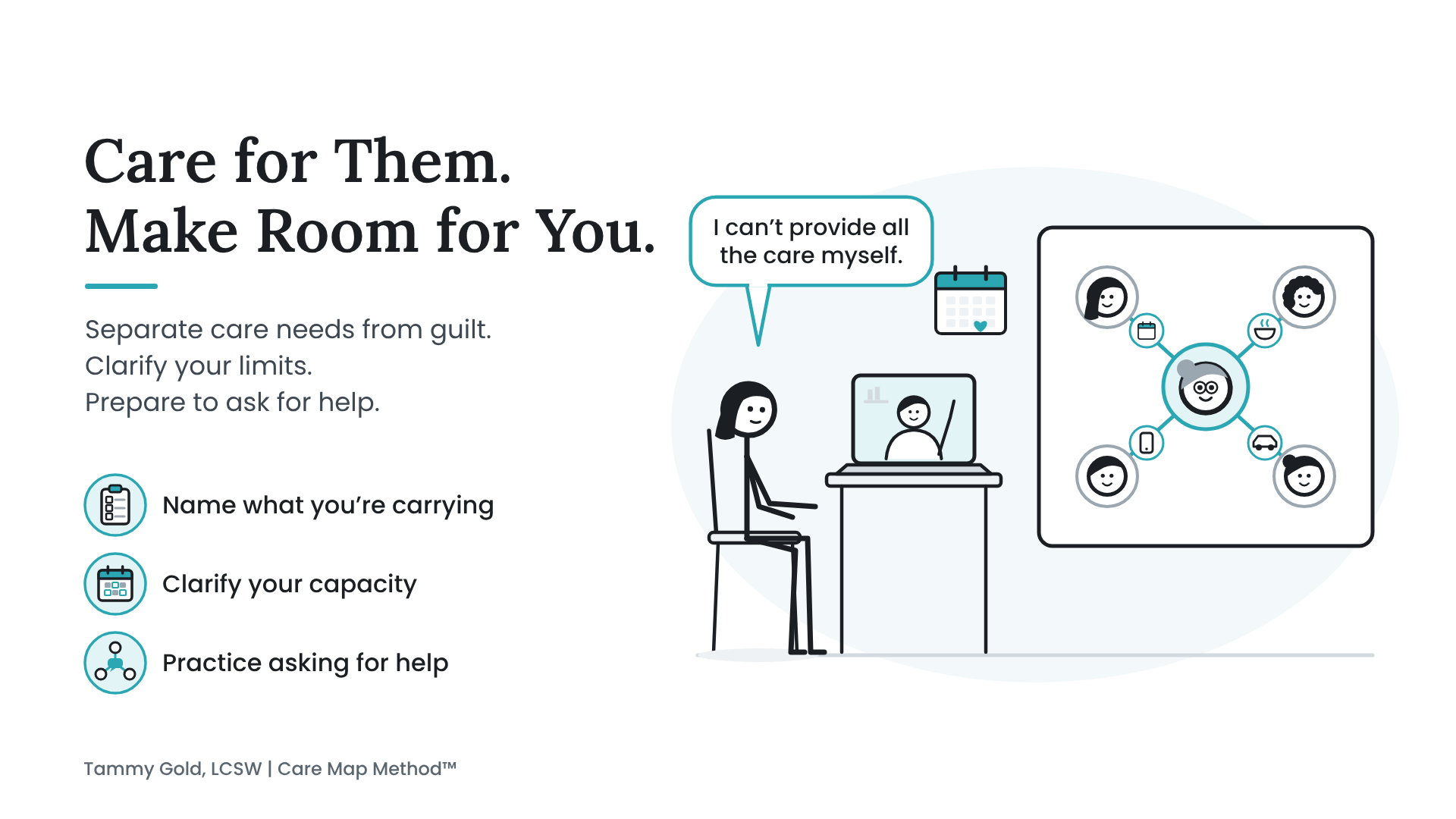
You may be balancing your parent’s wishes with your health, children, work, and finances. We can help you prepare conversations, tolerate disagreement, and recognize the grief that sometimes comes with changing a care arrangement. A useful starting point is: “I want you to have reliable care, and I cannot provide all of that care myself.”
Use the map to make your capacity visible
The Care Map Method™ helps us Map Biological, Emotional, Social, and Environmental needs for you and the care situation, Match those needs with realistic support, Merge clearer communication into the plan, and Manage your emotional response as circumstances change. Psychotherapy addresses your mental health; medical and care-placement decisions may also require other professionals.
What we would explore in your first session
We can start with the decision or request you keep replaying. Perhaps your parent wants daily visits, a sibling expects you to coordinate everything, or you feel guilty about considering assisted living. We would discuss your emotional symptoms, relevant history, and the effect of caregiving on your own life. It helps to understand your actual responsibilities and support network before deciding what to work on. You can attend even if other family members disagree about the care plan.
An example of separating love from capacity
Imagine that you are handling appointments and evening calls while also managing work and your household. We might list the responsibilities you carry and identify what happens when you reach your limit. A conversation could begin: “I can coordinate this appointment, but I cannot also provide every evening visit. We need another arrangement for that.” This is an illustrative exercise, not a client story. We would also work on the guilt or fear that appears after you state the limit.
Try a brief responsibility inventory
On a piece of paper, list what you currently do, how often it happens, and which tasks require another person’s help or professional input. Include the time spent worrying and organizing, not only hands-on care. Then circle the responsibility that feels least sustainable. Bring the list to therapy so we can explore the emotional pressure around it and identify a realistic next conversation. A therapist can support your decision-making without replacing your parent’s medical team or a qualified care coordinator.
How we review progress
We can look at whether you recognize overload earlier, accept appropriate help, or feel more able to rest without immediately criticizing yourself. We can also make room for sadness about your parent’s changing needs. A revised care arrangement may still feel painful even when it is necessary. Therapy gives you a place to process that experience and revisit boundaries as circumstances change.
About Tammy Gold
I am Tamara “Tammy” Gold, MSW, LCSW, CEC, a licensed therapist and certified coach with a clinical MSW from Columbia University. I founded the Care Map Method™ and have more than 20 years of direct work with families. These sessions focus on your individual mental health and treatment goals.
Take the next step
If this concern is affecting your daily life, view my profile to explore fit and current booking options. Check your exact plan and estimated costs before scheduling. You can also read the online therapy booking guide for help choosing a platform.
Check insurance and booking through Headway
Read the online therapy booking guide
Frequently asked questions
Can therapy help if my parent refuses outside help?
We can work on your distress, boundaries, communication, and decisions even when your parent does not agree with you.
Does Providence cover caregiver support?
Coverage depends on your plan and the clinical purpose of treatment. Individual psychotherapy for a caregiver is different from nonclinical care coordination or placement services. Verify benefits through Headway.
Do you choose a facility or arrange staffing during therapy?
This page offers individual psychotherapy. Care selection, staffing, and coaching are separate services and should not be assumed to be covered by therapy insurance.
Is it okay to seek therapy if my parent is the person who is ill?
Yes. The effect of caregiving on your own mental health deserves attention. We would assess your symptoms and treatment needs rather than assume your parent must attend.
Can we discuss conflict with siblings about care?
Yes. We can explore your distress and responses, practice a clearer request, and identify responsibilities you can realistically take on. Individual therapy does not require your siblings to participate.
Will therapy make the guilt disappear?
No particular outcome is guaranteed. We can work on understanding the guilt, responding to it more thoughtfully, and making decisions that take your own capacity into account.