

Individual Therapy for Relationship Stress After a Baby in California
Feeling disconnected or resentful after a baby? Explore individual online therapy in California and check Blue Shield of California benefits through Headway.
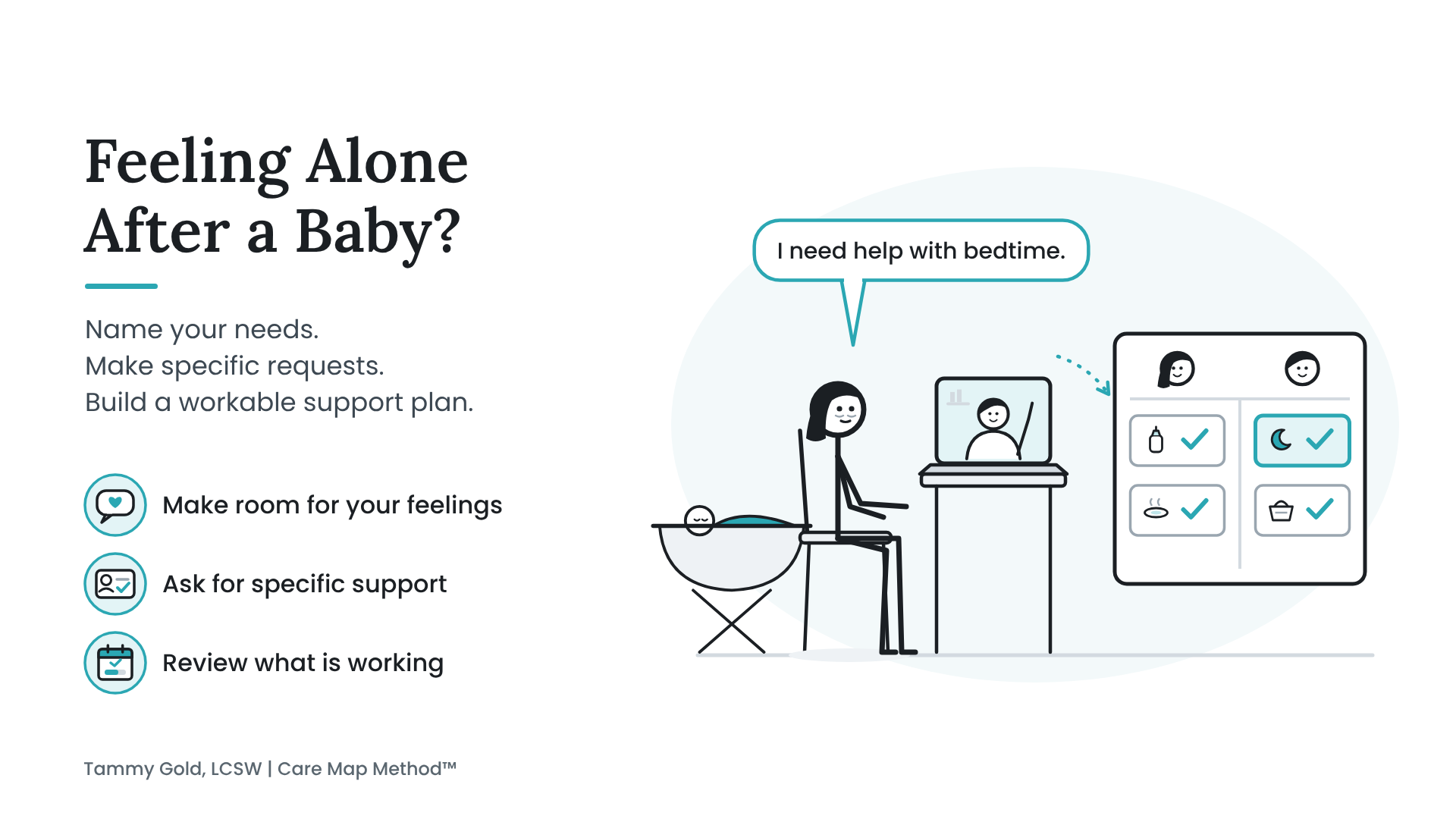
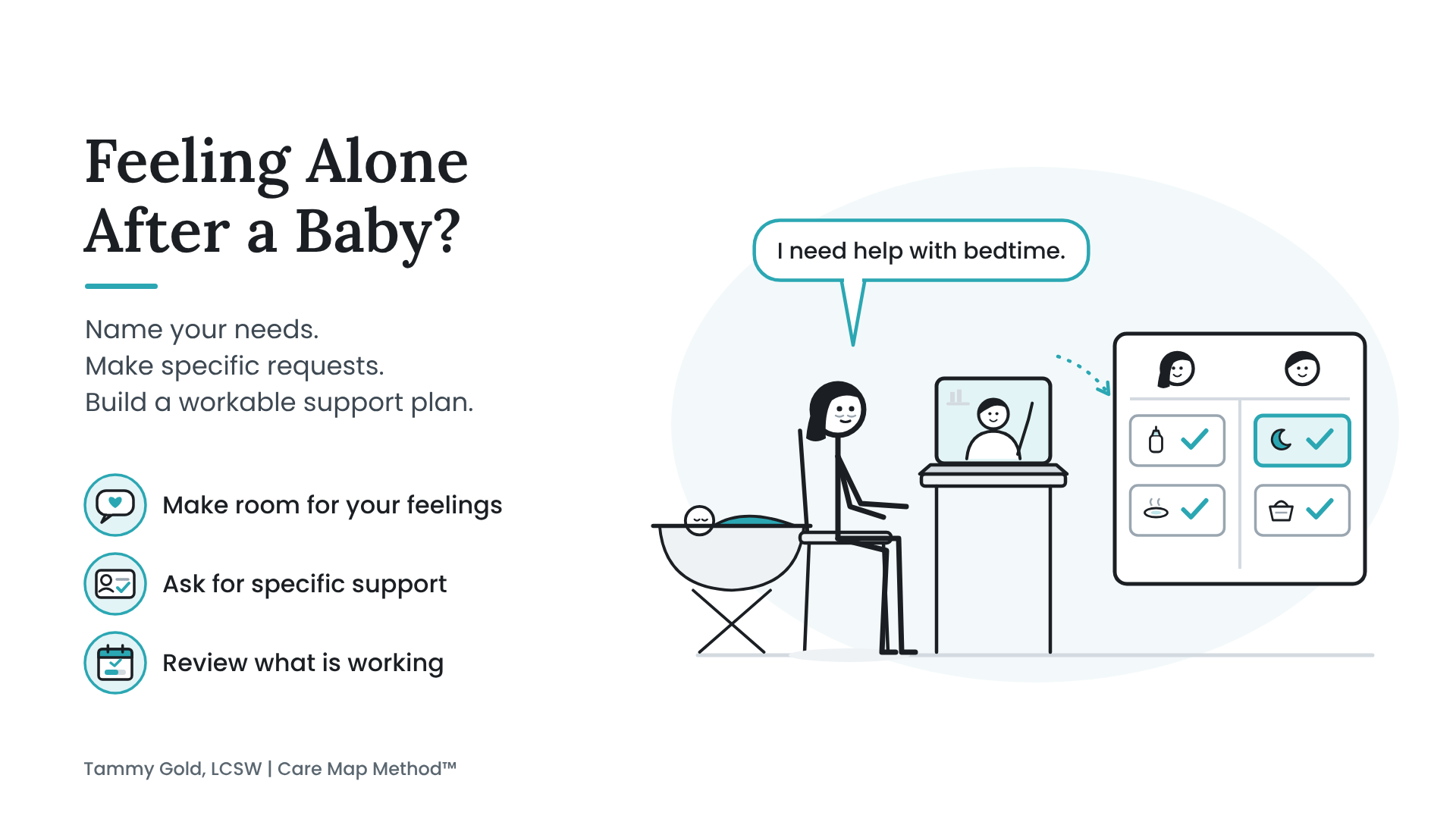
Illustration of new parents discussing support and shared responsibilities after a baby.
You expected life to change after a baby. You may not have expected to feel so alone beside your partner. Small disagreements about feeding, chores, visitors, or sleep can become arguments about whether you matter.
I am Tammy Gold, LCSW. I offer individual online therapy for adults located in California. Blue Shield of California appears on my Headway profile; please check your exact plan and eligibility before booking.
Check insurance and book through Headway
Make room for your own experience
You can love your baby and feel angry, lonely, or overwhelmed. Therapy gives you space to talk about changes in your relationship and identity without having to reassure everyone else first. We can assess your emotional symptoms and how they are affecting daily life, then decide what kind of support fits.
Move from a running argument to a specific request
“You never help” may express a real hurt, but it does not tell the other person what needs to change tonight. We can work on naming the task, the responsibility, and the follow-through you need. A starting sentence might be: “I need you to handle the bedtime routine on these two nights, including getting everything ready.” We can also explore what it means if clear requests repeatedly go unanswered.
Look at the whole picture
The Care Map Method™ helps us Map the emotional and practical strain, Match needs with realistic support, Merge that support into routines and conversations, and Manage adjustments. Biological, Emotional, Social, and Environmental needs all matter: your rest, feelings, support network, and household demands deserve attention.
What we would explore in your first session
We can begin with the moment that feels hardest: evenings, overnight responsibilities, returning to work, or watching your partner relax while you keep track of everything. We would discuss your emotional symptoms, relevant history, and how life has changed since the baby arrived. Your goal might be making a clear request, having space to process resentment, or feeling more like yourself. We can also discuss whether additional medical or mental health support is appropriate for your needs.
Make the invisible work easier to name
It can be difficult to explain why one household task feels exhausting when you are also remembering appointments, tracking supplies, and anticipating the next need. We can identify which parts of a task you carry: noticing it, planning it, doing it, and checking that it happened. In a session, we might practice asking another adult to take responsibility for the whole task. That conversation can make the request more specific and help us understand what happens when responsibility remains uneven.
A practical conversation to bring to therapy
Choose one repeated point of friction and write down what actually happens. For example: “At bedtime I prepare the supplies, do the routine, and clean up afterward. I want to discuss who owns this routine on particular nights.” Add how the situation affects you and what support you would like. We can use this as a starting point, explore your partner’s response, and adapt the request to your circumstances. You do not need to solve the entire division of labor in one conversation.
How we review progress
We can track whether you identify your feelings earlier, ask for support more directly, or recover from disagreements with less rumination. We may also revisit expectations that leave you feeling guilty about resting. If communication tools do not change an ongoing pattern, we can explore your options and support needs. Therapy cannot promise another person’s cooperation, but it can help you understand your experience and choose your next steps.
About Tammy Gold
I am Tamara “Tammy” Gold, MSW, LCSW, CEC, a licensed therapist and certified coach with a clinical MSW from Columbia University. I founded the Care Map Method™ and have more than 20 years of direct work with families. These sessions focus on your individual mental health and treatment goals.
Take the next step
If this concern is affecting your daily life, view my profile to explore fit and current booking options. Check your exact plan and estimated costs before scheduling. You can also read the online therapy booking guide for help choosing a platform.
Check insurance and booking through Headway
Is this therapy for me or for my baby?
This page describes individual therapy for an adult parent. Sessions focus on your mental health, relationships, and adjustment.
Can Blue Shield of California cover these sessions?
Your plan, provider eligibility, and clinical requirements determine coverage. Verify your exact benefits through my Headway profile before booking.
Is this the same as couples counseling?
No. Individual therapy focuses on your treatment. If you want joint sessions, we can discuss fit and check their coverage separately.
Can I attend if my partner does not want therapy?
Yes. These sessions focus on your individual mental health, decisions, and responses. We can explore relationship stress even if your partner is not participating.
Do I need to be a first-time parent?
No. You can seek support after another baby or during a later adjustment in parenting. We would assess your current needs and whether my approach is a good fit.
How do we know whether therapy is helping?
We can choose specific goals together and review changes in your daily experience, communication, and coping. We can adjust the plan when a strategy feels unrealistic or unhelpful.