

Care Map Method therapy for job burnout, work stress, boundaries and career decisions
Burnout can make everything look like a personal failure
When you are exhausted, it is easy to conclude that you need to become more efficient, resilient or disciplined. Sometimes the real problem is chronic overload, unclear priorities, a difficult manager, weak boundaries or a role that no longer fits.
We map the stress instead of calling all of it burnout
What happens on Sunday night? Which meetings create dread? When do you work beyond your capacity? What are you afraid will happen if you say no? The answers point toward different interventions.
Therapy can address both the workplace and your response to it
You may not control organizational decisions, but you can work on communication, perfectionism, over-responsibility, conflict, recovery time and decision-making.
Care Map Method™
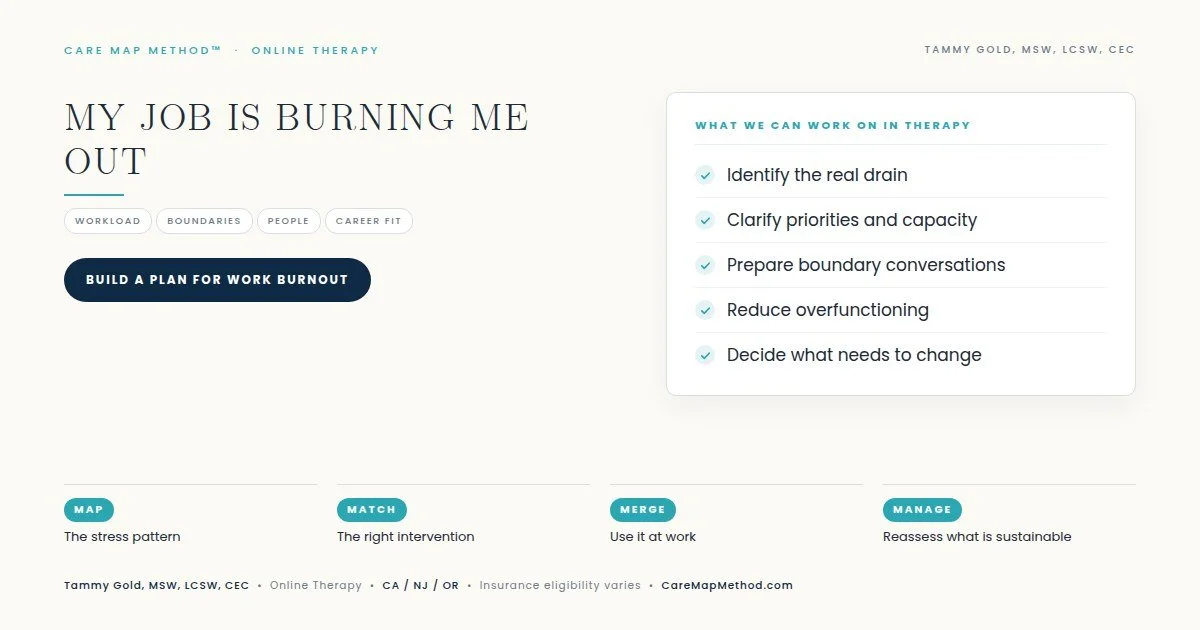
MAP the workload, relationships, triggers and costs. MATCH each problem with the right strategy—boundary, communication, prioritization, coping or career decision. MERGE the strategy into actual work conversations and routines. MANAGE the results and reassess what remains unsustainable.
The goal is not to teach you to tolerate an intolerable situation
Sometimes therapy helps people stay differently; sometimes it helps them recognize that the environment is not changing. Either way, clarity is more useful than simply trying harder.
What We Can Work On In Our Session:
Identify what is actually draining you
Separate workload from people and boundary problems
Reduce all-or-nothing overfunctioning
Prepare conversations about priorities and capacity
Clarify whether the job needs adjustment—or a larger change
Care Map Method™
MAP the problem and pattern. MATCH the needs with the right clinical strategies. MERGE insight into real conversations, boundaries and behavior. MANAGE what happens next and adjust as the situation changes.
How do I know if I am burned out or just tired?
Burnout is commonly associated with sustained work stress, exhaustion and reduced effectiveness or detachment. Because fatigue can also have medical and psychiatric causes, persistent or severe symptoms deserve appropriate professional evaluation.
Can therapy help if the job itself is the problem?
Yes. Therapy can help you identify what is controllable, prepare workplace conversations, set boundaries, manage stress and make clearer decisions about staying or leaving.
What if I cannot afford to quit?
Therapy does not require an immediate career exit. We can work on reducing harm and increasing clarity while respecting financial and practical realities.
Can therapy help me stop thinking about work at night?
We can address the triggers, unfinished-task loops, anxiety, boundaries and routines that keep work mentally active after hours.
What if I am the person everyone relies on?
That role can become rewarding and exhausting at the same time. We can examine over-responsibility, delegation, guilt and what happens when you are not immediately available.
Will you tell me to quit my job?
No. The purpose is to help you understand the situation, your needs and your options so that you can make your own informed decision.
BUILD A PLAN FOR WORK BURNOUT 818.308.1538
Check insurance eligibility and request an online therapy appointment. Therapy is available to eligible clients in California, New Jersey and Oregon; coverage and benefits vary by plan.