The First 30 Days Matter: How to Successfully Onboard a New Caregiver
Successful caregiving doesn't happen by chance.
It happens when families intentionally prepare caregivers for success.
A thoughtful onboarding process transforms a new caregiver into a trusted member of the care team.
At Care Map Method™, our MERGE Coaching Session provides the tools, structure, and guidance to help families create confident, collaborative caregiving relationships.
Finding the right caregiver is a tremendous accomplishment—but hiring someone is only half of the process.
Many families assume that once the caregiver starts, everything will naturally fall into place. In reality, the first month often determines whether a caregiving relationship becomes successful or stressful.
At Care Map Method™, we call this the MERGE phase.
MERGE is where families and caregivers build trust, establish expectations, and create a plan for working together before misunderstandings develop.
Without a thoughtful onboarding process, even an exceptional caregiver can struggle.
Why Caregiver Onboarding Matters
Every family has its own routines.
Every senior has unique preferences.
Every caregiver arrives with different experiences.
If these expectations are never discussed, problems quickly emerge.
Common issues include:
Different expectations about responsibilities
Communication breakdowns
Family disagreements
Missed medications or appointments
Confusion over schedules
Burnout for both caregiver and family
A structured onboarding process dramatically reduces these risks.
The MERGE Process
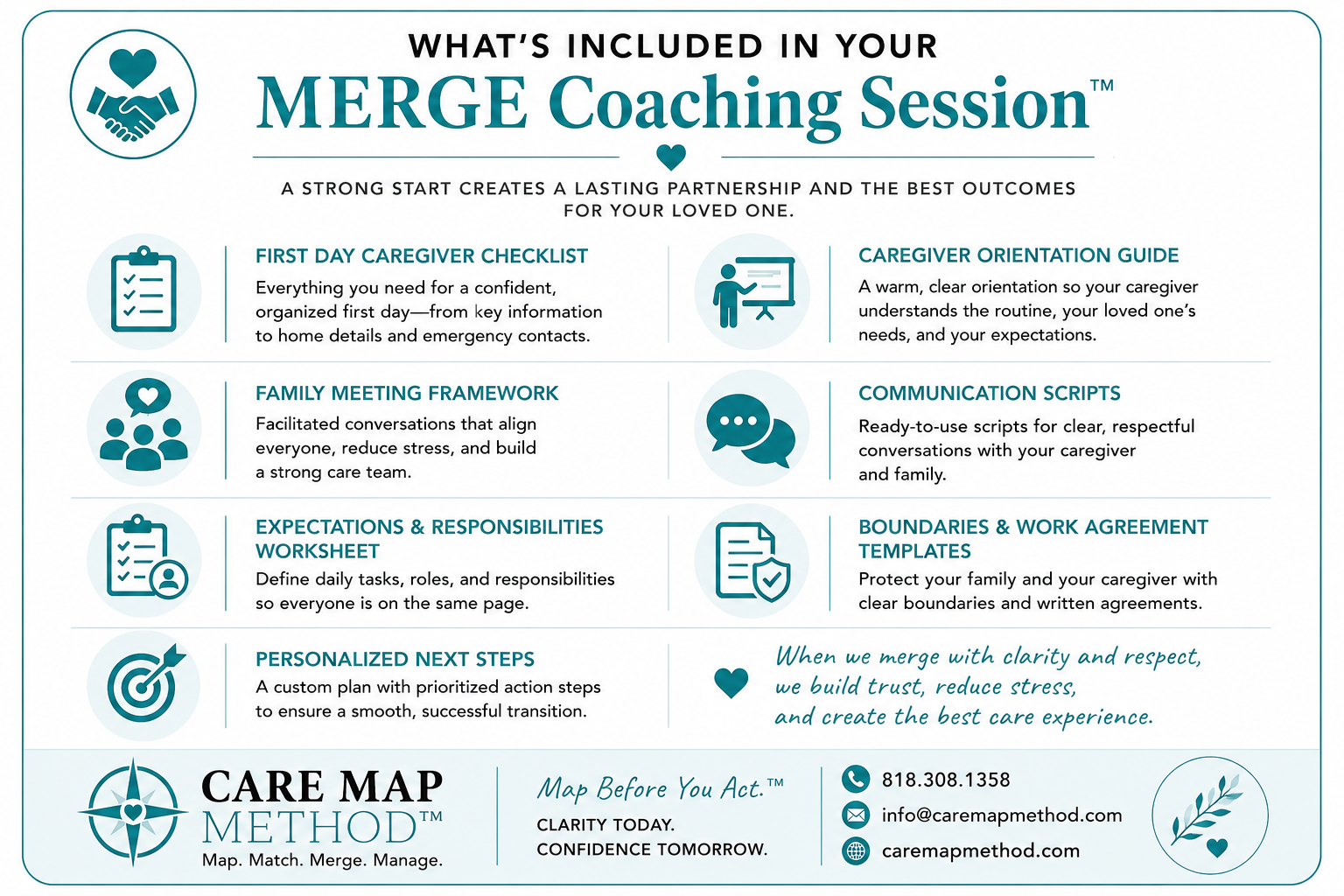
During a Care Map Method™ MERGE Session, we help families create a smooth transition using seven essential components.
First Day Checklist
Before the caregiver arrives, families prepare:
Emergency contacts
Medication lists
Home safety information
Daily routines
House rules
Important phone numbers
Everyone begins with the same information.
Caregiver Orientation
Rather than expecting caregivers to "figure it out," we provide a clear orientation that covers:
Medical needs
Mobility assistance
Meal preferences
Communication style
Personal routines
Family expectations
This builds confidence from day one.
Family Meetings
Caregiving works best when everyone communicates openly.
We facilitate conversations that align:
Adult children
Spouses
Paid caregivers
Physicians
Other family members
Everyone understands the care plan and their role.
Communication Scripts
Many families avoid difficult conversations until frustration builds.
We provide respectful scripts for discussing:
Performance concerns
Schedule changes
Requests
Appreciation
Feedback
Difficult situations
Clear communication prevents resentment.
Expectations & Roles
One of the biggest causes of caregiver turnover is unclear expectations.
Together we define:
Daily responsibilities
Weekly responsibilities
Transportation
Meal preparation
Personal care
Household duties
Documentation
Clarity creates consistency.
Healthy Boundaries
Professional caregiving requires compassion and boundaries.
We help families establish guidelines for:
Work hours
Personal privacy
Financial requests
Family involvement
Time off
Decision-making
Healthy boundaries protect everyone.
Work Agreements
A written agreement minimizes confusion.
Topics include:
Schedule
Compensation
Duties
Communication
Emergencies
Time off
Performance reviews
Everyone knows what success looks like.
The Benefits of a Structured MERGE Process
Families often report:
Less stress
Better communication
Fewer conflicts
More caregiver confidence
Greater consistency
Improved quality of care
Longer caregiver retention
When expectations are clear, relationships become stronger.
Caregiving Is a Partnership
Successful caregiving doesn't happen by chance.
It happens when families intentionally prepare caregivers for success.
A thoughtful onboarding process transforms a new caregiver into a trusted member of the care team.
At Care Map Method™, our MERGE Coaching Session provides the tools, structure, and guidance to help families create confident, collaborative caregiving relationships.

Caregiver Burnout: 15 Warning Signs and What to Do Before You Reach a Breaking Point
Feeling exhausted while caring for an aging parent? Learn the warning signs of caregiver burnout and discover practical tools to reduce stress and build a sustainable care plan.
Caregiver Burnout: 15 Warning Signs and What to Do Before You Reach a Breaking Point
Caregiver Burnout: 15 Warning Signs and What to Do Before You Reach a Breaking Point
Caring for an aging parent or loved one is one of the most meaningful roles many people will ever have. It can also be one of the most emotionally, physically, and mentally demanding.
Many family caregivers quietly carry the weight of coordinating appointments, managing medications, communicating with siblings, handling finances, and balancing careers and children—all while trying to ensure their loved one feels safe and supported.
Over time, these responsibilities can lead to caregiver burnout, a state of chronic stress that affects health, relationships, decision-making, and overall quality of life.
At Care Map Method™, we believe that caregivers deserve support too. Recognizing the warning signs early can help you create a healthier, more sustainable care plan for both you and your loved one.
What Is Caregiver Burnout?
Caregiver burnout is a state of physical, emotional, and mental exhaustion caused by the ongoing demands of caring for another person.
Unlike occasional stress, burnout develops gradually. Many caregivers don't realize how overwhelmed they've become until they feel emotionally depleted or physically unwell.
Burnout isn't a sign of weakness or lack of love—it often reflects the reality of trying to do too much without enough support.
15 Warning Signs of Caregiver Burnout
1. You're constantly exhausted, even after sleeping.
2. You feel guilty whenever you take time for yourself.
3. Small problems trigger big emotional reactions.
4. You're becoming forgetful or having trouble concentrating.
5. You feel isolated from friends or family.
6. Your own medical appointments keep getting postponed.
7. Anxiety feels constant.
8. You have difficulty sleeping.
9. You feel resentful about caregiving responsibilities.
10. You rarely enjoy activities that once made you happy.
11. You feel like you're "doing everything."
12. Family disagreements are increasing.
13. Your physical health is declining.
14. You feel trapped or hopeless.
15. You don't know where to begin asking for help.
If several of these sound familiar, it may be time to step back and reassess your caregiving plan.
Why Planning Reduces Burnout
One of the biggest contributors to caregiver stress is uncertainty.
Questions like:
Am I making the right decisions?
Is Mom safe at home?
Should we hire help?
What happens next?
How do I get my siblings involved?
can create constant mental overload.
Having a structured care plan reduces decision fatigue and helps families move from reacting to planning.
The Care Map Method™ Approach
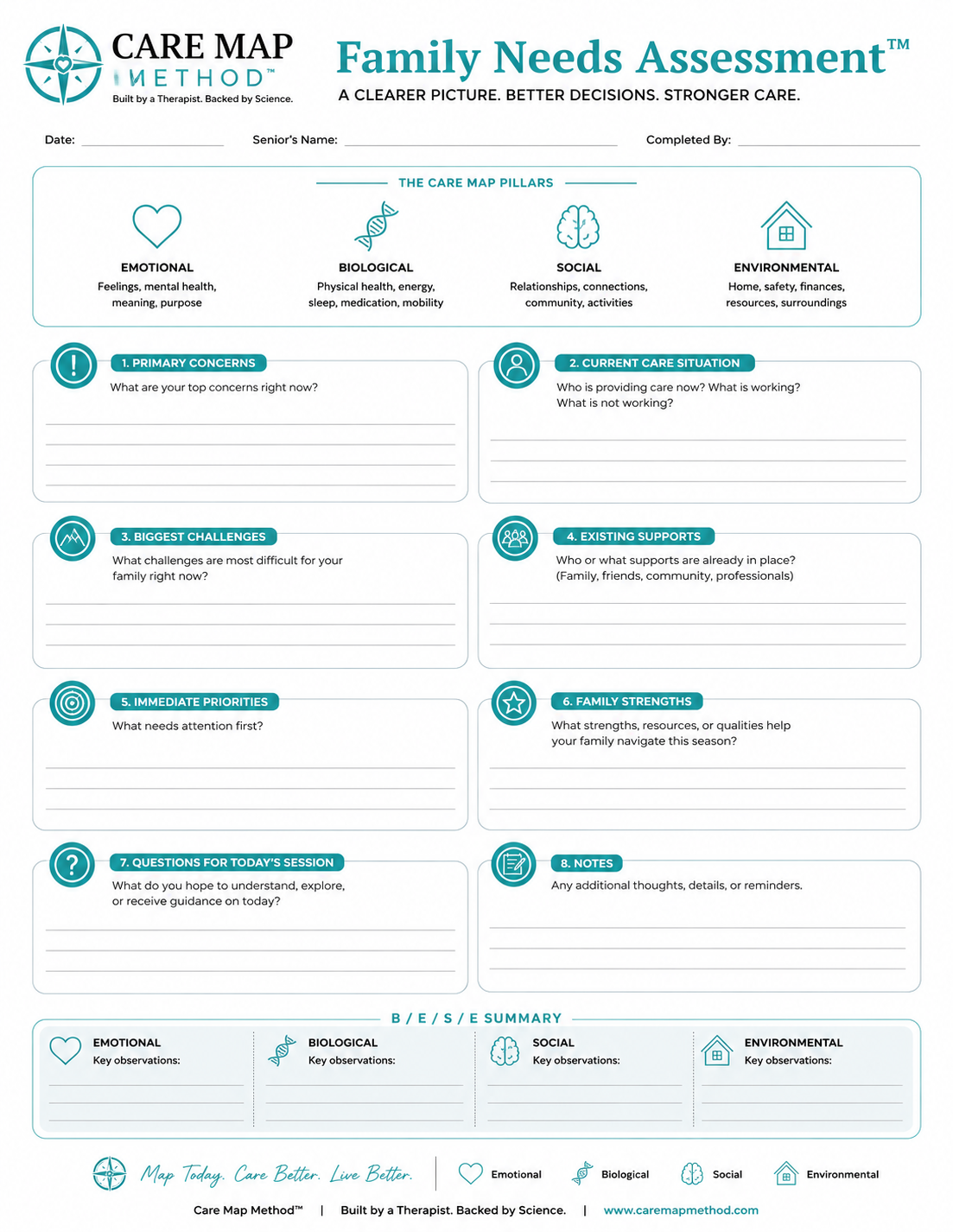
Our therapist-developed Care Map Method™ organizes caregiving into four essential pillars:
Biological
Medical needs, medications, nutrition, mobility, sleep, and overall physical health.
Emotional
Mental health, coping skills, relationships, grief, resilience, and emotional support.
Social
Family communication, community resources, friendships, caregiving roles, and social connection.
Environmental
Home safety, transportation, accessibility, financial planning, and daily routines.
Looking at all four areas together helps families identify gaps before they become crises.
When Is It Time to Ask for Help?
Many caregivers wait until they're overwhelmed before reaching out.
Support can be valuable much earlier.
Working with a therapist or caregiver coach can help you:
Organize priorities.
Improve family communication.
Reduce stress.
Clarify care options.
Create a realistic care plan.
Prevent burnout before it worsens.
What You'll Receive During a Care Map Method™ Caregiver Support Session
When you schedule a Care Map Method™ coaching session, you'll receive practical tools designed to help you feel more organized and confident, including:
Family Needs Assessment
Caregiver Burnout Assessment
Biological, Emotional, Social & Environmental Care Map
Family Communication Scripts
Weekly Care Planning Worksheet
Personalized Action Plan
These resources are designed to support both the caregiver and the entire family system.
You Don't Have to Do This Alone
Supporting an aging parent is a journey, and no one should feel they have to navigate it without guidance.
Whether you're just beginning to notice signs of stress or you're already feeling overwhelmed, taking one small step toward creating a clear care plan can make a meaningful difference.
Caregiver burnout is not a personal failure—it's a sign that the caregiver needs care too.
Call to Action
Ready to create a personalized care plan?
Schedule a Care Map Method™ Caregiver Support Session to receive practical guidance, therapist-developed tools, and a customized plan that helps you care with greater confidence while protecting your own well-being.