Hiring a nanny is only the beginning.
Even an experienced nanny has never worked with your child, your home, your routines, and your family's expectations. Effective nanny training helps turn general childcare experience into individualized care.
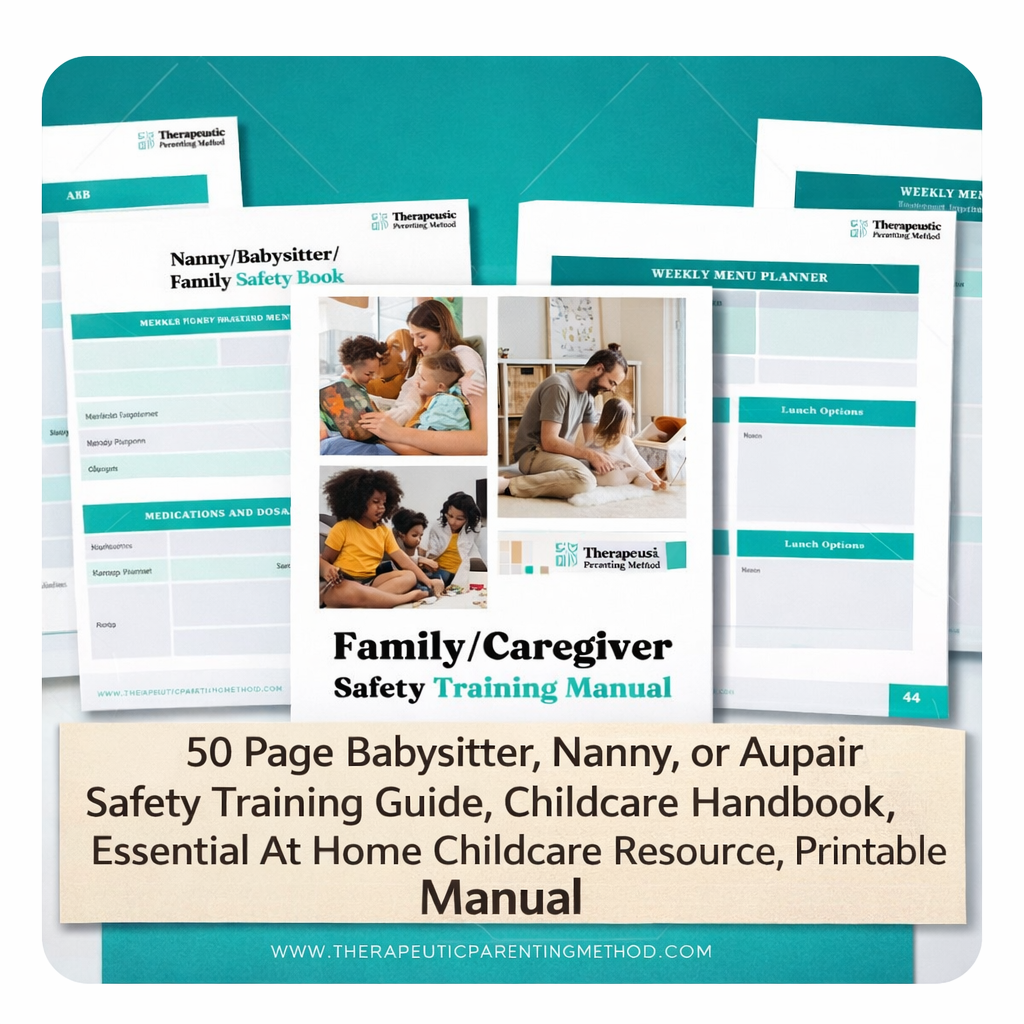
The Therapeutic Parenting Method™ Nanny Training Manual gives parents a structured framework for onboarding and training a nanny so everyone understands what great care looks like in your home.
Rather than leaving expectations unspoken, the manual helps parents create clear systems for the child's routines, temperament, sleep, feeding, behavior, safety, communication, household expectations, and professional boundaries.
You'll learn how to:
Establish clear nanny responsibilities and professional boundaries
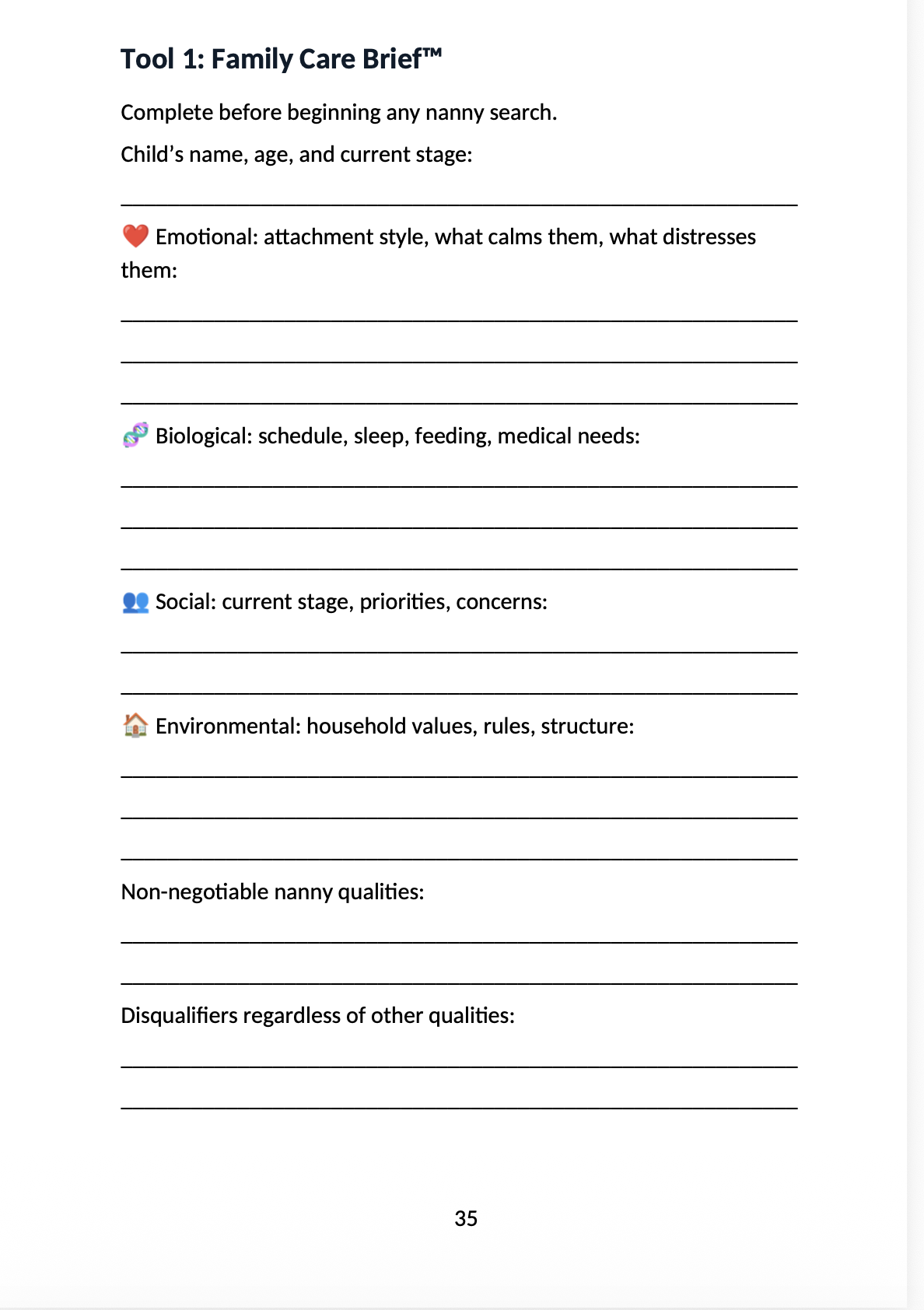
Teach your nanny your child's temperament, preferences, and individual needs
Train your nanny on your family's daily routines
Establish sleep and feeding protocols
Communicate your approach to discipline and challenging behavior
Create emergency and safety procedures
Establish expectations around screen time, nutrition, phone use, visitors, confidentiality, and social media
Set up a parent-nanny communication and daily-log system
Structure your nanny's first day and first week
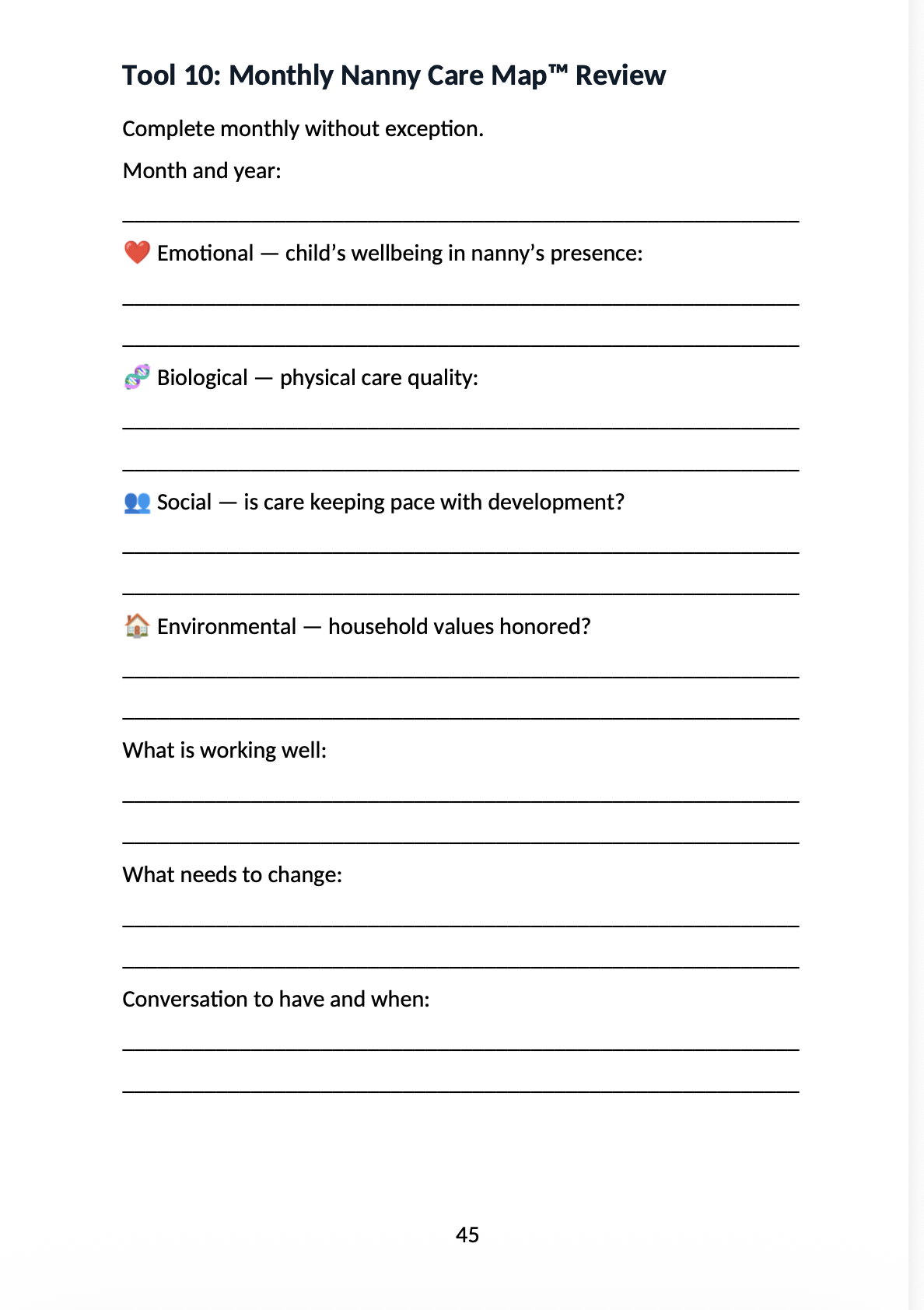
Conduct regular check-ins and address problems before they become larger issues
Create greater consistency between the care parents provide and the care their nanny provides
The underlying manual specifically addresses written expectations around discipline, screens, nutrition, sleep, emergency procedures, confidentiality, visitors, phone use and other professional boundaries.
The TPM approach doesn't simply hand your nanny a list of rules.
You'll learn how to demonstrate your child's routines, introduce your communication system, facilitate the nanny-child transition, and use brief check-ins during the first weeks to identify what is working and what needs adjustment.
Parents who:
Are hiring a nanny for the first time
Recently hired a new nanny
Want to improve consistency with an existing nanny
Are experiencing communication or expectation problems
Want a more professional nanny-family relationship
Need clearer routines, rules, and responsibilities
Want their nanny to understand the whole child rather than simply complete childcare tasks
The original TPM training methodology also specifically supports retraining an existing nanny, using written family guidelines, schedules and a communication log to clarify expectations and improve performance.
Tammy Gold is a licensed therapist, parenting expert, author, and childcare professional who has spent decades helping families hire, train, and manage caregivers.
The Therapeutic Parenting Method™ brings psychology, child development, structure, and practical caregiving systems together to help families create safer, more consistent and more responsive care.
Hiring a nanny is only the beginning.
Even an experienced nanny has never worked with your child, your home, your routines, and your family's expectations. Effective nanny training helps turn general childcare experience into individualized care.
The Therapeutic Parenting Method™ Nanny Training Manual gives parents a structured framework for onboarding and training a nanny so everyone understands what great care looks like in your home.
Rather than leaving expectations unspoken, the manual helps parents create clear systems for the child's routines, temperament, sleep, feeding, behavior, safety, communication, household expectations, and professional boundaries.
You'll learn how to:
Establish clear nanny responsibilities and professional boundaries
Teach your nanny your child's temperament, preferences, and individual needs
Train your nanny on your family's daily routines
Establish sleep and feeding protocols
Communicate your approach to discipline and challenging behavior
Create emergency and safety procedures
Establish expectations around screen time, nutrition, phone use, visitors, confidentiality, and social media
Set up a parent-nanny communication and daily-log system
Structure your nanny's first day and first week
Conduct regular check-ins and address problems before they become larger issues
Create greater consistency between the care parents provide and the care their nanny provides
The underlying manual specifically addresses written expectations around discipline, screens, nutrition, sleep, emergency procedures, confidentiality, visitors, phone use and other professional boundaries.
The TPM approach doesn't simply hand your nanny a list of rules.
You'll learn how to demonstrate your child's routines, introduce your communication system, facilitate the nanny-child transition, and use brief check-ins during the first weeks to identify what is working and what needs adjustment.
Parents who:
Are hiring a nanny for the first time
Recently hired a new nanny
Want to improve consistency with an existing nanny
Are experiencing communication or expectation problems
Want a more professional nanny-family relationship
Need clearer routines, rules, and responsibilities
Want their nanny to understand the whole child rather than simply complete childcare tasks
The original TPM training methodology also specifically supports retraining an existing nanny, using written family guidelines, schedules and a communication log to clarify expectations and improve performance.
Tammy Gold is a licensed therapist, parenting expert, author, and childcare professional who has spent decades helping families hire, train, and manage caregivers.
The Therapeutic Parenting Method™ brings psychology, child development, structure, and practical caregiving systems together to help families create safer, more consistent and more responsive care.