

A Calm, Therapist-Led Guide to Infant Care
Every baby is different.
A chatbot can explain typical sleep schedules, feeding patterns, milestones or soothing techniques. But it cannot observe your baby, understand your household, weigh competing needs, or tell you which issue deserves attention first.
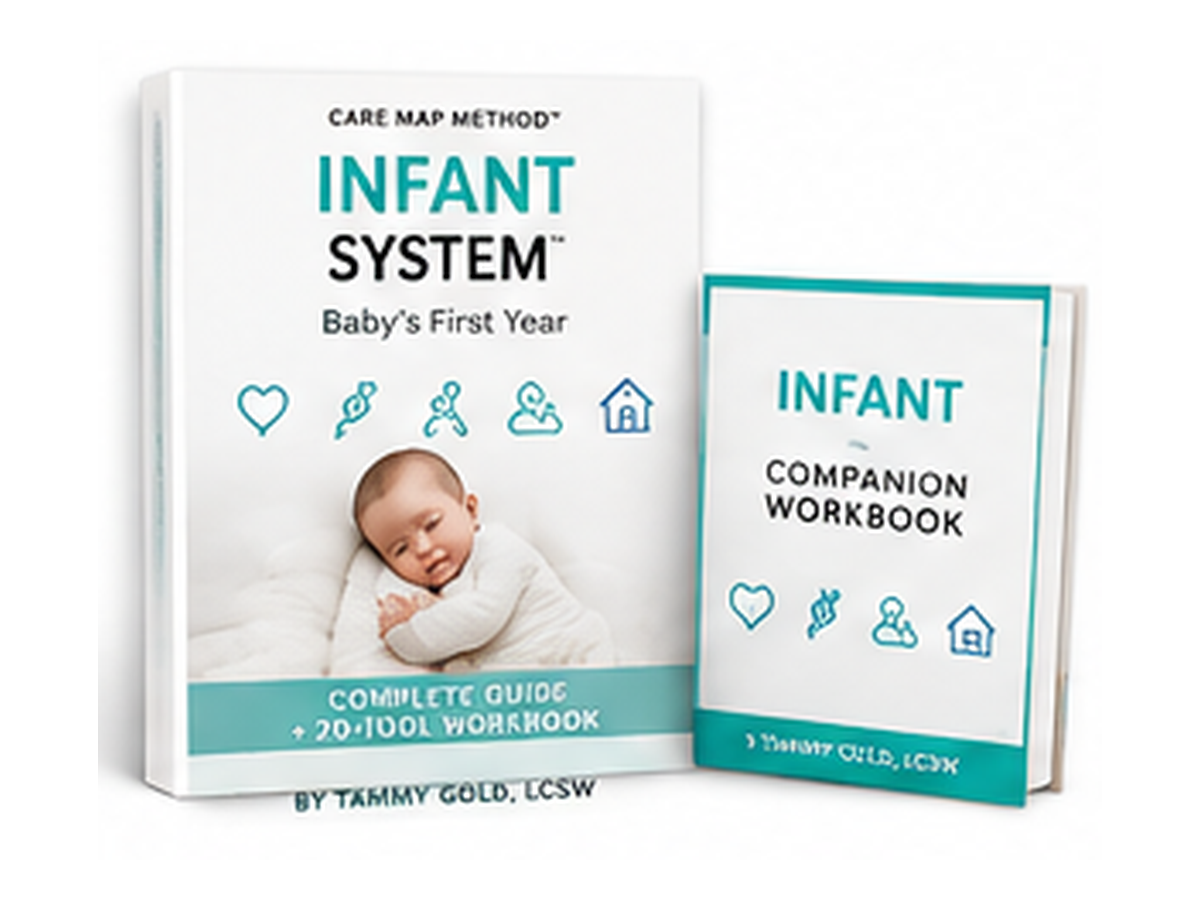
Baby’s First Year gives parents a structured way to stop searching for random answers and start looking at the whole baby.
Biological
Sleep • Feeding • Physical needs • Daily rhythms
Emotional
Attachment • Soothing • Connection • Regulation
Developmental
Growth • Learning • Milestones • Stimulation
Environmental
Routine • Home environment • Caregiving setup • Daily structure
AI can be useful for information.
But there are important parts of parenting that require context, judgment and observation.
What is normal for your individual baby
General developmental information is not the same as knowing your child's patterns.
Which need is driving the problem
Sleep, hunger, overstimulation, separation, development and environment can overlap.
How your family routine affects your baby
Caregiving schedules, transitions, siblings, childcare and household rhythms matter.
Which issue deserves attention first
Parents often need help prioritizing—not another twenty suggestions.
How several small problems connect
A feeding issue, shortened nap and evening meltdown may be part of the same pattern.
What changed over time
Tracking patterns can reveal information a one-time question cannot.
What does my baby’s body need?
Look at areas such as sleep, feeding, comfort, rhythms and physical wellbeing.
What helps my baby feel secure and regulated?
Consider connection, responsiveness, soothing and attachment needs.
What is my baby learning or working through right now?
Consider developmental change, stimulation and emerging abilities.
What in my baby’s surroundings is helping—or making things harder?
A Calm, Therapist-Led Guide to Infant Care
Every baby is different.
A chatbot can explain typical sleep schedules, feeding patterns, milestones or soothing techniques. But it cannot observe your baby, understand your household, weigh competing needs, or tell you which issue deserves attention first.
Baby’s First Year gives parents a structured way to stop searching for random answers and start looking at the whole baby.
Biological
Sleep • Feeding • Physical needs • Daily rhythms
Emotional
Attachment • Soothing • Connection • Regulation
Developmental
Growth • Learning • Milestones • Stimulation
Environmental
Routine • Home environment • Caregiving setup • Daily structure
AI can be useful for information.
But there are important parts of parenting that require context, judgment and observation.
What is normal for your individual baby
General developmental information is not the same as knowing your child's patterns.
Which need is driving the problem
Sleep, hunger, overstimulation, separation, development and environment can overlap.
How your family routine affects your baby
Caregiving schedules, transitions, siblings, childcare and household rhythms matter.
Which issue deserves attention first
Parents often need help prioritizing—not another twenty suggestions.
How several small problems connect
A feeding issue, shortened nap and evening meltdown may be part of the same pattern.
What changed over time
Tracking patterns can reveal information a one-time question cannot.
What does my baby’s body need?
Look at areas such as sleep, feeding, comfort, rhythms and physical wellbeing.
What helps my baby feel secure and regulated?
Consider connection, responsiveness, soothing and attachment needs.
What is my baby learning or working through right now?
Consider developmental change, stimulation and emerging abilities.
What in my baby’s surroundings is helping—or making things harder?