

Workplace stress when the messages keep coming
Your workday ends, but your attention stays on the phone. When a message arrives from your boss, you feel you should respond immediately—even when you are unsure whether that is expected.
An adult placing a work phone beside a closed laptop at home in the evening.
Your workday ends, but your attention stays on the phone. When a message arrives from your boss, you feel you should respond immediately—even when you are unsure whether that is expected.
I’m Tammy Gold. I offer individual online therapy for adults in New Jersey. We can explore how workplace demands and relationships affect your mental health, including what makes it difficult to disengage after work.
Understand the expectation and the fear
Some jobs have explicit on-call responsibilities. Others rely on unclear expectations. We can distinguish what your role requires from assumptions you have made and examine any consequences you have actually experienced.
That distinction does not require you to ignore a difficult work environment. We can consider workload, power, finances and the support available to you. We will also discuss the effect on sleep, concentration and relationships outside work.
Prepare a clarification rather than a confrontation
You might want to ask, “For messages that arrive after my scheduled hours, which need an immediate response and which can wait until morning?” We can practice wording that fits your role and explore what feels risky about asking.
If a direct conversation is not appropriate, we can consider other options within your control. Therapy does not provide employment-law advice or guarantee that a manager will respond reasonably.
Work on what happens after the notification
Perhaps you keep rereading a message even after you have answered it. We can examine the feared outcome, the reassurance you are seeking and whether repeated checking is helping you make a decision or keeping you engaged with the worry.
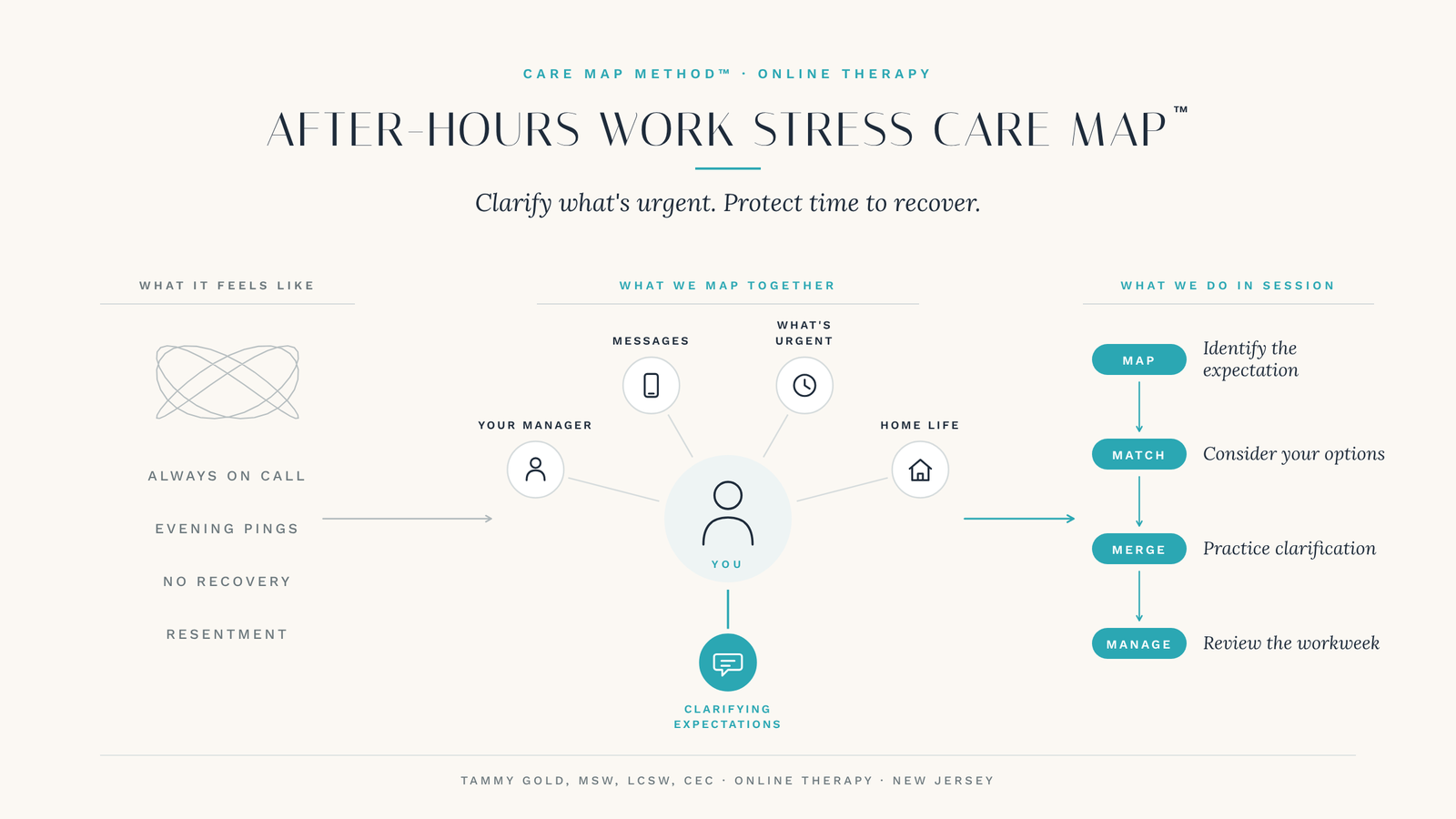
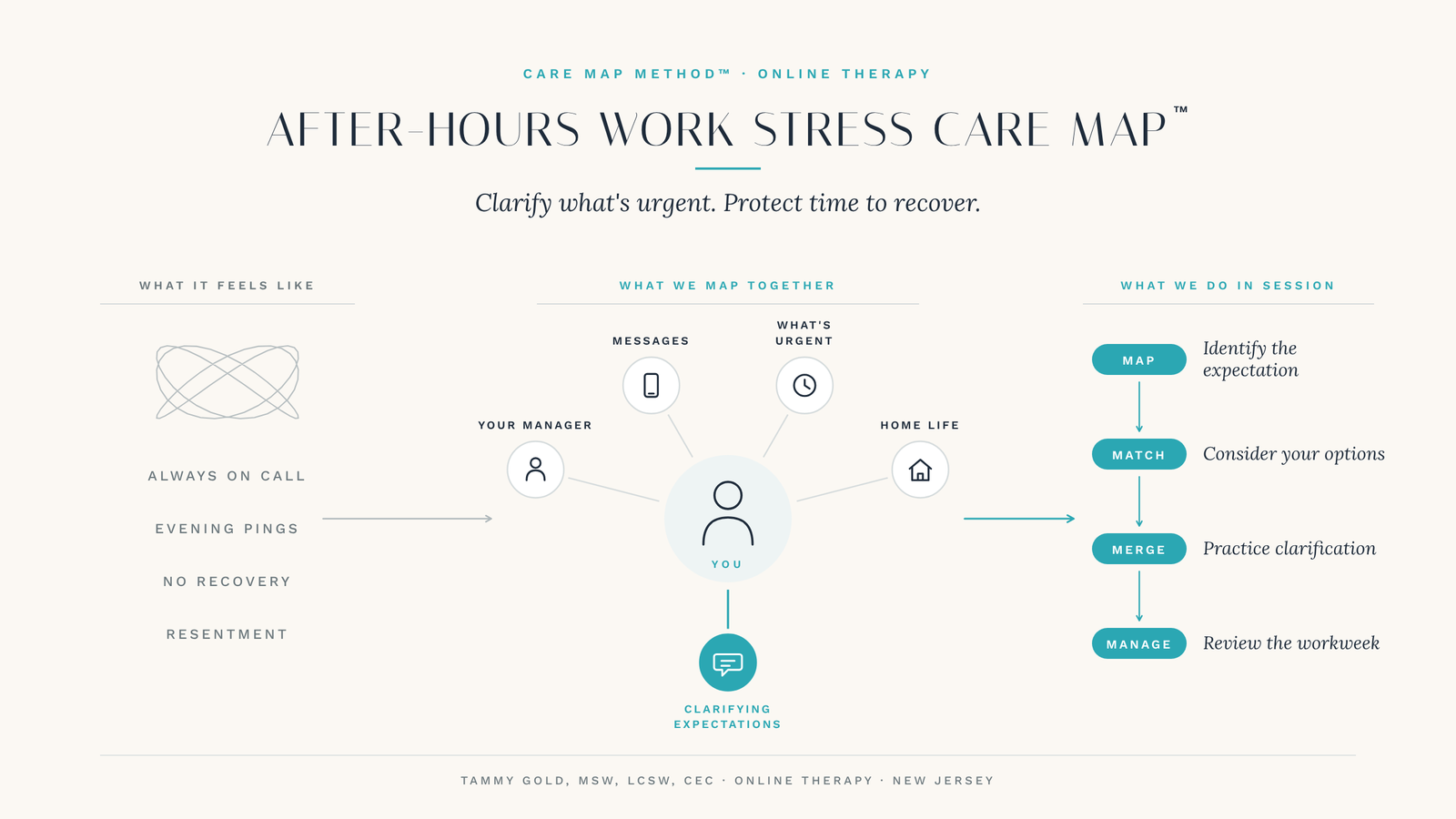
My Care Map Method™ organizes Biological, Emotional, Social and Environmental pressures. We map the sequence, match a strategy to your circumstances, merge one practice into the workweek and manage the plan as we review the results.
Choose a goal you can evaluate
An early goal might be clarifying one expectation or spending less of an evening mentally preparing for tomorrow’s conversation. We will decide together what meaningful change would look like for you.
The first session includes assessment of your concerns, history and functioning. Your employer does not need to participate for you to seek individual support. We will explain confidentiality and its exceptions before treatment.
Questions about starting therapy
Should I stop answering my boss immediately? There is no universal rule. We can consider actual job duties, consequences and your circumstances before choosing a response.
Can you give legal advice about after-hours work? No. Employment rights and legal decisions belong with qualified legal or workplace advisers.
Will therapy make me leave my job? There is no predetermined outcome. We can explore your options without prescribing a career decision.
Can I work on difficult feedback too? Yes. Individual therapy can examine how workplace interactions affect your mental health and responses.
Will my employer be told? We will discuss confidentiality and its legal exceptions. We do not routinely notify an employer that you are in therapy.
Can I use Headway or Alma? Use the route currently verified for your New Jersey plan and service. Platform membership alone does not establish coverage.
Ask about current availability, clinical fit and payment options. Confirm the state where you will be located before scheduling.