

Online Therapy for Retirement Adjustment in Oregon
Retirement can change your identity, relationships and sense of purpose. Online therapy in Oregon can help you explore what you miss, discuss expectations at home and choose meaningful next steps for this stage of life.
You may have looked forward to leaving work and still miss the structure, contact or sense of usefulness it provided. More time at home can also change relationships in ways you did not anticipate.
I’m Tammy Gold. I offer individual online therapy for adults in Oregon navigating life transitions and relationship stress. We can explore what retirement has changed for you and what you need in this stage of life.
Identify what work used to provide
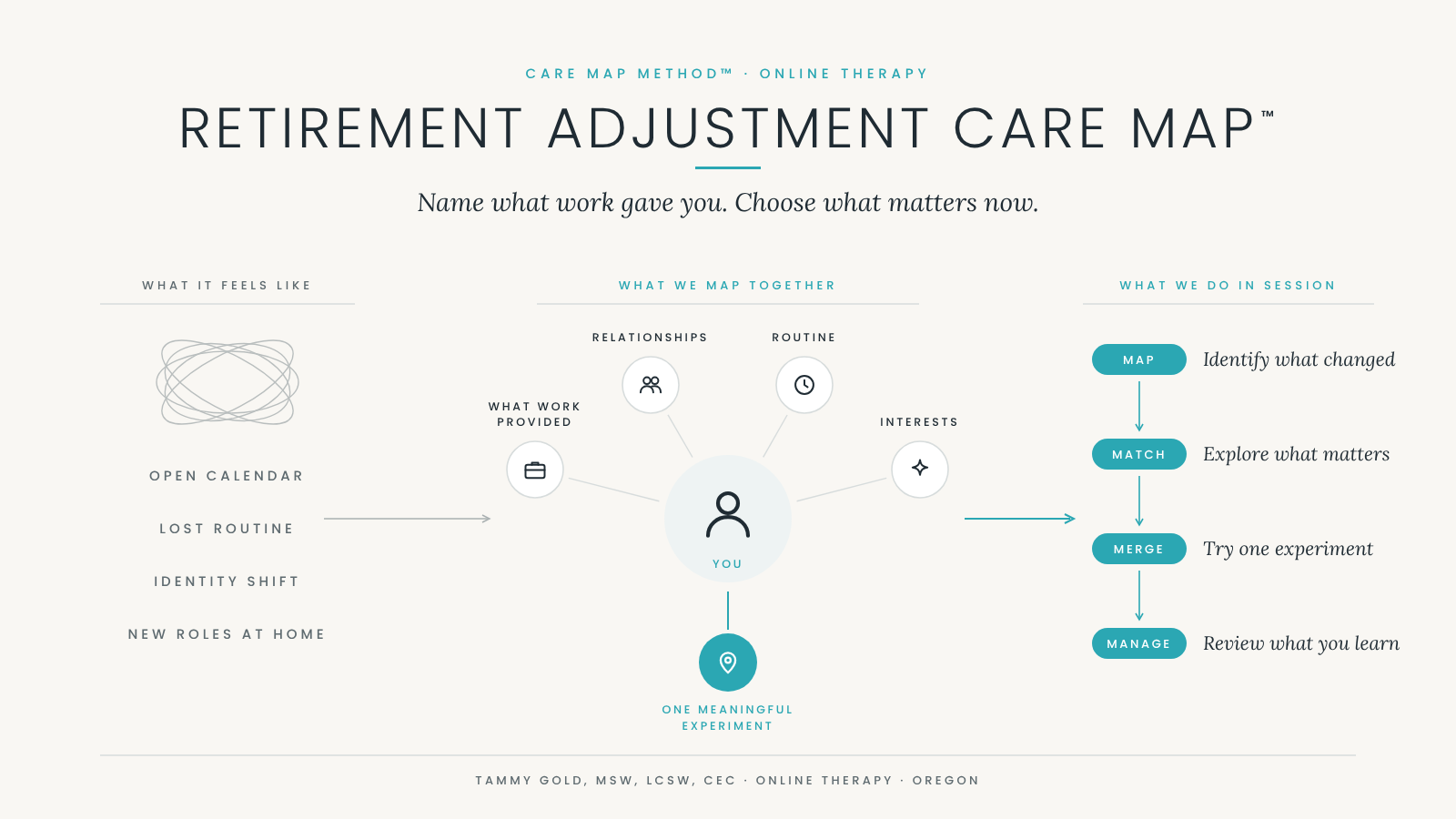
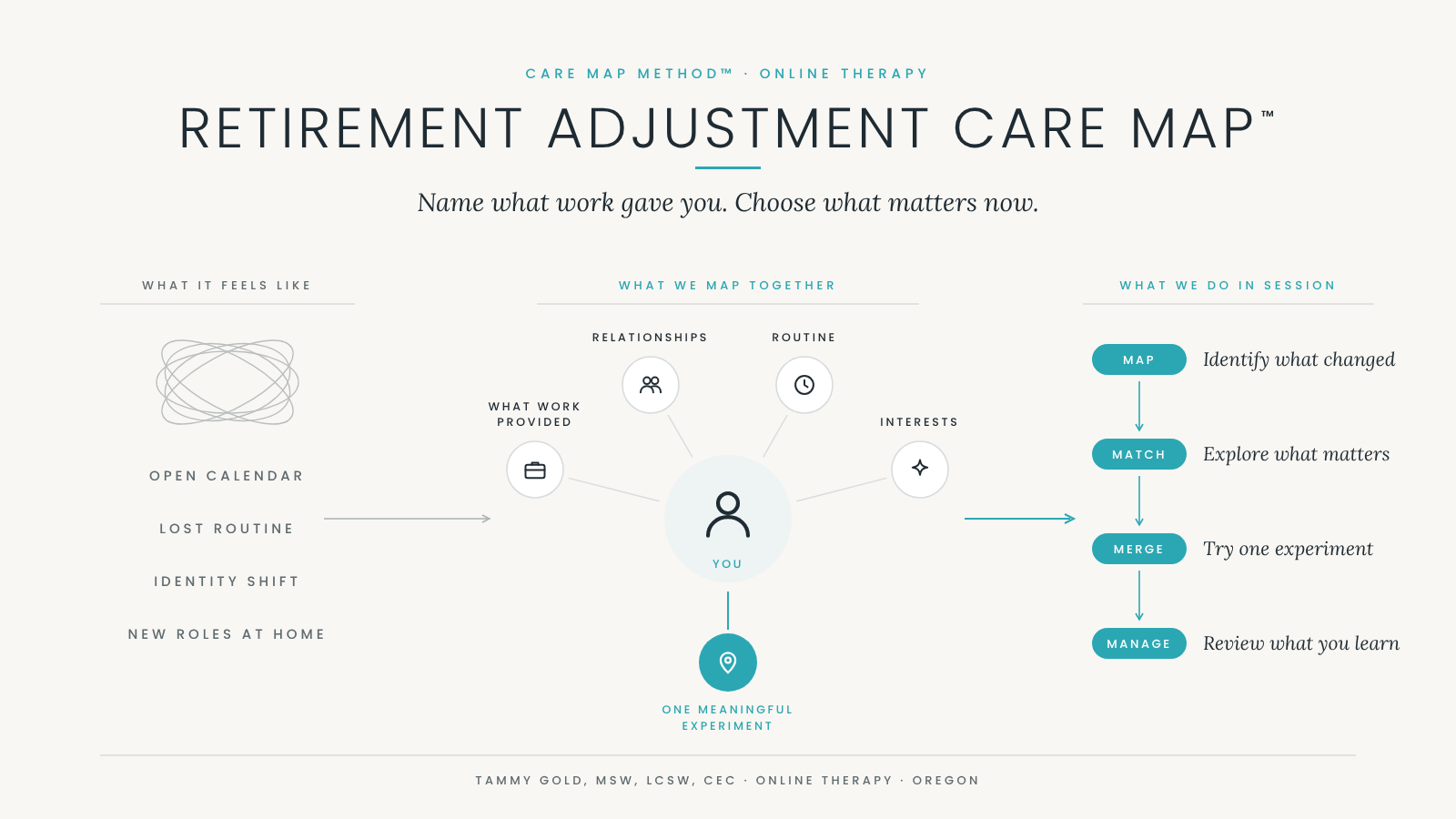
Perhaps you miss being asked for your opinion, having a reason to leave the house or seeing familiar people. We can examine those losses without assuming that a busier calendar will automatically address them.
Retirement may have been chosen, forced or shaped by health and finances. Those differences matter. We will also discuss mood, sleep, concentration and functioning rather than assume every change is ordinary adjustment.
Explore the new expectations at home
You may feel that family members now consider you permanently available. Or you and a partner may have different ideas about shared time and privacy.
A conversation could begin, “I want us to discuss what we each need from the week, including time together and time independently.” We can explore the feelings underneath that request and whether it fits your situation.
Build a next step around meaning
We can consider what you want to continue, what you are ready to release and what you would like to try. A next step might be reconnecting with one person or making space for an interest you have postponed.
The goal is not to perform a perfect retirement. We can work on your experience of the change and review what supports your well-being. Financial planning and medical questions belong with the appropriate professionals.
What we can work on together in session
We can map a typical day before and after retirement to understand what changed beyond the hours of paid work. We might identify missing social contact, a loss of recognition, less privacy at home or uncertainty about how to describe yourself. We will also assess symptoms that deserve attention in their own right.
Together, we can choose one meaningful experiment: contacting a person you miss, setting aside time for an interest or discussing expectations with a partner. We can explore what makes that step appealing or difficult and keep it realistic for your energy and resources. At a later visit, we can review the experience and adjust the direction. You do not need a complete plan for this stage of life before therapy can be useful.
When an open calendar feels uncomfortable
Work may have offered more than a schedule. It may have provided recognition, familiar conversations or a clear way to know you had contributed. If those supports disappear at once, being told to “enjoy your freedom” can feel lonely. We can explore what you miss and which parts you would like to carry forward in a different form.
You may also feel pressure to say yes to family responsibilities because you are no longer employed. We can discuss the difference between choosing to help and feeling unable to decline. Your interests, energy and relationships deserve consideration in the new arrangement.
Try a direction without deciding your whole future
We might identify one connection you want to maintain, one activity that interests you or one conversation about expectations at home. The purpose is to learn what feels meaningful and realistic, rather than fill every hour. If low mood, withdrawal or other symptoms are affecting daily life, we will assess those concerns directly. Retirement does not make distress something you simply have to accept, and seeking support does not mean you are doing this stage of life incorrectly.
A practical way to understand what is happening
My Care Map Method™ helps us look at Biological, Social, Environmental and Emotional factors alongside clinical assessment. We consider your health and energy, relationships, daily circumstances and emotional experience rather than isolate one difficult moment from the rest of your life. We MAP the need, MATCH appropriate support, MERGE that support into your circumstances and MANAGE the plan as we learn what is useful. This is an organizing framework within individualized therapy, not a promise of a particular result.
What your first session can include
You can bring one situation you want help understanding. We will discuss your concern, relevant history, symptoms, daily functioning and available support. You can tell me what has or has not helped before and what you need to feel comfortable talking. My aim is to offer empathy without judgment and begin exploring a practical next step, while allowing time for assessment. We will decide together whether my approach fits and which goals matter to you. You do not need to arrive knowing the right words or the solution.
About Tammy Gold
I’m Tamara “Tammy” Gold, MSW, LCSW, CEC. I earned my clinical MSW at Columbia University and my BA at the University of Pennsylvania. My work with families includes parenting, caregiving and difficult relationships. I bring empathy without judgment and a practical interest in helping you understand the problem and consider what comes next.
Frequently asked questions
Can I come before I retire?
Yes. We can explore the anticipated transition and assess what support fits.
What if I did not choose to stop working?
We can make room for the loss, anger or uncertainty involved rather than assume retirement is welcome.
Is this financial retirement planning?
No. This page describes psychotherapy for mental health and adjustment.
Can I discuss changes with my spouse?
Yes. Individual therapy can explore your experience of the relationship; couples services would require a separate discussion.
Do you accept Medicare?
Do not assume coverage. Ask about your exact plan and the practice’s current enrollment before booking.
How do I start from Oregon?
Confirm current availability, your physical location, treatment fit and payment arrangements before scheduling.
What if I miss work but do not want to return?
We can explore the parts you miss without assuming that returning to employment is the answer. The loss of a role and a preference for retirement can coexist.
Will you tell me to volunteer or find a hobby?
We can consider those possibilities if they interest you, but the work begins with what has changed and what matters to you. A fuller calendar is not the only possible goal.
Booking and profile options
Choose a platform that shows current appointments for your physical location in Oregon and your exact insurance plan. Availability and participation can differ across platforms.
Check availability and insurance on Grow Therapy
Check availability and insurance on Alma
Check availability and insurance on Headway
Read my profile or contact me on Psychology Today
Before confirming a visit, check the service, current provider participation, your exact benefits and estimated costs. Coverage depends on your plan and the assessed clinical service; a life event alone does not establish insurance eligibility. You must be physically located where I am authorized to provide care at each session.