

When criticism from your boss takes over the evening
The meeting ended, but you are still defending yourself in your head. You may replay a supervisor’s tone, wonder how coworkers interpreted the exchange or spend the evening rewriting a response you never send.
The meeting ended, but you are still defending yourself in your head. You may replay a supervisor’s tone, wonder how coworkers interpreted the exchange or spend the evening rewriting a response you never send.
I’m Tammy Gold. I offer individual online therapy for adults in Oregon. We can explore how difficult workplace interactions affect your mental health and develop a response grounded in your circumstances.
Look at the exchange without filling in every blank
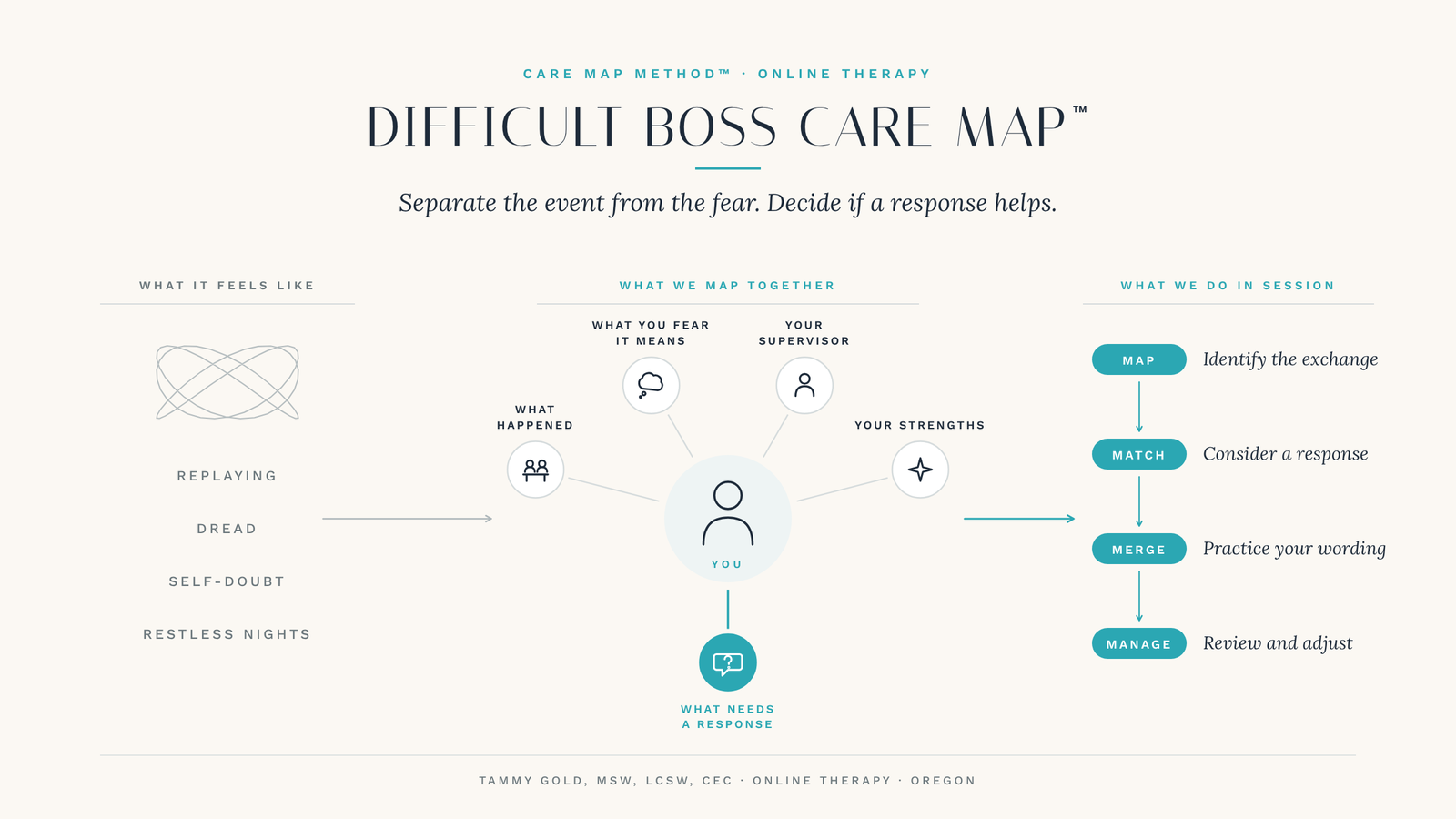
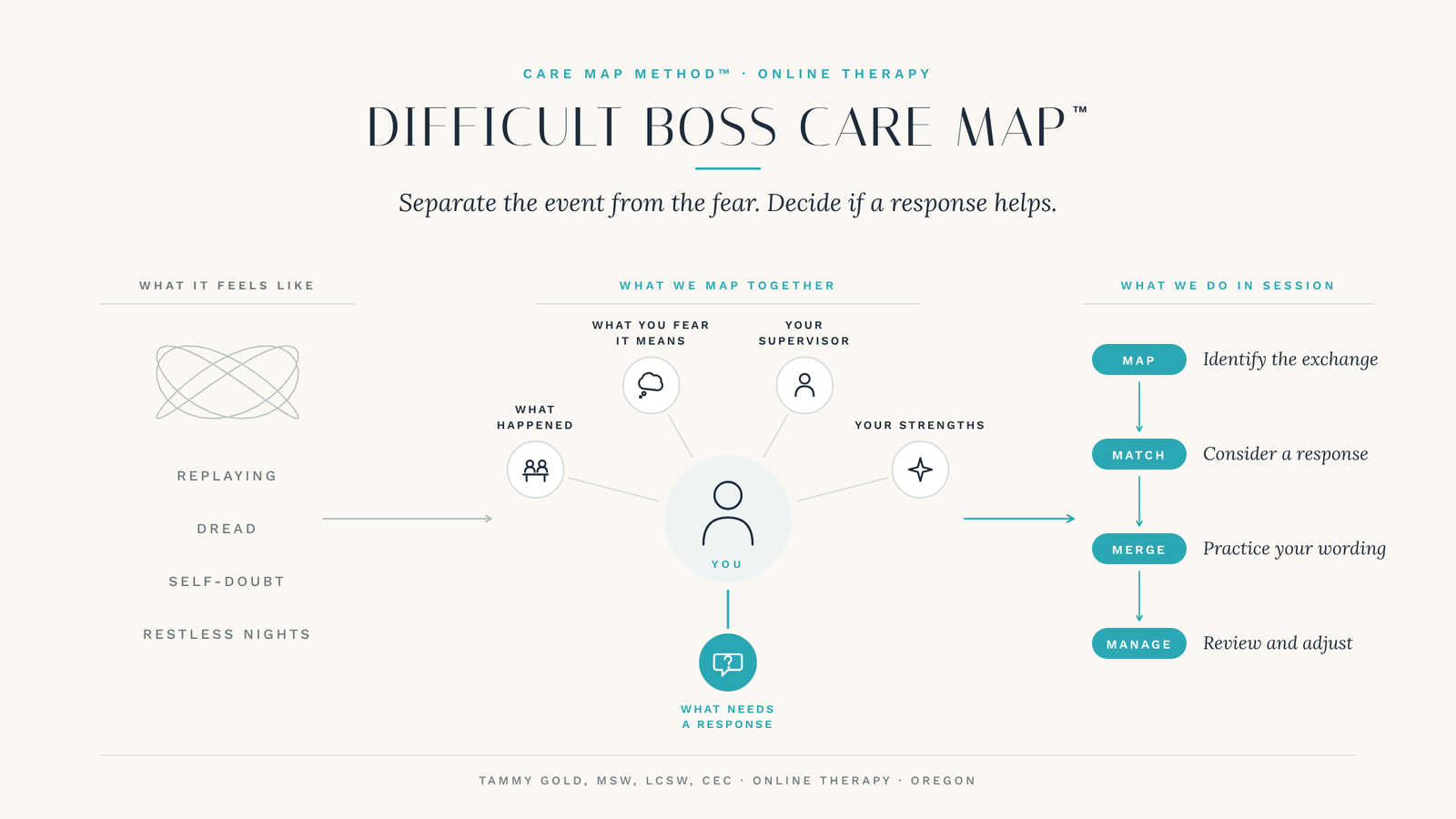
We can begin with what was actually said or done. What was useful feedback? What was unclear, dismissive or inappropriate? What are you afraid the interaction means for your job or for how others see you?
This work does not assume that the environment is fair. It helps us distinguish the practical concern from the conclusions that may be keeping the event active in your mind. We will consider power, money and your responsibilities as well as feelings.
Choose whether a response is needed
Sometimes clarification is useful: “I want to make sure I understand the change you are asking for.” Sometimes a pause gives you time to decide what you actually want to address.
We can practice wording, explore what makes it difficult to use and discuss appropriate outside support when a concern involves workplace rights or policy. Therapy is not an investigation of your employer or a substitute for legal advice.
Understand the urge to keep reviewing
Replaying the exchange may feel like preparing, proving your position or preventing another mistake. We can explore whether it helps you decide what to do or leaves you caught in the same argument.
My Care Map Method™ organizes Biological, Emotional, Social and Environmental factors. We map the interaction and aftermath, match a strategy to your needs, merge a practice into the workweek and manage the plan as we review it.
Set goals around your well-being
You might want to ask a question with less avoidance, spend less time mentally defending yourself or become clearer about your options. We will assess symptoms and functioning and decide together whether my approach is a fit.
Your employer does not need to participate in individual therapy. We will discuss confidentiality and its exceptions, and any proposed communication with another professional would follow the appropriate consent process.
Questions about starting therapy
Is the goal to stop caring about my work? No. We can explore how to care about your responsibilities without allowing one interaction to occupy all of your attention.
Will you tell me to confront my supervisor? There is no prescribed response. We will consider your role, risks and realistic options.
Can you decide whether I was bullied? We can examine behavior and its impact, but therapy is not an employer investigation or legal determination.
Can I work on coworker conflict too? Yes, when the effect on your mental health fits the practice. The focus remains your experience and choices.
Is burnout automatically an insurance diagnosis? No. Assessment determines clinical needs; coverage depends on the service, plan and active participation.
Which Oregon insurance route should I use? Use only the platform and plan currently verified for you. A brand name in an old article does not establish current coverage.
Ask about current availability, clinical fit and payment options. Confirm the state where you will be located before scheduling.