
Moving home after college and feeling like a child again
Living with your parents may make financial sense while still being emotionally difficult. A question about your plans can feel like criticism. A disagreement about a visitor can turn into an argument about gratitude or maturity
An adult in their twenties writing privately at a desk in a family home.
Living with your parents may make financial sense while still being emotionally difficult. A question about your plans can feel like criticism. A disagreement about a visitor can turn into an argument about gratitude or maturity.
I’m Tammy Gold. I offer individual online therapy for adults in New Jersey, including young adults navigating family relationships and independence. We can explore how living together affects you and what a workable adult role could look like.
Separate dependence from your sense of worth
Housing costs, job uncertainty and family responsibilities can shape where you live. Needing support does not provide a complete explanation of who you are or what you can do.
In therapy, we can examine how you interpret a parent’s questions, what you feel expected to prove and whether you have space to express an ordinary preference. We will also discuss mood, sleep, motivation and the effect of conflict on everyday life.
Work on a specific household conversation
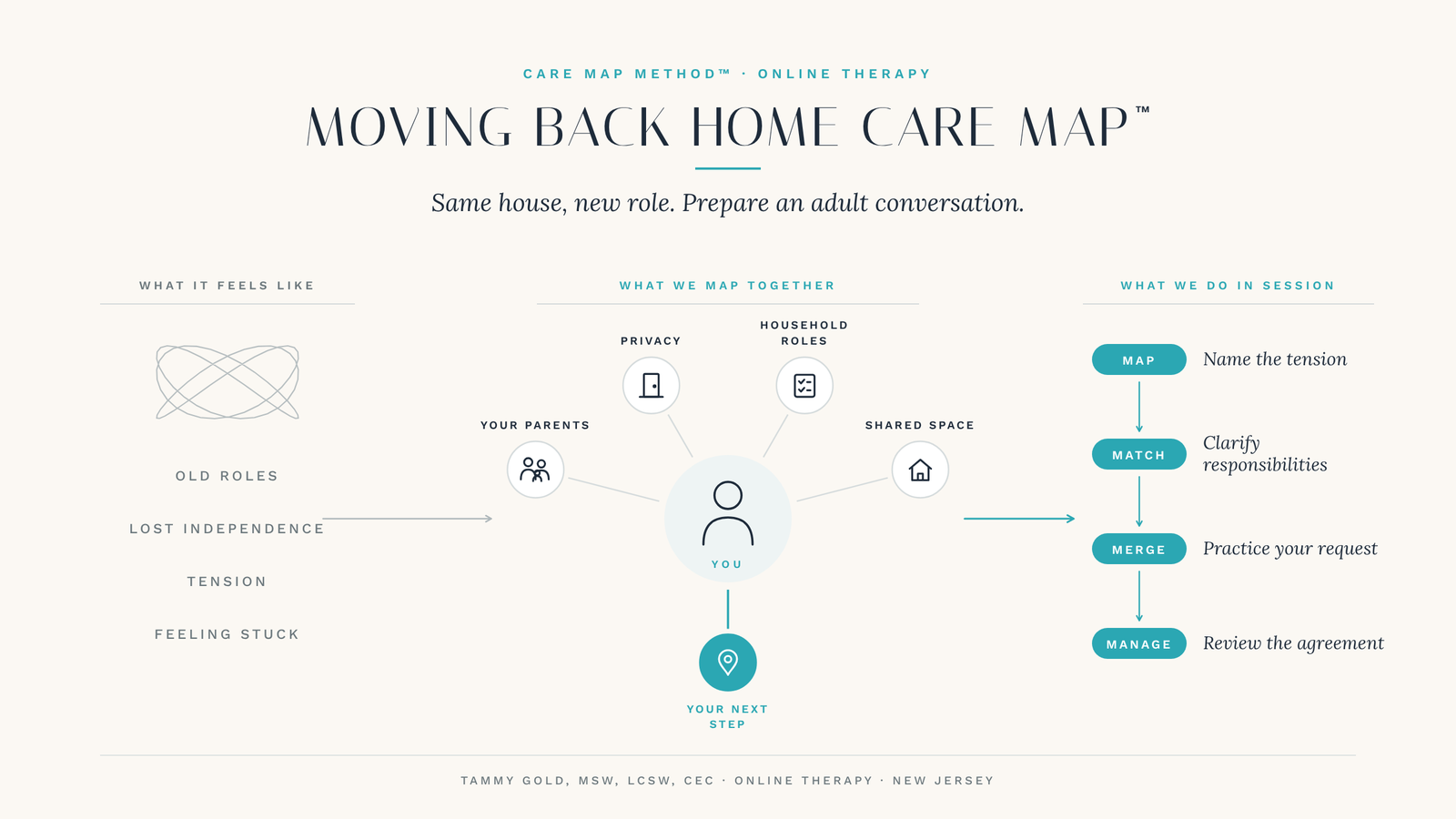
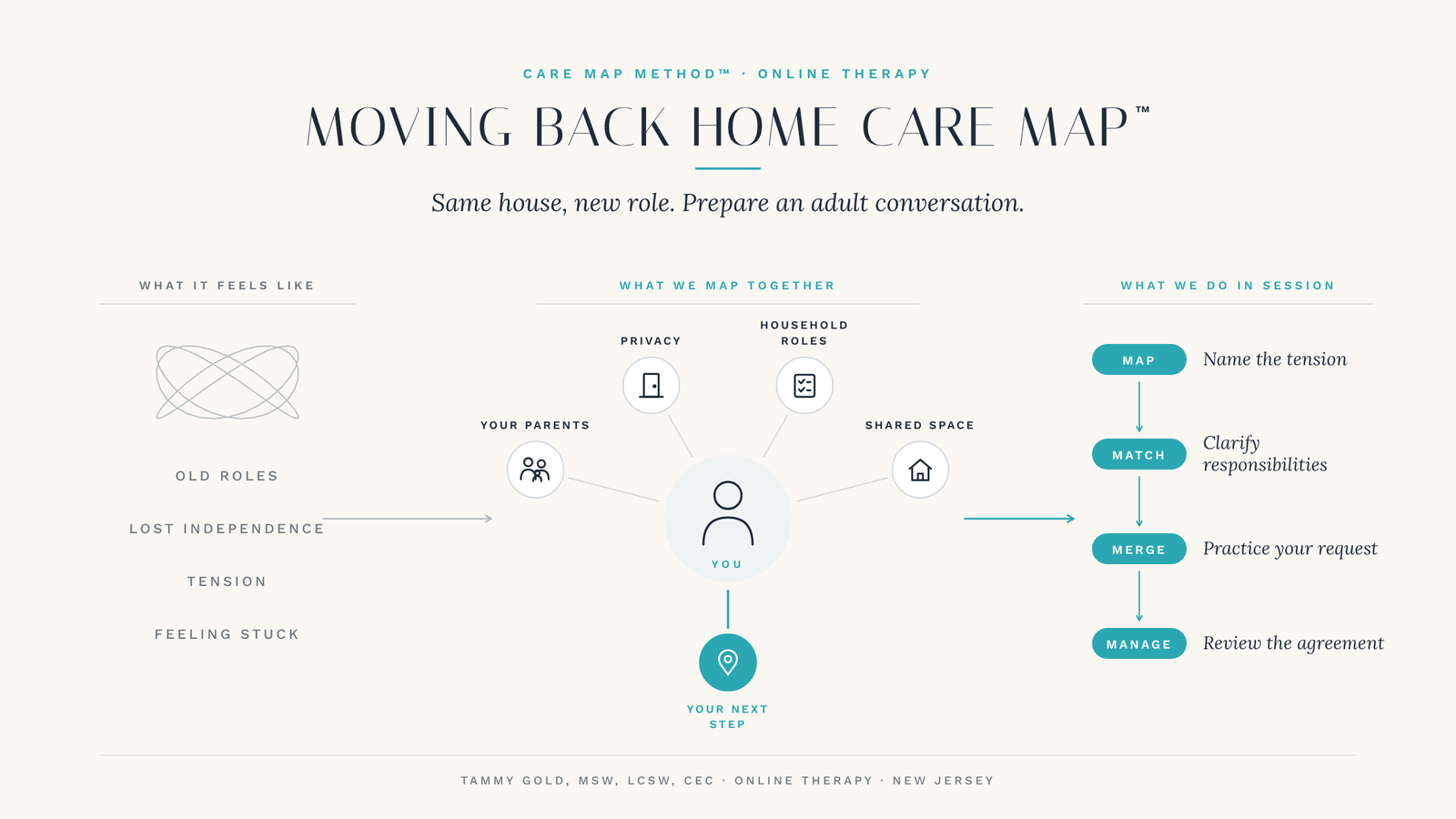
Rather than trying to establish independence in one argument, we might identify a concrete issue: privacy, contributions to the home, use of shared space or how often you discuss your job search.
A starting point could be, “I want to agree on what I am responsible for here and when we will check in about my plans.” We can explore the fear behind making that request and consider how to respond if the conversation becomes heated.
Build a next step you own
Therapy can help you consider goals within your actual resources. That might involve a routine, a conversation or a step toward work or housing. You remain responsible for your choices; therapy is not a deadline imposed by your family.
My Care Map Method™ helps organize Biological, Emotional, Social and Environmental factors. We map the interaction, match a strategy to your needs, merge practice into a real conversation and manage the plan as you learn what is workable.
A confidential space for the adult client
We will discuss confidentiality, consent and any family involvement during intake. Parents paying for treatment does not automatically make them participants in your care. If you use someone else’s insurance, we can discuss questions to ask the insurer about statements and communications before you begin.
Questions about starting therapy
Do my parents need to attend? No. Individual therapy focuses on you. Any family participation would be discussed with you and require appropriate consent.
Will you report back to my parents if they pay? Payment alone does not automatically authorize sharing clinical information. We will explain confidentiality and its exceptions.
Can I use a parent’s insurance privately? Ask the insurer about explanations of benefits, online access and communications. We cannot guarantee that the policyholder will not see billing information.
Is this a failure-to-launch program? No. This is individual psychotherapy for the adult’s assessed mental health needs, not a compliance or placement program.
Will therapy tell me to move out? There is no preset outcome. We can explore choices within your safety, finances and circumstances.
How do I check New Jersey coverage? Verify your exact plan, current provider participation and estimated session cost before booking.
Ask about current availability, clinical fit and payment options. Confirm the state where you will be located before scheduling.