

When toddler parenting leaves you overwhelmed
The difficult moment might be small from the outside: shoes, a cup, another request at the end of a long day. Inside, you feel pushed past what you can manage. Afterward, you worry about your reaction and promise yourself that tomorrow will be different.
An adult caregiver pausing at a kitchen counter while a toddler plays safely nearby.
The difficult moment might be small from the outside: shoes, a cup, another request at the end of a long day. Inside, you feel pushed past what you can manage. Afterward, you worry about your reaction and promise yourself that tomorrow will be different.
I’m Tammy Gold. I offer individual online therapy for adults physically located in Iowa, including parents dealing with overwhelm, guilt and relationship strain. We can take your concern seriously and work on what happens around those moments.
Look earlier than the outburst
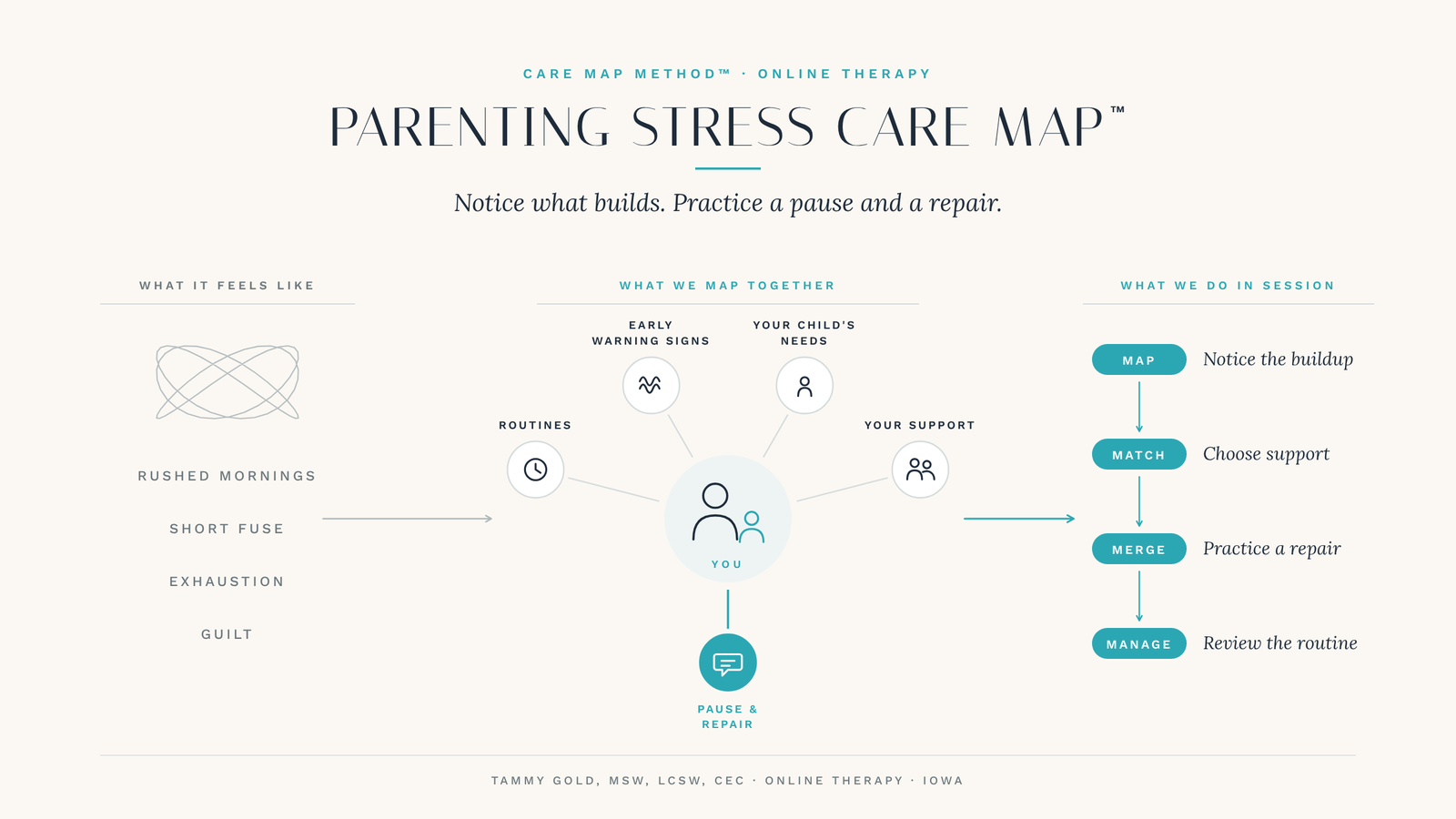
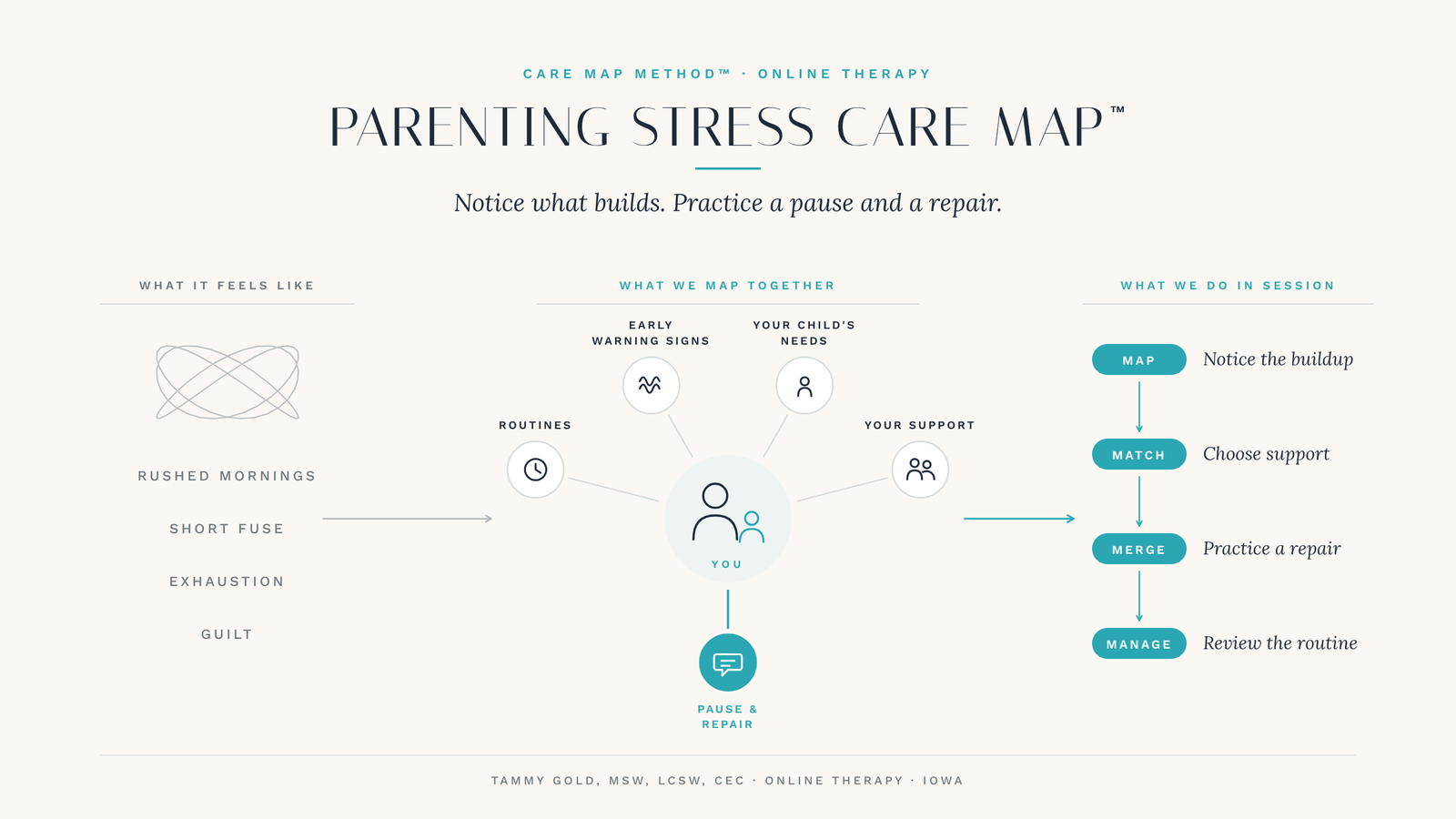
We might review the hour before a difficult interaction. What demands were competing? Were you already feeling unsupported, rushed or judged? What did your child’s behavior mean to you in that moment?
This does not remove your responsibility for how you respond. It helps us identify where a different response or additional support might become possible. We can discuss your mental health, relevant history and how the strain affects daily functioning.
Give the adult a place in the plan
Parenting information can be useful, but you may also need space for your own anger, sadness or disappointment. Perhaps you are carrying most of the responsibilities or trying to parent differently from how you were raised.
In therapy, we can work on those feelings and practice a request that names a need: “I need us to agree who handles the evening routine before we are both exhausted.” The wording will depend on your family and circumstances.
Practice repair without expecting perfection
A repair might sound like, “I raised my voice. That was my responsibility. I want to say it again more calmly.” We can explore how to take responsibility while keeping an appropriate limit, and how to respond to the guilt that follows.
My Care Map Method™ organizes Biological, Emotional, Social and Environmental pressures. We map a recurring moment, match a manageable strategy, merge practice into that routine and manage the plan as we review it.
What we can assess together
The first session can begin with one situation you want to handle differently. We will discuss symptoms, support and treatment fit. This is care for the adult; a child’s developmental or behavioral concerns may call for their own pediatric or child-focused evaluation.
Questions about starting therapy
Is my toddler the therapy client? No. This page describes individual psychotherapy for the parent or adult caregiver.
Will you diagnose my child? Not through your individual treatment. A child’s needs require an appropriate separate assessment.
Can I come if I am a father or another caregiver? Yes. The service is for adult caregivers whose own mental health needs fit the practice.
Is this the same as parent coaching? No. Coaching is a separate service. Psychotherapy addresses the adult’s assessed mental health needs.
What if I am afraid I might hurt my child? Seek immediate help to keep everyone safe, using emergency services when danger is imminent. Do not wait for a routine appointment.
Can insurance cover my sessions? We will assess clinical needs and confirm current Iowa network participation and your plan’s requirements before making coverage claims.
Ask about current availability, clinical fit and payment options. Confirm the state where you will be located before scheduling.