

Therapy for Panic Attacks and Fear of Having Another One
therapy for panic attacks; panic-related anxiety; fear of another panic attack; panic symptoms; anxiety therapy
Adult pausing during a stressful moment and considering a support plan.
The first time it happened, you may have wondered whether something was seriously wrong. Your heart raced, your breathing changed, or you felt unsteady and overwhelmed. Even after the moment passed, you might have worried about when it would happen again.
I’m Tammy Gold, LCSW. I provide individual online therapy for adults navigating anxiety, panic-related distress, relationship stress, parenting pressure, and major life changes. We can look at what happens before, during, and after a panic episode and discuss support that fits your needs.
When fear of another episode starts shaping the day
After a frightening episode, you might change your routine to avoid another one. You may stop driving on a certain road, avoid crowded spaces, sit near an exit, or check your body for signs that something is about to happen. These steps can feel protective in the moment, while also making your world smaller over time.
Everyone’s experience is different. You may feel embarrassed telling someone what happened, especially if they did not see it. Or you may be frustrated that reassurance helps only briefly. Therapy offers a space to discuss the experience without dismissing it or assuming its cause.
Begin with what happened and what changed afterward
We can discuss the episode itself, what you noticed, and what you did next. You might describe a moment when your breathing felt different in a grocery store, or when a sudden wave of fear made it difficult to stay in a meeting. We can explore what was happening around that time, what you thought the sensations meant, and what you have been doing to prevent another episode.
The goal is not to decide that every physical sensation is harmless. New, severe, or changing physical symptoms should be discussed with a medical professional. Therapy can focus on the distress, the fear of recurrence, and the ways the worry is affecting your choices.
Understand the cycle without blaming yourself
You may notice a sensation, interpret it as a sign that something bad is about to happen, and become more frightened. That fear can make it harder to think clearly in the moment. Afterward, you might replay what happened or look for certainty that it will not occur again.
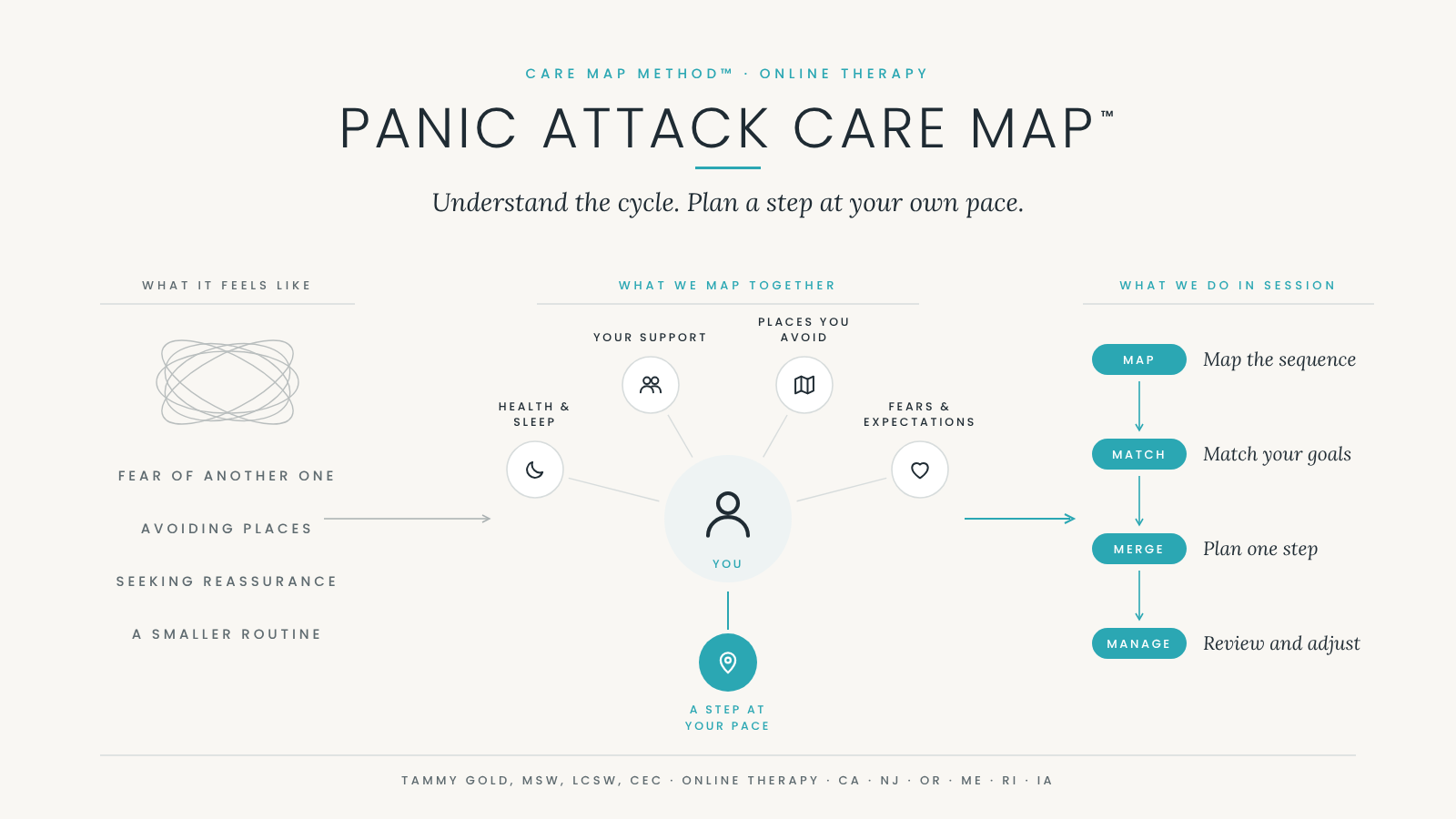
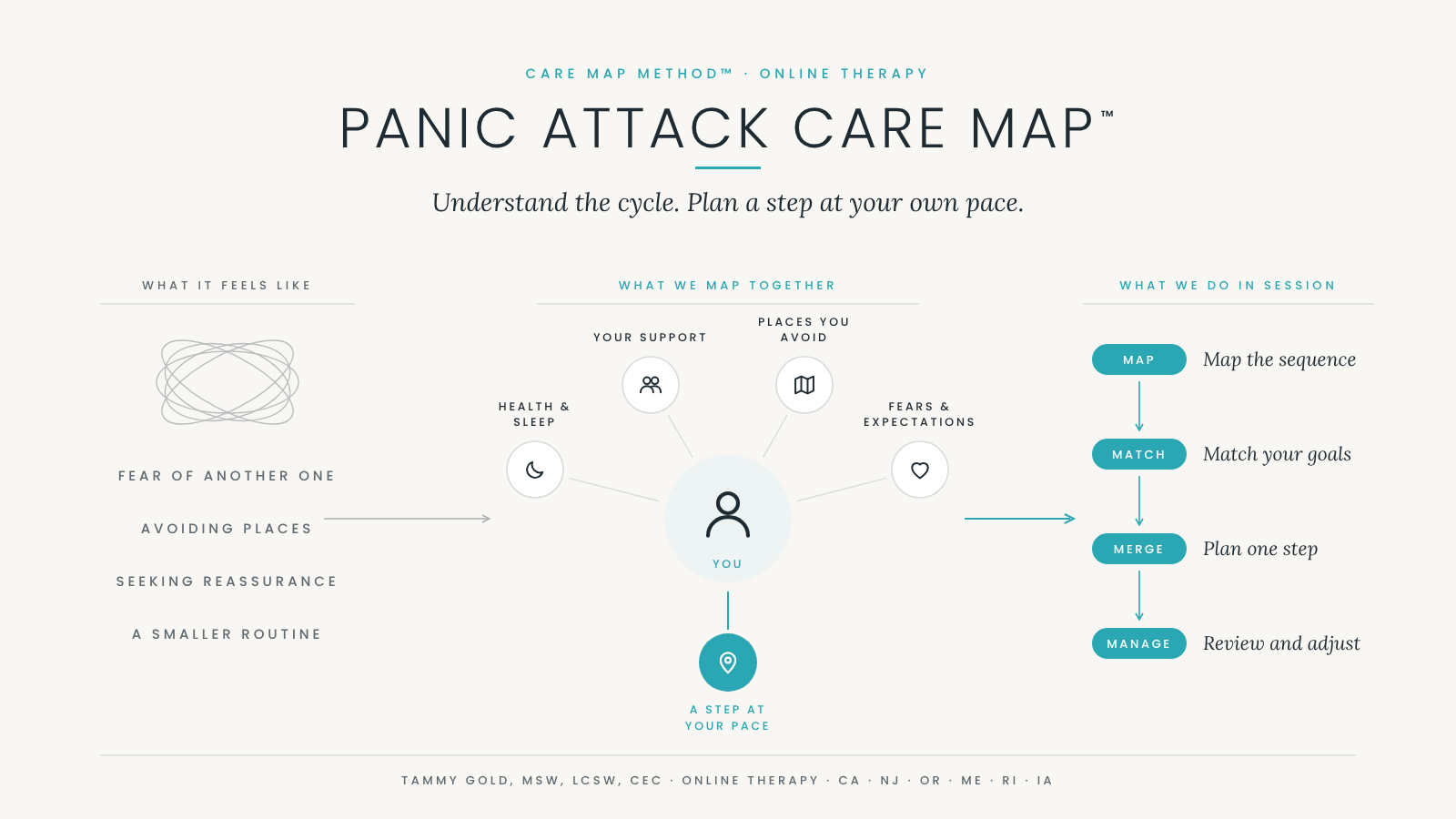
In therapy, we can map your particular pattern. What was happening before the episode? What did you notice? What did you believe it meant? What did you do to feel safer? How did that response affect the next hour or the following week?
Understanding the sequence can help us decide what to work on. We might discuss a situation you have been avoiding, a plan for asking for support, or a way to respond when worry rises. Any step should be considered in light of your goals and safety, not assigned as a one-size-fits-all challenge.
Talk about the impact on relationships and work
Panic-related fear can be hard to explain. You may worry that a partner thinks you are overreacting or that a manager will question your reliability. Perhaps a family member has started planning around what you avoid, and you are unsure whether the support is helping or keeping the fear in charge.
We can work on how you want to describe your experience and what support you want from others. We can also consider practical boundaries, such as how to leave a conversation or what information you are comfortable sharing at work. Therapy remains focused on your needs and choices.
Care Map Method: consider the whole context
My Care Map Method helps organize Biological, Social, Environmental, and Emotional factors. When discussing panic, we may consider health and sleep, relationships and available support, the settings where episodes occur, and the fears or expectations that have developed around them.
We MAP what is happening,
MATCH support to your goals,
MERGE a manageable step into your daily routine, and
MANAGE the plan through review.
The method helps us structure the work; it is not a guarantee that panic will stop or a replacement for medical assessment.
When to seek medical or urgent support
If physical symptoms are new, severe, or changing, contact a medical professional or emergency service as appropriate. A therapist cannot rule out medical causes through a website or a routine psychotherapy session.
If you feel in immediate danger, are unable to stay safe, or believe you are experiencing a medical emergency, call 911 or go to an emergency department. This practice does not provide emergency response.
What the first session can include
We can discuss what happened, what you fear might happen next, and how the worry is affecting daily life. You can ask questions about therapy and decide whether the approach feels like a fit. You do not need to have a formal diagnosis before asking about care.
I offer telehealth to adults located in California, New Jersey, Oregon, Maine, Rhode Island, and Iowa, depending on current availability. You must be physically in a state where I am licensed during a session. Check my Headway or Alma profile for state, plan, and scheduling details.
Frequently asked questions
Can therapy help with panic attacks?
Therapy can help you explore the fear and behavior patterns connected with panic-related distress. An assessment can clarify your goals and whether the service is an appropriate fit.
Do I need to know whether the symptoms are panic before I book?
No. You can describe what happened and what concerns you. A mental health assessment can discuss the emotional and behavioral aspects, while physical symptoms may also need medical evaluation.
What if I am afraid to go places alone?
We can discuss how the fear developed, how it affects your routines, and what kind of support you want. Any changes should be planned thoughtfully and at a pace that fits your clinical needs.
Can panic affect work or relationships?
Yes, fear of another episode can affect plans, communication, concentration, and the settings you are willing to enter. We can focus on the parts of daily life that matter most to you.
Should I see a doctor about physical symptoms?
New, severe, or changing physical symptoms should be evaluated by a medical professional. Therapy is not a way to rule out medical causes.
Does insurance cover therapy for panic?
Coverage depends on your exact benefits, eligibility, assessment, and active provider participation. Check your plan and expected cost through my booking profile.
Is the first session a test?
No. It is a chance to discuss your concerns, history, goals, and questions. You can decide whether you feel comfortable continuing.
What if I have an emergency during a panic episode?
If you believe you are having a medical emergency or cannot stay safe, call 911 or go to an emergency department. This practice is not an emergency service.
If fear of another episode is limiting your choices, check current insurance and availability through my Headway or Alma profile.