

Online Therapy After a Friendship Breakup in Maine
Losing a friendship can bring grief, self-doubt and uncomfortable situations with mutual friends. Online therapy in Maine offers space to process the ending, consider boundaries and prepare for the moments that feel hardest.
Maine Therapy, Friendship Breakup, Friendship Grief, Relationship Boundaries
You may miss the person you used to call first. You may also feel embarrassed that the ending has affected you so much. When people minimize friendship loss, it can become difficult to explain why a photograph, mutual invitation or unanswered message stays with you.
I’m Tammy Gold. I offer individual online therapy for adults in Maine. We can make room for the loss and explore how it is affecting your sense of trust, connection and daily life.
Understand what you lost
The ending may involve more than contact with one person. You might miss shared routines, a social circle or the feeling of being known. We can explore those meanings without requiring you to justify the length of the friendship or prove who was entirely at fault.
If you keep replaying the final exchange, we can distinguish questions that may be answerable from questions the other person may never resolve for you.
Consider contact without making it the only path
Perhaps you want to send a long explanation. We might discuss what you hope it will accomplish, what response you can realistically expect and how you would care for yourself if no response comes.
We can also explore accountability and regret where they fit. Understanding your part does not mean accepting responsibility for every part of the relationship.
Rebuild connection at your own pace
You do not have to replace the friendship immediately. We can consider the supports you already have, how mutual friendships feel and what boundaries would help at shared events. An early goal could be expressing the loss to a trusted person or deciding how to handle reminders, rather than forcing yourself to stop caring.
What we can work on together in session
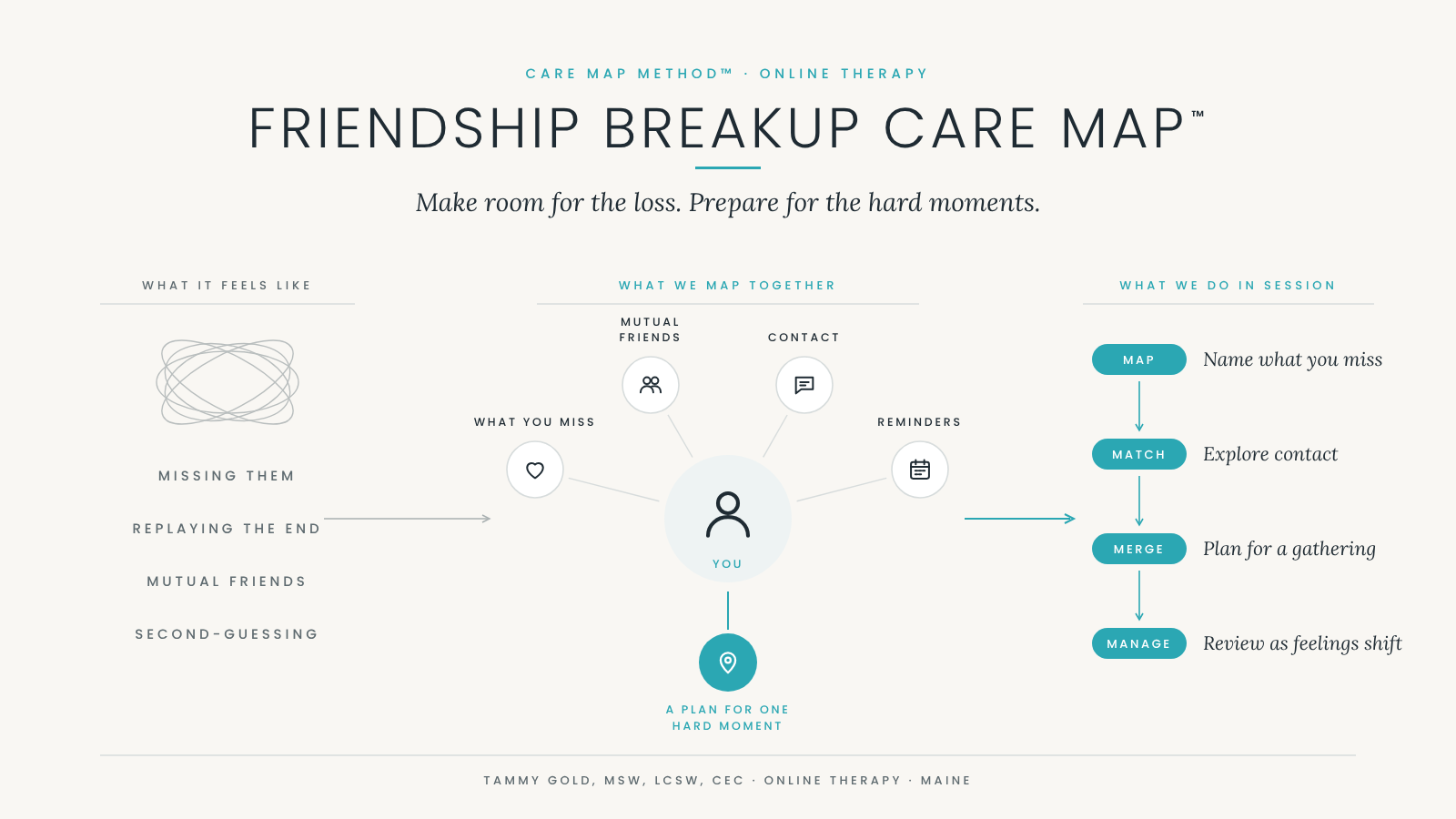
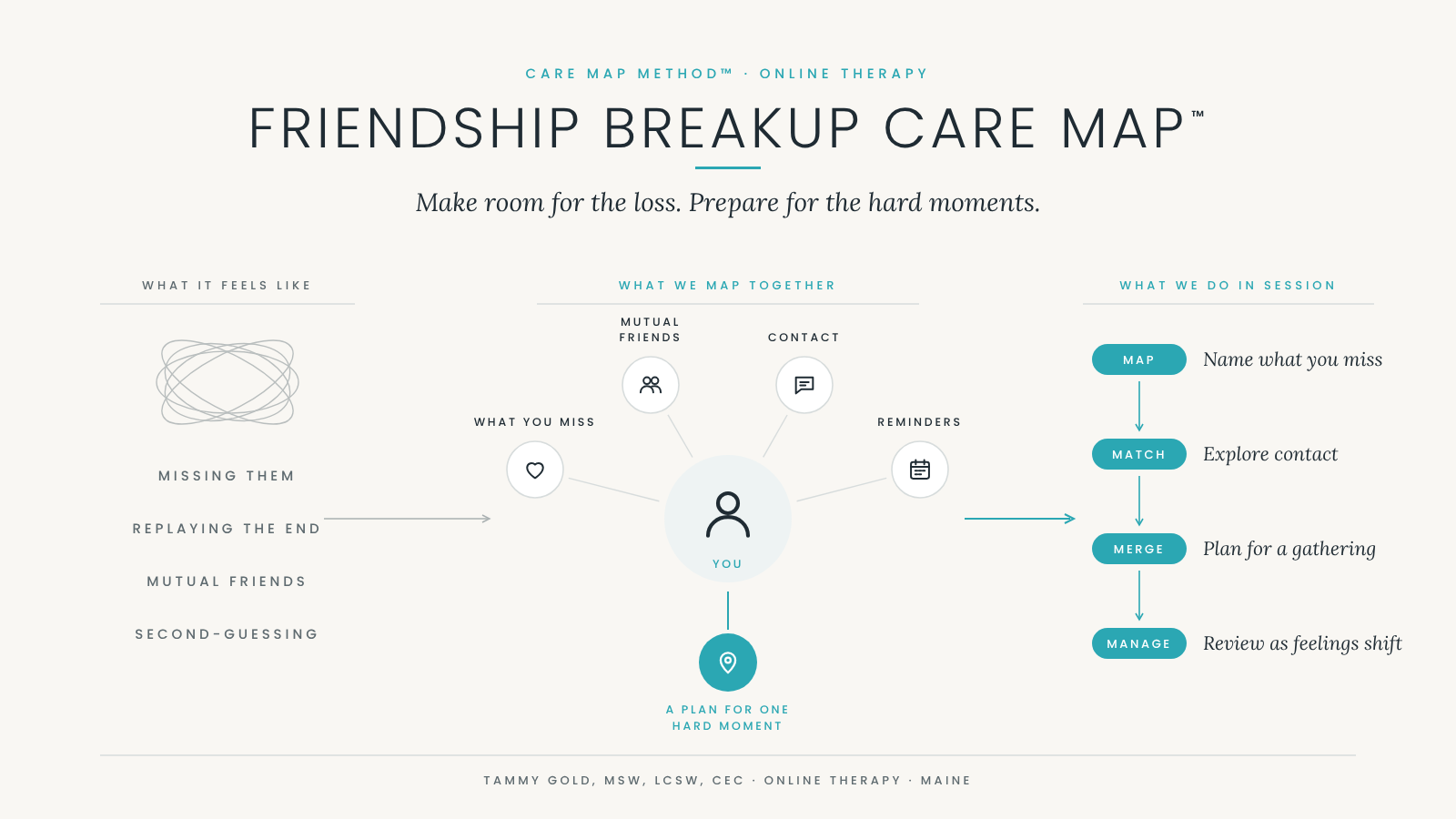
We can begin with a recent reminder of the friendship and explore what made it painful. Was it missing companionship, feeling excluded, regretting something you said or not knowing why the relationship changed? Naming the specific loss helps us choose a useful focus instead of asking you to stop thinking about the person.
If a shared gathering is approaching, we can rehearse how you want to respond to questions, decide what you prefer to keep private and identify someone you can contact afterward. If you are considering a message, we can explore your purpose and expectations before deciding whether to send it. A next step might be one sentence you feel comfortable saying or a support plan for the event. We can revisit that plan as your feelings and circumstances change.
When the ending affects your other friendships
You may be deciding whether to attend a birthday gathering, mute a group conversation or explain why you have been quieter. Each choice can feel loaded when you are worried about being discussed or asked to take sides. We can explore what you want people to know and what you would prefer to keep private. You do not owe every mutual friend the full story.
Sometimes the harder part is comparing the friendship you remember with the way it ended. You may miss the closeness and still recognize patterns that hurt you. Therapy can hold both experiences without requiring you to label the whole friendship good or bad.
Notice what support looks like now
We might consider who can listen without pushing you toward reconciliation, where you still feel comfortable showing up and how you want to respond to an unexpected reminder. An early step could be deciding what to say if someone asks about your former friend. We can revisit that choice as your feelings change. There is no requirement to stop missing someone before you are allowed to invest in your present life.
A practical way to understand what is happening
My Care Map Method™ helps us look at Biological, Social, Environmental and Emotional factors alongside clinical assessment. We consider your health and energy, relationships, daily circumstances and emotional experience rather than isolate one difficult moment from the rest of your life. We MAP the need, MATCH appropriate support, MERGE that support into your circumstances and MANAGE the plan as we learn what is useful. This is an organizing framework within individualized therapy, not a promise of a particular result.
What your first session can include
You can bring one situation you want help understanding. We will discuss your concern, relevant history, symptoms, daily functioning and available support. You can tell me what has or has not helped before and what you need to feel comfortable talking. My aim is to offer empathy without judgment and begin exploring a practical next step, while allowing time for assessment. We will decide together whether my approach fits and which goals matter to you. You do not need to arrive knowing the right words or the solution.
About Tammy Gold
I’m Tamara “Tammy” Gold, MSW, LCSW, CEC. I earned my clinical MSW at Columbia University and my BA at the University of Pennsylvania. My work with families includes parenting, caregiving and difficult relationships. I bring empathy without judgment and a practical interest in helping you understand the problem and consider what comes next.
Frequently asked questions
Is friendship loss a legitimate reason to seek help?
You can ask for support when a relationship loss affects your well-being. Assessment helps establish the care that fits.
Will you tell me to reconnect?
There is no predetermined outcome. We can explore contact, distance and your own participation.
Can I attend if the ending was partly my fault?
Yes. Therapy can include responsibility, regret and learning without reducing you to a mistake.
Can we work on mutual-friend situations?
Yes. We can examine the emotions and choices involved in invitations, shared spaces and conversations.
Is this mediation with my former friend?
No. This page describes individual psychotherapy, not a process for resolving the dispute between you.
Does insurance cover friendship grief?
The event alone does not establish coverage. Verify benefits and estimated costs, and discuss assessed clinical needs before starting.
What if I keep looking at their social media?
We can explore what you hope to find, how checking affects you and what limits you would like to try. The goal is understanding, rather than blaming you for missing someone.
Can I grieve a friendship I chose to end?
Yes. Choosing distance does not erase attachment, sadness or uncertainty. We can discuss both the reasons you left and what you miss.
Booking and profile options
For appointments while you are in Maine, please use Alma while enrollment on other platforms is pending. The other profiles below are available for reference; they do not confirm appointments or insurance participation in this state.
Check availability and insurance on Grow Therapy
Check availability and insurance on Alma
Check availability and insurance on Headway
Read my profile or contact me on Psychology Today
Before confirming a visit, check the service, current provider participation, your exact benefits, and estimated costs. Coverage depends on your plan and the assessed clinical service; a life event alone does not establish insurance eligibility. You must be physically located where I am authorized to provide care at each session.