Online Therapy for Dating After Divorce in California
Dating after divorce can bring hope alongside uncertainty about trust and your own judgment. Online therapy in California offers support for processing past experiences, recognizing present concerns and practicing boundaries at a pace that fits you.
You may feel ready for connection and still find yourself questioning your judgment. A delayed message, new expectation or unfamiliar disagreement can bring up memories of what happened before.
I’m Tammy Gold. I offer individual online therapy for adults in California navigating relationship stress and life changes. We can explore what dating again means to you and what would help you participate with more awareness of your own needs.
Understand what you are carrying into the new situation
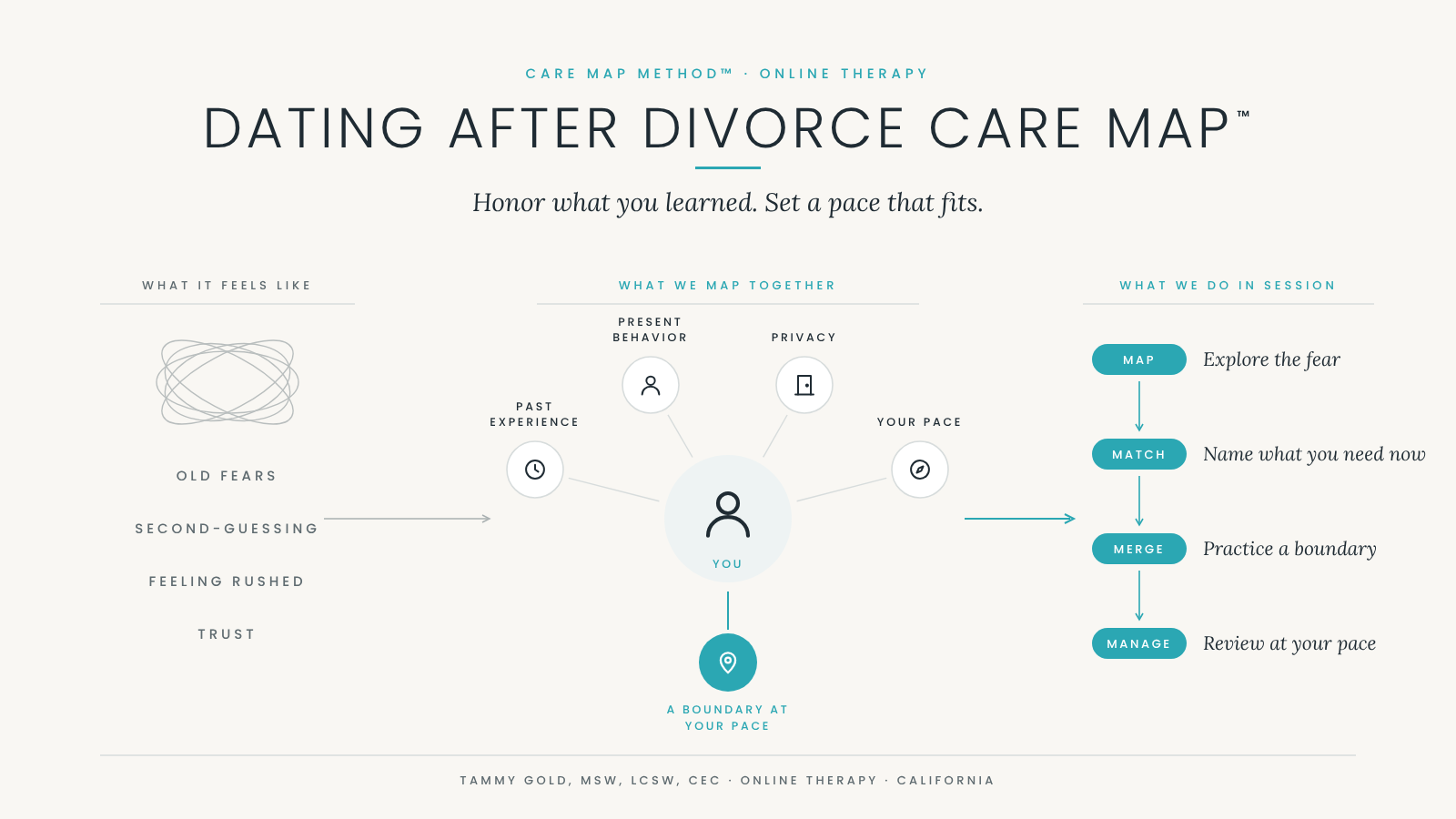
The goal is not to pretend the previous relationship did not happen. We can examine what you learned, what remains painful and how you distinguish a present concern from a fear based on earlier experience.
We will take actual behavior seriously. Therapy should not encourage you to overlook warning signs in order to appear trusting or optimistic.
Practice keeping a preference visible
Perhaps you want to move slowly, keep some personal information private or decline a plan without explaining your whole history. We can explore what makes that difficult.
A starting point might be, “I would like to keep getting to know you, and I need more time before taking that step.” We can consider how that fits your circumstances and what the response tells you about your options.
Make choices without accepting someone else’s timetable
Friends and relatives may have opinions about when you should date, whether you should remarry or how much caution is reasonable. We can explore those expectations alongside your own values.
You do not have to prove you have recovered by entering a new relationship. We can work on grief, confidence and boundaries while leaving the timing and decisions with you. If parenting or co-parenting is involved, we can discuss its emotional impact without providing legal advice.
What we can work on together in session
We can begin with a recent dating moment that triggered doubt and explore both your earlier experiences and the present person's actual behavior. For example, we might discuss whether a request to move faster conflicts with your preference or brings up pressure you recognize from a previous relationship. We will not ask you to ignore a current concern to prove you are ready to trust.
Then we can practice wording that fits your pace, such as, “I am interested in getting to know you, and I am not ready for that step.” We can explore the feelings that arise when you say it and what you want to notice afterward. A next step may be expressing one preference or giving yourself time to decide. Later sessions can examine the experience with curiosity rather than grade the date as a success or failure.
When a new connection brings an old fear
You might notice yourself expecting an argument after expressing a preference, apologizing before asking a question or searching for reassurance that the relationship is secure. We can explore when those responses developed and whether they fit what is happening now. Your past deserves attention without becoming the only explanation for every new experience.
You may also be grieving the life you expected to have, even while feeling interested in someone new. Those feelings can coexist. We can discuss the pressure to appear completely healed and what it would mean to be honest about your pace without sharing more than you want.
Make room for your present responsibilities
Dating may now involve parenting schedules, limited free time or concerns about how much family members should know. We can explore the emotional strain of balancing these responsibilities and how you want to communicate availability. An early goal might be stating a preference before resentment builds or recognizing a situation in which you need more information. Therapy cannot certify that a new partner is trustworthy; it can support your ability to consider what you observe and what you need.
A practical way to understand what is happening
My Care Map Method™ helps us look at Biological, Social, Environmental and Emotional factors alongside clinical assessment. We consider your health and energy, relationships, daily circumstances and emotional experience rather than isolate one difficult moment from the rest of your life. We MAP the need, MATCH appropriate support, MERGE that support into your circumstances and MANAGE the plan as we learn what is useful. This is an organizing framework within individualized therapy, not a promise of a particular result.
What your first session can include
You can bring one situation you want help understanding. We will discuss your concern, relevant history, symptoms, daily functioning and available support. You can tell me what has or has not helped before and what you need to feel comfortable talking. My aim is to offer empathy without judgment and begin exploring a practical next step, while allowing time for assessment. We will decide together whether my approach fits and which goals matter to you. You do not need to arrive knowing the right words or the solution.
About Tammy Gold
I’m Tamara “Tammy” Gold, MSW, LCSW, CEC. I earned my clinical MSW at Columbia University and my BA at the University of Pennsylvania. My work with families includes parenting, caregiving and difficult relationships. I bring empathy without judgment and a practical interest in helping you understand the problem and consider what comes next.
Frequently asked questions
Do I need to be ready for a serious relationship?
No. We can explore what you want and whether dating fits your life now.
Will therapy tell me when I should date?
There is no universal schedule. We can discuss your needs, circumstances and choices.
Can I discuss trust after a difficult marriage?
Yes, within treatment fit. Assessment helps determine whether additional specialized care is needed.
Do you provide dating or matchmaking services?
No. This page describes individual psychotherapy.
Can we discuss the impact on my children?
We can explore your parenting-related distress and choices. Children’s treatment or legal questions need separate appropriate services.
Can I use insurance in California?
Verify exact plan participation, assessed clinical needs and estimated costs through the appropriate active platform.
What if dating is harder than I expected?
We can explore what feels difficult, how it affects daily life and whether your current approach fits your needs. You do not have to force a particular pace.
Can I come if I am not currently dating?
Yes. We can work on your experience of divorce, relationship concerns and goals without requiring you to be using dating apps or seeing someone.
Booking and profile options
Choose a platform that shows current appointments for your physical location in California and your exact insurance plan. Availability and participation can differ across platforms.
Check availability and insurance on Grow Therapy
Check availability and insurance on Alma
Check availability and insurance on Headway
Read my profile or contact me on Psychology Today
Before confirming a visit, check the service, current provider participation, your exact benefits and estimated costs. Coverage depends on your plan and the assessed clinical service; a life event alone does not establish insurance eligibility. You must be physically located where I am authorized to provide care at each session.