

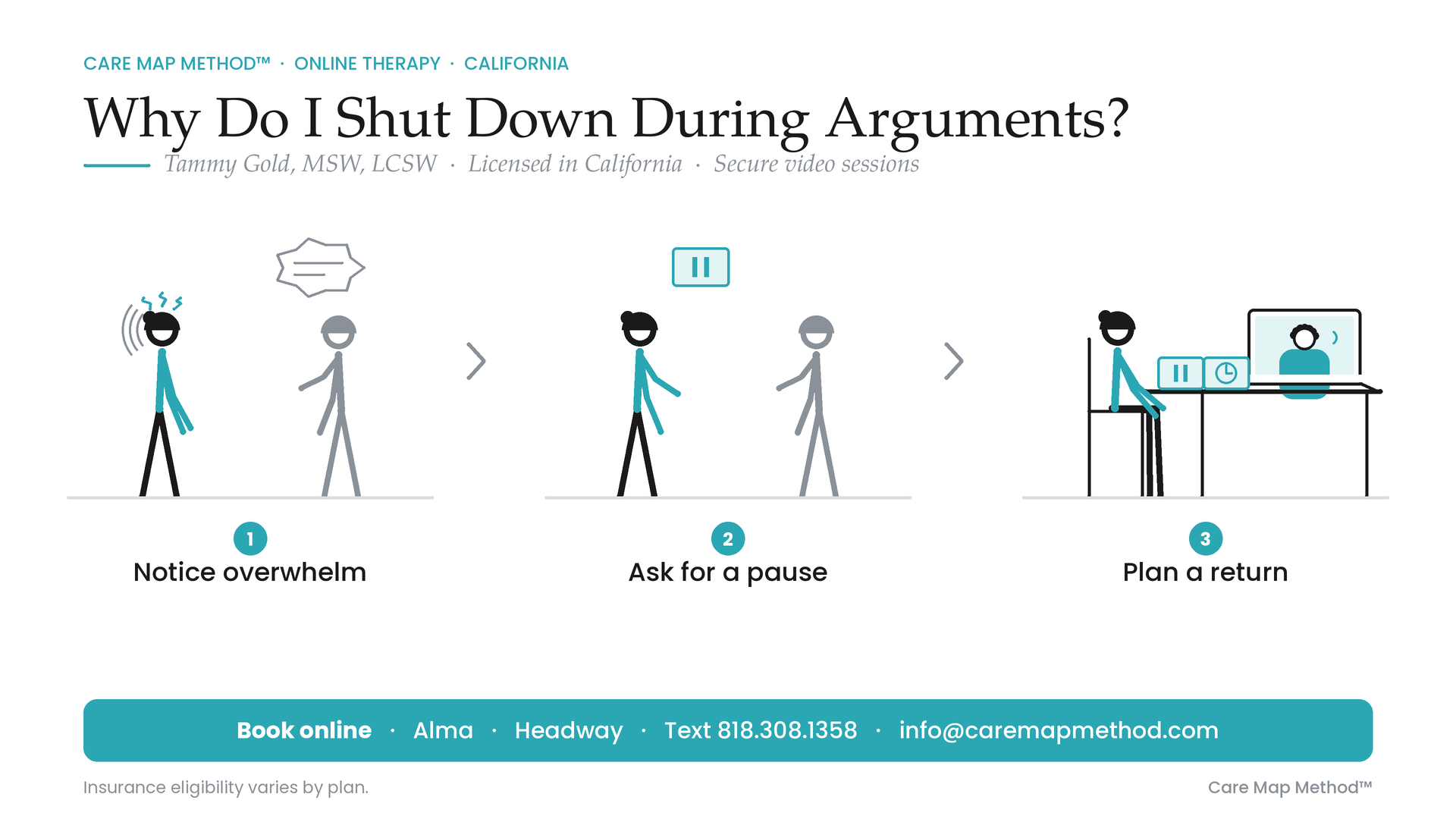
Why Do I Shut Down During Arguments
You want to explain yourself, but the words disappear. Your mind goes blank, your body feels tense, or you need to leave the conversation. Later, you may feel guilty, misunderstood, or afraid of starting again. Shutting down during arguments can have different causes, and therapy begins with understanding your experience rather than assuming a label. In online individual therapy for adults in California, we can explore triggers, recognize earlier signs of overwhelm, and practice a pause that includes a plan for returning. Eligible Anthem Blue Cross or Aetna members can check insurance options through my Headway profile.
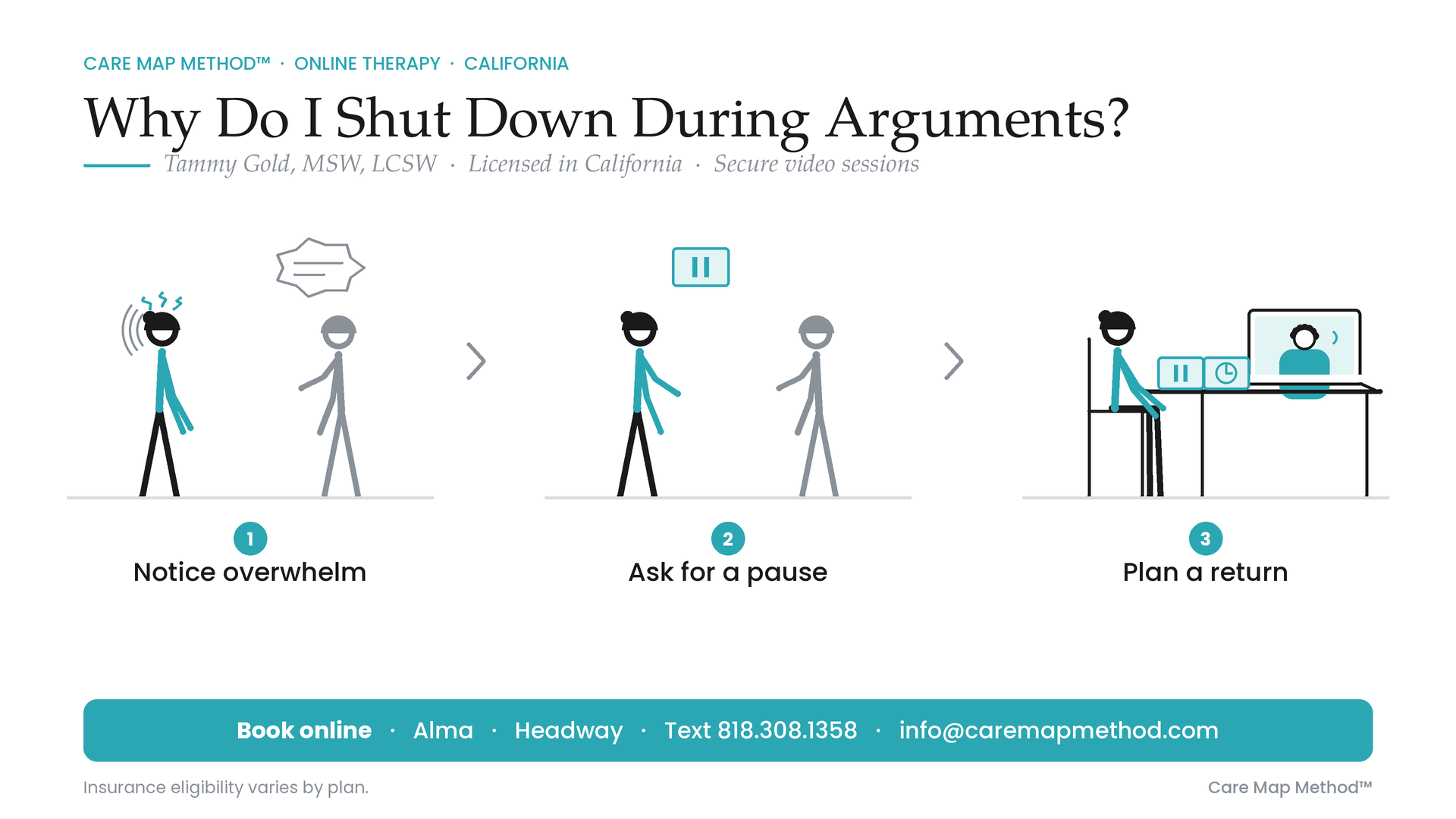
An adult recognizing tension during a conversation, then writing a short pause request and a return time with a therapist on a laptop.
When going quiet does not feel like a choice
An argument starts, and suddenly you cannot think clearly. You might become silent, struggle to speak, or agree just to make the conversation stop. Your partner may read this as indifference while you feel overwhelmed inside. Afterward, the original issue remains unresolved.
I am Tammy Gold, LCSW, and I offer online individual therapy in California. We can explore what happens for you during conflict, including feelings, physical sensations, thoughts, and relationship context. Going quiet does not tell us the cause on its own. Assessment helps us understand what support fits.
Button: Check Insurance and Availability on Headway
Understand what happens before the silence
We might look at a recent argument in detail. Was there a change in tone, a particular phrase, fear of saying the wrong thing, or a sense that there was no way to respond safely? Were you exhausted before the conversation began? What happened when you tried to pause?
We can work on noticing earlier signs of overload, putting words to your experience, and distinguishing a useful break from withdrawing without explanation. Your needs matter, and so does what happens after the break. The goal is to develop more options for responding, not force you to continue a conversation when you cannot participate safely or thoughtfully.
Map the trigger and prepare a different response
Care Map Method™ helps organize our work alongside clinical assessment. Biological factors may include fatigue or physical tension. Emotional factors might include fear, shame, or hurt. Social and Environmental factors include relationship history, expectations, timing, and privacy.
MAP the point where you begin to lose your words. MATCH the need with a strategy, such as grounding, a clear pause, or writing down one sentence. MERGE the strategy by practicing it before a difficult moment. MANAGE communication and responses by reviewing whether the plan helped and what made it difficult. We can adjust the pace and explore the history behind the reaction.
Practice a pause with a return plan
One possible phrase is: “I want to talk about this, and I am having trouble thinking clearly. Can we pause and choose a time to return?” In therapy, we can make that wording more natural for you and discuss what a workable return looks like. A pause should not become a way to avoid every difficult topic.
When conflict involves intimidation or fear, communication practice alone may not be appropriate; we will consider safety and the kind of help needed. We can review progress through earlier recognition of overload, increased ability to express a need, and follow-through on returning to conversations. Progress is individual, and setbacks give us information to work with.
Insurance and next steps
Eligible Anthem Blue Cross or Aetna members in California can use my Headway profile to check their specific plan, estimated costs, and appointment options. Benefits and network participation vary. Coverage depends on clinical assessment and the service provided. This page describes individual psychotherapy; couples sessions, coaching, mediation, and other services require separate confirmation.
You do not need to have the whole situation figured out before reaching out. We can begin by understanding what is most difficult and deciding whether this service is a good fit.
Frequently asked questions
Does shutting down mean I have trauma?
Not necessarily. Silence or overwhelm during conflict can have different explanations. We consider your history, current circumstances, symptoms, and safety without assigning a diagnosis based on one behavior.
Can I work on this without my partner?
Yes. Individual therapy can help you understand your responses and practice coping and communication skills. Changes in a relationship also depend on the other person’s behavior, which individual therapy cannot control.
What will we discuss at the first session?
We explore your concern, relevant history, symptoms, supports, and goals. You can describe a recent argument if you feel comfortable. You do not need to relive every painful experience or find the perfect words immediately.
Can Anthem Blue Cross or Aetna cover sessions?
Headway can check your exact California plan and estimate costs. Coverage depends on benefits, network participation, clinical assessment, and the service. This page describes individual psychotherapy, not a guarantee of couples counseling coverage.
Should I force myself to stay in the argument?
No single rule fits every situation. We can consider what happens during the interaction and develop an appropriate pause or response. If you feel threatened, safety takes priority over completing a conversation.
How do I start?
Use “Check Insurance and Availability on Headway” to explore an appointment for California individual therapy. Bring a general sense of what is happening. We can clarify the pattern together rather than expect you to explain it perfectly.
About Tammy Gold
Tamara “Tammy” Gold, MSW, LCSW, CEC, is a Columbia University–trained clinical social worker, University of Pennsylvania graduate, certified coach, and founder of Care Map Method™. She is the author of Secrets of the Nanny Whisperer and brings more than 20 years of direct family work. Her therapy style is warm, collaborative, and practical, with attention to emotions, history, and everyday functioning.