

Anxiety and Decision-Making Therapy in Iowa
Repeatedly comparing options or asking for reassurance can leave you less certain than when you started. Explore online therapy in Iowa to understand the worry, clarify priorities and practice a decision process that keeps your choices yours.
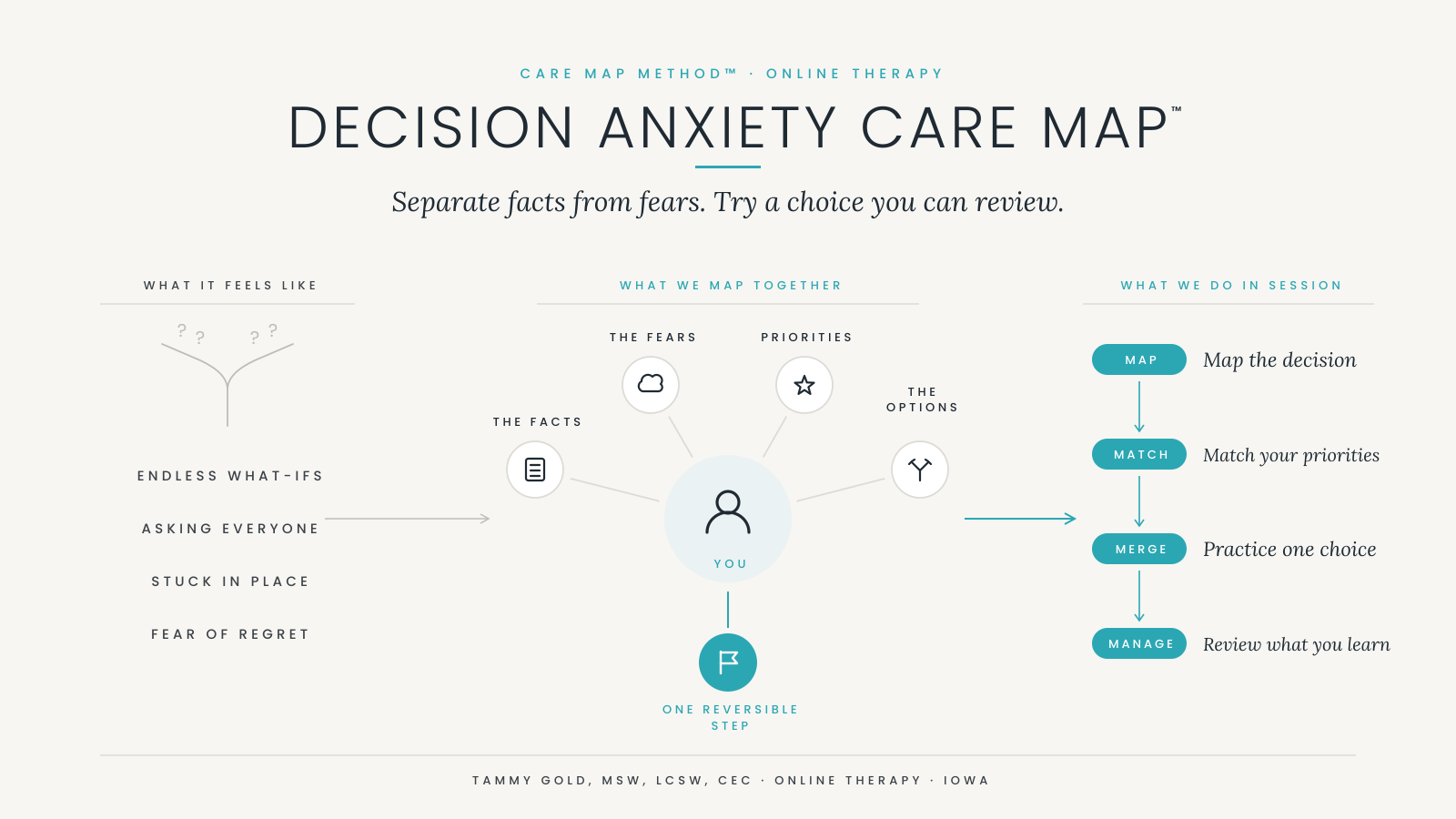
Four illustrated steps for exploring a difficult decision and reviewing a manageable choice.
You compare the options, ask someone what they think and feel settled for a moment. Then another possibility appears and you begin again. A routine decision can take more time and energy than you expected, leaving you frustrated with yourself and worried about making the wrong choice.
I’m Tammy Gold, a licensed therapist. I offer individual online therapy for adults in Iowa experiencing anxiety, relationship stress and difficult life transitions. We can explore what makes decisions feel so loaded, what information you actually need and how you want to respond to uncertainty.
Check Iowa Insurance and Availability
When choosing becomes a cycle of checking
You may reread reviews, ask several people for opinions or postpone answering a simple invitation. Perhaps you make a choice, then keep revisiting it instead of feeling able to move on. Other people may not see how much effort goes into an ordinary day.
We can look at the pattern without assuming that all careful thinking is a problem. Some decisions need time and specialized information. The question is how the process affects you, whether new information is being gained and what happens when you do not feel completely certain. Your assessment helps us understand the concern.
What making the wrong choice seems to mean
The feared outcome may involve disappointing someone, wasting money, causing conflict or proving a harsh belief about yourself. You may feel responsible for predicting consequences that no person could fully know in advance.
In therapy, we can explore the meaning attached to one actual decision. We might consider the standards you are using, whose preferences are taking priority and how past experiences shape the moment. This can help us distinguish a practical question that needs an answer from a repeated attempt to feel perfectly safe.
What we might work on in a session
For example, we might discuss a routine commitment you kept checking with friends. Each opinion added another possibility until you felt less able to choose. We could explore what you hoped the next opinion would settle, what mattered to you and what you feared would happen if someone disagreed.
Together, we might identify the information already available and practice making one proportionate choice. If appropriate, that could involve a small, reversible decision or expressing a preference without another round of consultation. We would discuss the discomfort and review the experience later. The therapist's role is to support your understanding and agency, rather than select the correct life decision for you.
Using the four Care Map steps for decision anxiety
Care Map Method™ helps organize Biological, Social, Environmental and Emotional factors. Fatigue, relationship expectations, the practical setting and emotional history may all affect a choice. We consider those factors alongside your symptoms and functioning.
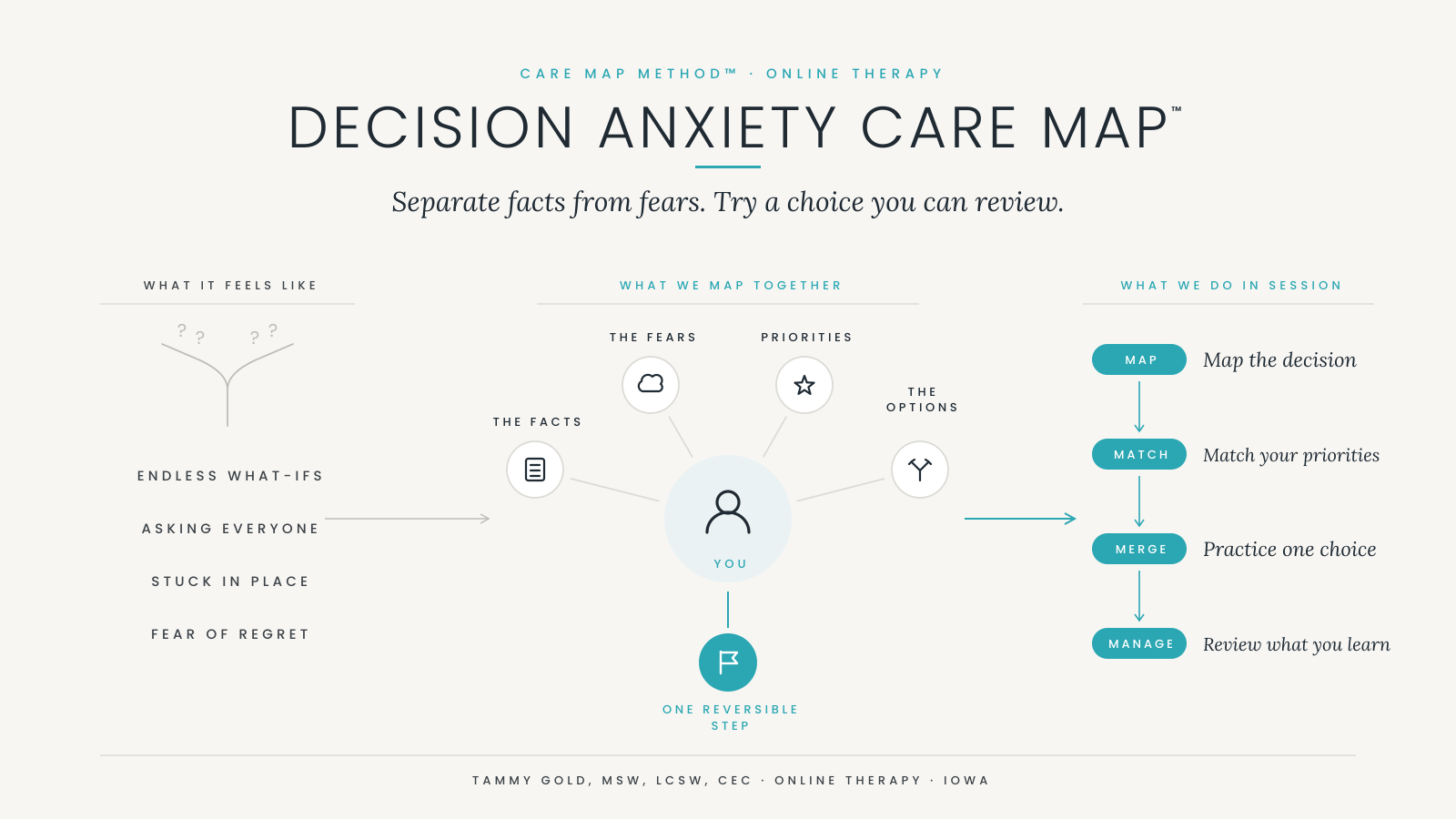
We MAP the decision, the facts and the feared outcomes. We MATCH support and strategies to the concern and your priorities. We MERGE a chosen approach through rehearsal or a manageable experiment in daily life. We MANAGE the plan by reviewing what you learned and what needs adjustment. The framework does not mean every decision is simple, reversible or appropriate to make without expert advice.
When other people have become part of the decision
You may be used to seeking approval before naming a preference. A partner, parent or friend might offer reassurance generously, while you still find yourself needing more. We can examine the relationship pattern without blaming the person who has been trying to help.
You might practice saying what you prefer, asking one specific factual question or noticing when you are requesting permission rather than information. We can explore what it feels like to have a preference that someone else does not share. The focus stays on your well-being and the choices available in your circumstances.
A first session does not require a finished plan
You can start by describing the choice or pattern that brought you here. We will discuss relevant history, current symptoms and the effect on work, relationships and daily functioning. You can tell me what you have tried and what you would like to be different.
We will consider fit and possible goals together. Financial, medical and legal decisions may require information from the appropriate professionals. Therapy can explore the distress and your participation in the process while respecting those separate areas of expertise.
About Tammy Gold and Iowa appointments
I’m Tammy Gold, MSW, LCSW, CEC, a licensed therapist, certified coach and author. I earned my MSW at Columbia University and my BA at the University of Pennsylvania. My work includes relationships, family stress and the emotional demands of major transitions.
Use my Alma profile to review current Iowa availability and your exact insurance plan. If you have BCBS Massachusetts, verify that specific product and current participation rather than assuming all Blue Cross plans are equivalent. Confirm estimated costs and plan to be physically located in Iowa during an appointment.
Frequently asked questions
Why do ordinary decisions feel so difficult?
We can explore what you fear a choice might mean, the information involved and how the process affects you. There is no single explanation for everyone. Assessment considers your history, symptoms, current pressures and daily functioning before deciding what support fits.
Will you tell me which option to choose?
Your decisions remain yours. Therapy can help you understand priorities, fears and patterns around a choice, while relevant specialists provide information within their expertise. We can practice a decision process without treating the therapist as the authority on your life.
Can we work on asking for reassurance repeatedly?
Yes. We can examine what happens before and after you ask, what the reassurance is meant to settle and how long it helps. That understanding can guide a manageable next step. You do not have to stop a familiar response perfectly.
What if a decision has serious consequences?
We will take the context seriously. Medical, financial or legal questions may need advice from the appropriate professional. Therapy can address the emotional experience and your decision process without replacing expert information or pretending every option is equally safe or reversible.
Is decision paralysis a diagnosis?
It is a descriptive phrase, not a diagnosis by itself. We would discuss the pattern, other symptoms and the impact on your life. Assessment helps clarify whether a clinical condition is present and what form of care may be appropriate.
Do I need to know my therapy goals before contacting you?
No. You can begin with a situation that feels difficult or a pattern you want to understand. We will discuss symptoms, history and functioning, then consider treatment fit and goals together. An initial question can be enough to start the conversation.
Can I use BCBS Massachusetts while located in Iowa?
Check the exact plan and current Iowa provider participation through my Alma profile. The insurer name does not confirm every product or network. Coverage depends on benefits and the clinical service. Review estimated costs before booking an appointment.
How do I check Iowa online appointments?
Open my Alma profile, select your actual location and review current availability and insurance options. Plan to be physically located in Iowa for an Iowa appointment. If the correct state, service or plan is unclear, clarify those details before scheduling.
Take the next step
You can review current Iowa appointment options and your exact insurance plan through my provider profile. Confirm estimated costs before scheduling. We can begin with the situation you want help understanding.