

Therapy for Trauma-Related Stress and Feeling Constantly on Guard
After a frightening or deeply upsetting experience, reminders can bring tension, avoidance, or strong reactions long after the event. Explore trauma therapy that starts with what feels manageable, without pressure to retell everything at once.
Adult pausing to notice a stress response and consider support.
After a frightening or deeply upsetting experience, life can look familiar while you feel different inside. You may find yourself scanning a room, avoiding reminders, replaying what happened, or reacting strongly to something that other people barely notice. You might tell yourself that enough time has passed and wonder why it still affects you.
I’m Tammy Gold, LCSW. I offer individual online therapy for adults navigating trauma-related stress, anxiety, relationship concerns, parenting stress, and life transitions. We can begin with how the experience is affecting you now and what kind of support feels manageable.
Reactions can continue after the event is over
People respond to frightening experiences in different ways. You may feel alert even in settings that used to feel ordinary. A sound, place, date, conversation, or conflict may bring back a strong reaction. You might avoid certain situations because they remind you of what happened, or find it hard to relax when nothing dangerous is happening.
Some people experience changes in trust, sleep, concentration, mood, or closeness with other people. Others feel detached or have trouble explaining why a particular moment is so difficult. None of these details alone establishes a diagnosis, and you do not need to compare your experience with anyone else’s to deserve support.
You control how much you share
You do not have to describe every detail of a painful event in the first appointment. We can start with what you notice in the present: what feels difficult, what you have been avoiding, and what would help you feel safer or more supported. You can tell me if a question feels like too much or if you need to slow down.
Our pace matters. Some people want help understanding a reaction at work or at home. Others want to explore how the experience affects relationships or parenting. We can discuss your goals and identify what kind of therapy approach may fit, based on your needs and my clinical scope.
Notice what happens around a trigger
Imagine that an unexpected message arrives from someone connected with a painful period in your life. You may feel your body tense, begin rereading the message, and decide you need to respond immediately. In therapy, we can slow down that sequence and ask what you noticed, what meaning came to mind, and what you needed in that moment.
The purpose is not to prove that your reaction is wrong. It is to understand it and explore your options. You might choose to wait before responding, reach out to a trusted person, make a plan for a difficult setting, or discuss a boundary. We can review what happened and adjust the plan if it did not fit.
Consider the effects on relationships and daily life
Trauma-related stress can affect how close you feel to people and how you respond during conflict. You may withdraw, become more watchful, or feel responsible for preventing every possible problem. Someone close to you may not understand why a reminder affects you so strongly.
We can focus on your experience and the choices available to you. That might include preparing to talk about a boundary, deciding what information you want to share, or identifying a support person who can help during a difficult moment. Individual therapy does not require another person to attend.
Use Care Map Method to organize the picture
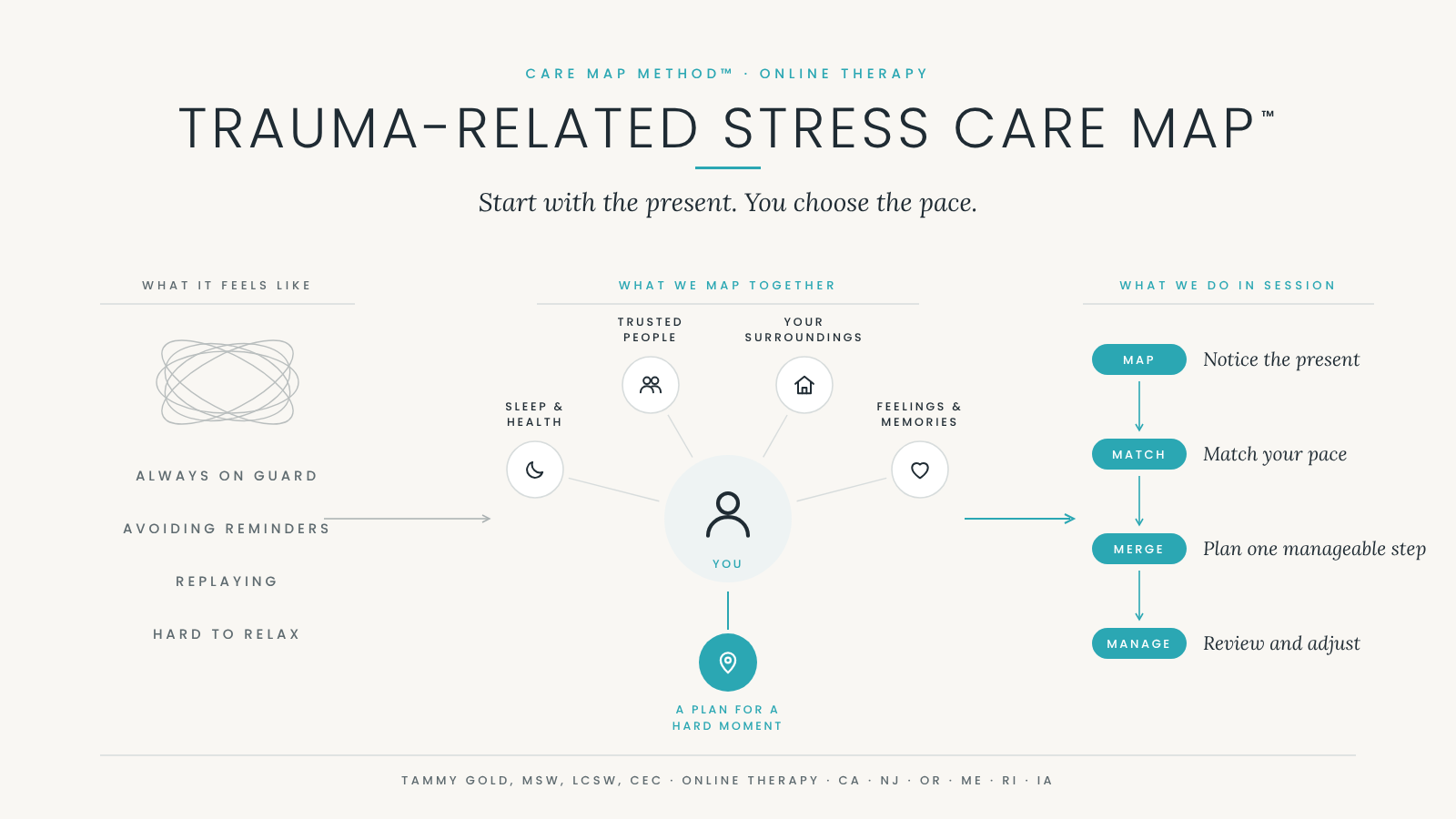
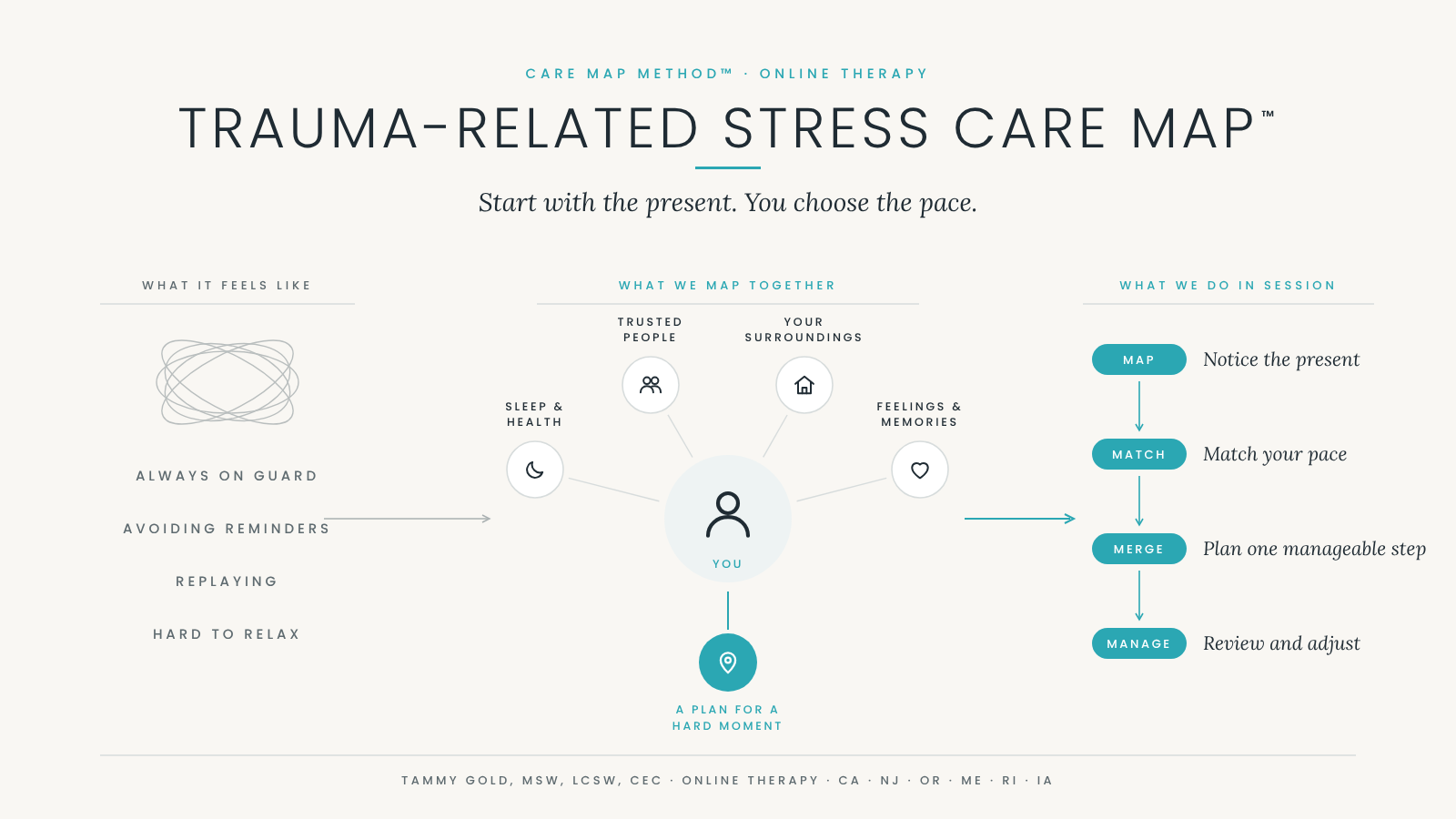
My Care Map Method considers Biological, Social, Environmental, and Emotional factors that may be relevant. We might discuss sleep, health, supportive relationships, current surroundings, and the feelings or memories connected with a situation. The framework can help organize the conversation without reducing your experience to a checklist.
We MAP what is happening now,
MATCH appropriate therapeutic support,
MERGE manageable steps into daily routines, and
MANAGE the plan through review.
This is a framework for our work, not a promise of a specific outcome or a claim that one method fits every person.
Getting support for trauma-related symptoms
If symptoms are interfering with daily life, relationships, sleep, or your sense of safety, speaking with a licensed mental health professional may help. A therapist can discuss your history, current symptoms, and goals and consider whether the treatment is a good fit. If you need a specialized trauma treatment, we can discuss whether a referral is appropriate.
If there is an immediate threat to your safety, contact emergency services or go to an emergency department. A routine telehealth therapy appointment is not emergency care.
What the first session can include
We can discuss what brought you to therapy, what you want help with, and what would make the conversation feel manageable. You can ask how I work and share only what feels useful to begin. We can talk about current symptoms and support needs without requiring a full retelling of the event.
I offer online therapy to adults physically located in California, New Jersey, Oregon, Maine, Rhode Island, and Iowa, subject to current openings. Check my Headway or Alma profile for your state and exact insurance benefits.
Frequently asked questions
Do I have to tell the whole story in the first session?
No. We can begin with what is affecting you now and discuss what you want from therapy. You can decide how much detail to share and ask to slow down.
Does a strong reaction mean I have PTSD?
Not by itself. A diagnosis requires an assessment of symptoms, history, duration, and impact. We can discuss what you are experiencing and whether additional evaluation is appropriate.
Can therapy help if the event happened a long time ago?
People seek support at different points in life. We can focus on how the experience affects you now and what you would like to address.
Can I work on a trigger without discussing every detail?
We can start by talking about the present-day situation and your response. The approach and pace should be based on your goals, safety, and clinical fit.
Can trauma affect relationships?
It can affect trust, communication, closeness, or reactions during conflict. Individual therapy can help you understand your own patterns and consider what you want to communicate or change.
Do you offer EMDR or another specialized trauma treatment?
This page describes individual therapy and does not advertise a specialized modality. Ask during an initial conversation whether your goals fit the services I currently provide or whether a referral would be more appropriate.
Can I use insurance for trauma-related therapy?
Coverage depends on your exact plan, eligibility, clinical needs, and active provider participation. Verify benefits and expected costs through my provider profile.
What if I do not feel ready to start?
You can ask questions about the process and describe what would help you feel more comfortable. Starting with a consultation or a limited first conversation may help you decide whether the fit feels right.
You can begin with the part that feels manageable. Check current insurance and availability through my Headway or Alma profile.