

Wanting connection while fearing the interaction
Social situations can feel exhausting when you are monitoring everything you say. Explore therapy for fear of judgment, avoidance and the wish to feel more connected.
Young adult reviewing a notebook at a quiet cafe table before a meeting.
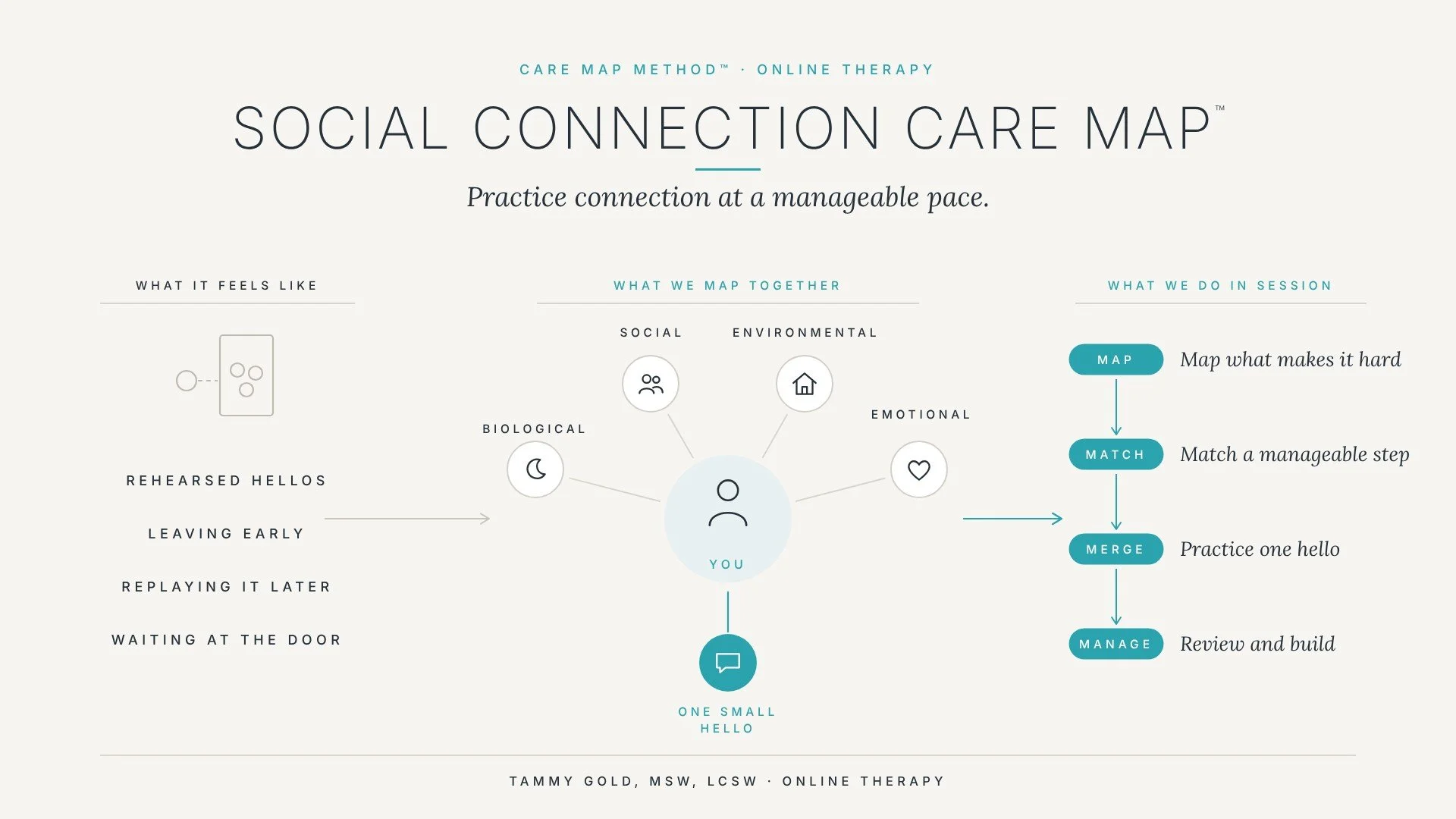
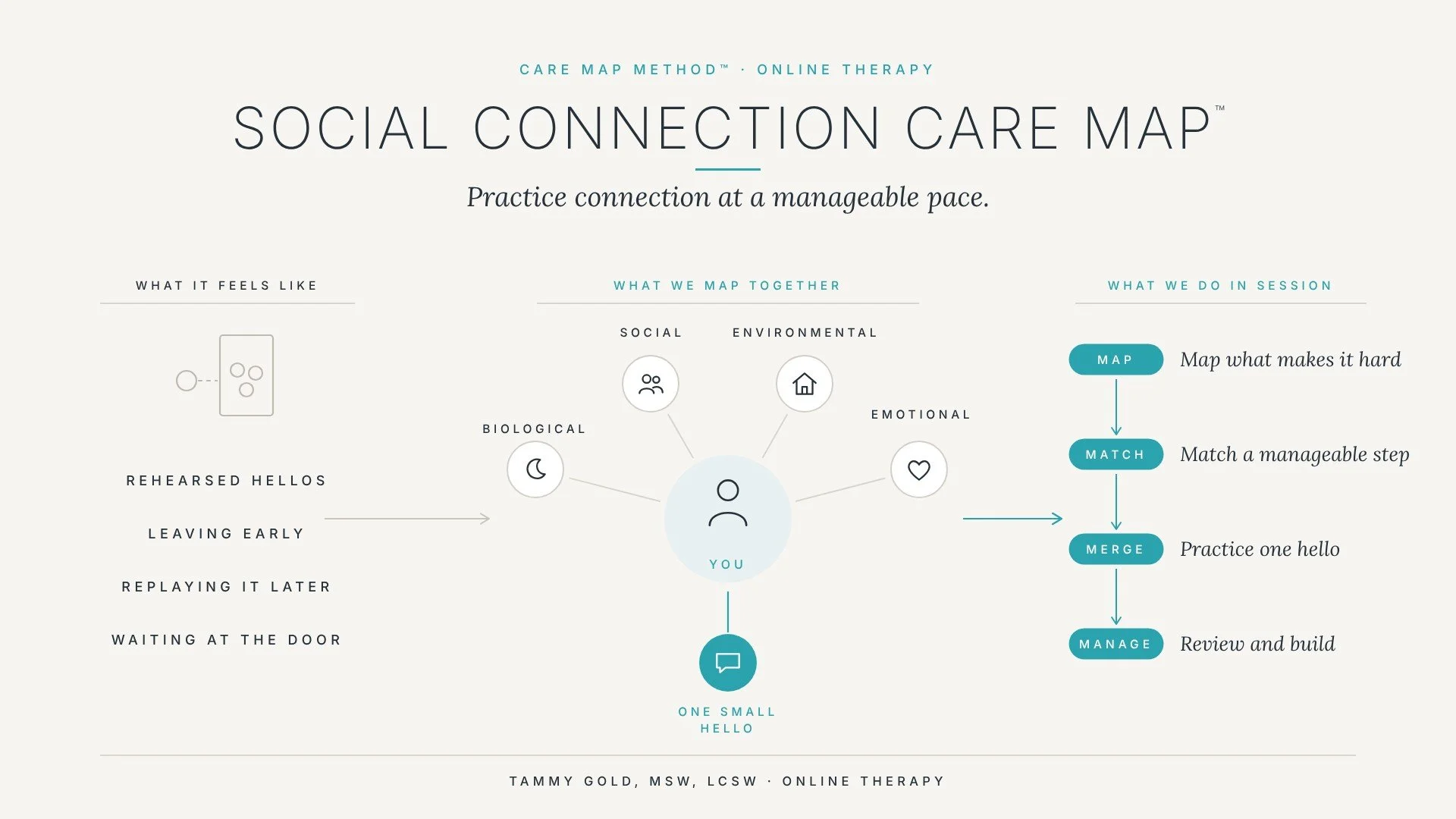
You might want to attend a gathering and still spend the day looking for a reason to cancel. During a conversation you may focus so intensely on how you appear that it becomes difficult to listen. Afterward, you replay an ordinary comment and wonder whether everyone noticed something wrong. Over time, avoiding situations can make your world smaller even when connection matters to you.
Social anxiety therapy offers space to understand that pattern and consider what would help you participate more freely. The goal is not to turn you into an extrovert or make you enjoy every gathering. It is to reduce the extent to which fear makes choices for you.
Understanding your particular experience
Social anxiety can show up around meetings, dating, new friendships, classes or everyday interactions. One person worries about sounding unintelligent; another fears rejection or visible nervousness. You may be comfortable with close friends but struggle whenever there is uncertainty about your role or how others see you.
We will look at when the anxiety appears, what you predict, what you do to protect yourself and what happens afterward. We can also explore experiences of exclusion, discrimination, bullying or criticism without assuming every fear is irrational. Cultural expectations, neurodivergence and communication preferences may be important parts of the picture.
How I approach the work
I use a collaborative, structured approach that considers your symptoms, goals and circumstances. We may examine interpretations of social events, practice ways to redirect attention, work on self-criticism or plan manageable steps toward situations you want to participate in. Any between-session practice should be discussed and adapted to your needs.
The Care Map Method™ can help organize the work. We MAP situations and responses, MATCH clinical strategies to the difficulties identified, MERGE practice into ordinary life and MANAGE what we learn. If your needs call for specialized assessment or treatment beyond my scope, we will discuss an appropriate referral rather than treating every social difficulty in the same way.
Moving from broad goals to specific situations
A goal such as being more confident can feel vague. A more concrete starting point might be asking one question during a team meeting, attending part of a gathering or sending a message without repeatedly rewriting it. We can consider what makes that step difficult and how you would know whether it was useful.
For example, you might believe that pausing during a conversation will make someone reject you. We can explore that prediction and how it influences your behavior. Progress would not require a flawless conversation. It might involve staying engaged, tolerating uncertainty or recovering more gently when an interaction feels awkward.
Making room for your preferences and limits
Enjoying solitude, needing recovery time or preferring a small number of friendships does not automatically indicate a problem. The question is whether fear is keeping you from the relationships, opportunities or activities you want. Therapy should respect your personality rather than impose a social ideal.
We can also distinguish a situation that needs coping skills from one that needs boundaries or a change of environment. You do not have to practice tolerating disrespect in order to become less anxious. Understanding your needs includes considering where you feel safe, which relationships are reciprocal and how much social energy you realistically have.
What progress may look like
Change can be uneven. You may participate more one week and feel unsettled the next. Together we can review what is changing, which situations remain difficult and whether the approach needs adjustment. We will consider functioning and your experience, not just whether you appear calm to other people.
Useful progress might include spending less time reviewing conversations, responding to invitations more deliberately or feeling able to express a preference. You can also bring doubts about therapy into the sessions. If talking by video itself feels exposing, we can discuss that at the start and consider what would make the appointment more manageable.
About Tamara Gold
I am Tamara “Tammy” Gold, MSW, LCSW, CEC, a Columbia University-trained therapist, certified coach and author of Secrets of the Nanny Whisperer. My work with individuals and families informs a warm, collaborative approach that connects emotional understanding with practical next steps. Treatment is individualized to your needs; results and timelines vary.
Online appointments and insurance
Online appointments depend on your physical location at each session, clinical fit and current availability. Review my booking profiles to confirm whether I can serve you in your state. Selected insurance plans may be available through Headway or Alma. Coverage, medical-necessity requirements and your costs depend on your individual plan; a life problem alone does not establish insurance coverage.
Frequently asked questions
Is social anxiety the same as being shy?
No. Shyness is a temperament or experience, while clinically significant social anxiety involves distress and interference that require assessment. You can seek support without deciding in advance which label fits. We will explore your experience rather than diagnose from a checklist alone.
Can therapy help me make friends?
Therapy can address anxiety, avoidance, communication and beliefs that affect connection. It cannot guarantee friendships or control other people. We can identify realistic ways to approach relationships that fit your interests and preferences.
Will I have to do things that overwhelm me?
We will discuss any practice collaboratively and consider the pace, purpose and support needed. You should be able to ask questions and express discomfort. The plan should fit the assessed problem and your readiness.
What if I only feel anxious at work?
That is useful information. We can examine meetings, feedback, workplace dynamics and performance concerns rather than assuming the same pattern occurs everywhere. Sometimes a broader assessment helps clarify overlapping concerns.
Can we address replaying conversations afterward?
Yes. We can explore the meaning you give to the interaction, how repeated reviewing affects you and what helps you shift attention without demanding certainty about what someone else thought.
Is online therapy an option?
Online appointments may be appropriate depending on your needs and location. We will consider privacy, technology and clinical fit, and discuss other options if virtual care is not sufficient.
Take the next step
If this sounds like the kind of support you need, review current appointment options and check insurance eligibility through my Headway or Alma profile. You can bring questions about fit, fees and the process before scheduling. You do not need a perfect explanation of the problem to begin.