

When parenting disagreements keep becoming relationship arguments
One of you sets a limit and the other changes it. A discussion about bedtime becomes an argument about respect. You may be worried about your child while also feeling criticized or unsupported by your partner.
An adult reviewing notes about a family routine at a table away from the child’s play area.
One of you sets a limit and the other changes it. A discussion about bedtime becomes an argument about respect. You may be worried about your child while also feeling criticized or unsupported by your partner.
I’m Tammy Gold. I offer individual online therapy for adults in California. We can explore how parenting disagreements affect your mental health and work on responses that fit your role and circumstances.
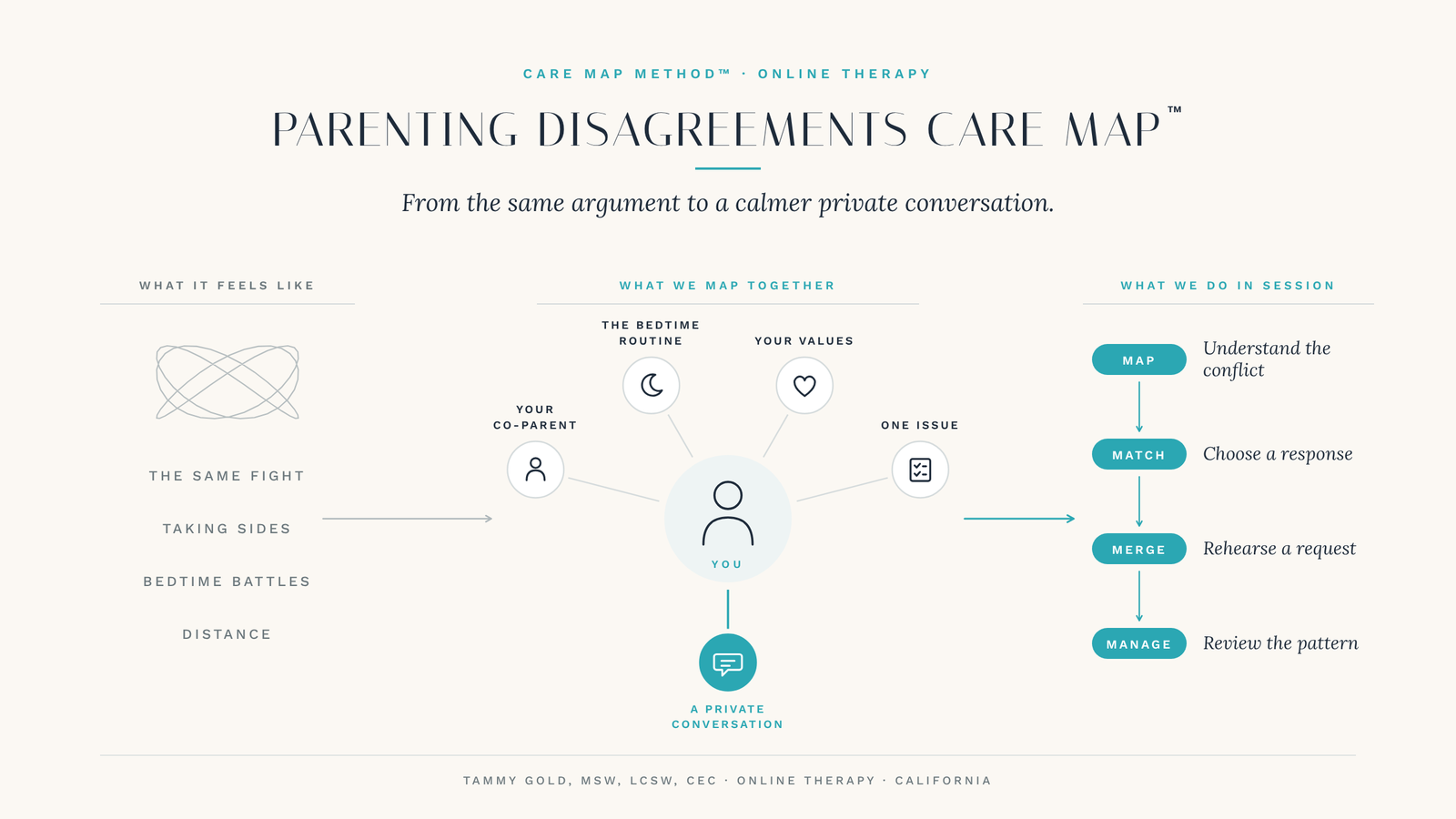
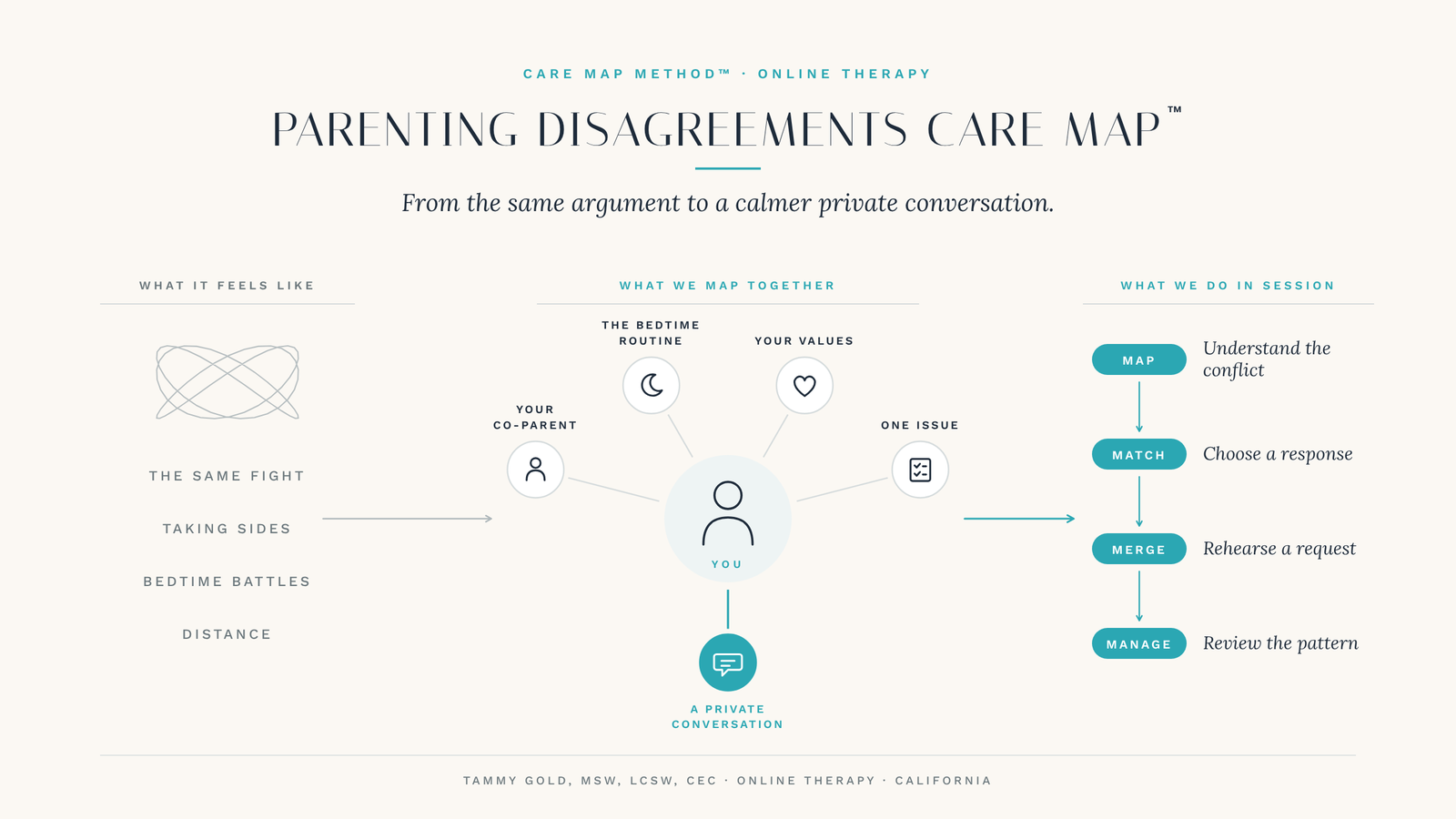
Identify the conflict beneath the parenting decision
You may have different beliefs about structure, affection or consequences. You may also attach different meanings to disagreement: one person hears criticism, while the other hears that their concern does not matter.
We can examine a specific interaction, what you felt and what you did next. We will consider your family history, present responsibilities and whether fatigue or limited support is making discussion harder.
Move one discussion away from the heated moment
An example might be, “I want us to discuss this privately before it comes up again, because I do not want to keep arguing in front of our child.” We can practice expressing the issue without trying to settle every parenting difference at once.
Individual therapy focuses on your experience and choices. We can explore how to make a request, respond to disagreement and decide whether a separate couples or family service would be useful. It cannot require another adult to cooperate.
Consider your own emotional response
Perhaps you feel compelled to defend every decision or find yourself withdrawing until resentment builds. Therapy can give you room to understand those patterns and take responsibility for your part without taking responsibility for everything.
My Care Map Method™ organizes Biological, Emotional, Social and Environmental factors. We map a recurring conflict, match a coping or communication strategy, merge practice into one situation and manage the plan as we review it.
Begin with an adult treatment goal
The first session includes assessment of your concerns and functioning. An initial goal could be expressing disagreement more clearly or recovering from a conflict with less rumination. We are treating the adult’s mental health; your child’s developmental or behavioral needs may require separate evaluation.
If there is intimidation, violence or fear, safety and appropriate support take priority over a joint discussion.
Questions about starting therapy
Can I attend if my partner refuses? Yes. Individual therapy can address your distress and choices without requiring partner participation.
Will you decide whose parenting style is right? We can explore behavior, impact and appropriate concerns without making a verdict about a person who has not been assessed.
Is my child included in these sessions? This page describes individual adult care. Child or family treatment would require a separate discussion and consent process.
Can you assess a developmental concern? A child’s developmental concerns belong with their pediatric clinician or another appropriate evaluator.
Is this couples therapy with insurance? No. Couples services and coverage require separate assessment; relationship-only counseling is generally self-pay.
How do I start in California? Ask about current individual therapy availability and confirm your plan and payment options before scheduling.
Ask about current availability, clinical fit and payment options. Confirm the state where you will be located before scheduling.