

When adulthood looks different from what you expected
Your 20s and 30s can bring friendship changes, career pressure and questions about who you want to become. Explore practical, individualized online therapy with Tamara Gold.
Young adult using a notebook during a video therapy session at home.
You can be doing the things you thought you were supposed to do and still feel uncertain. Maybe you finished college, started a job, moved away from home or entered a serious relationship, yet everyday life feels more confusing than you expected. Friends seem to be moving ahead while you keep wondering whether you are behind. You may look capable to everyone else while privately feeling lonely, anxious or unsure of yourself.
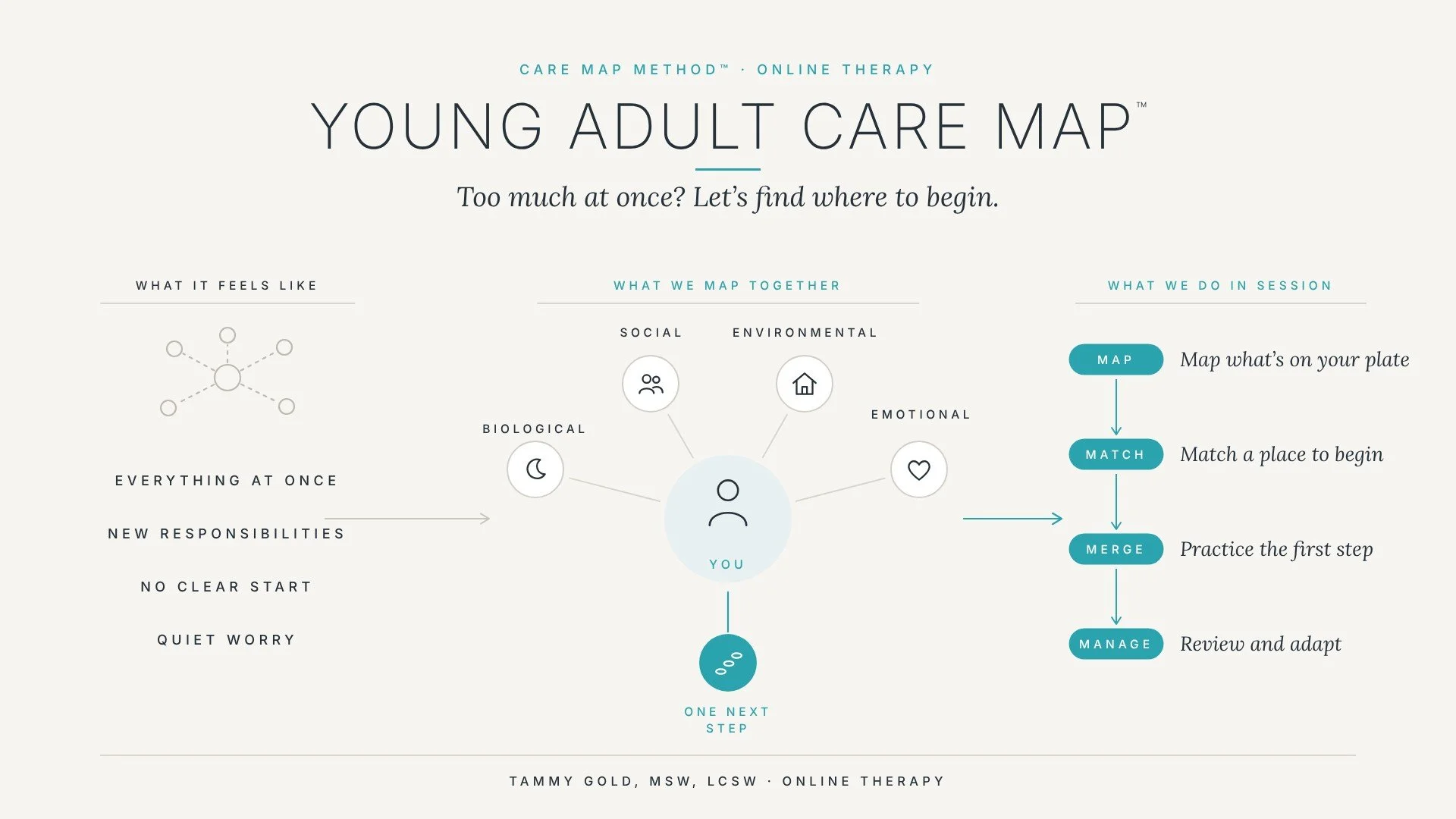
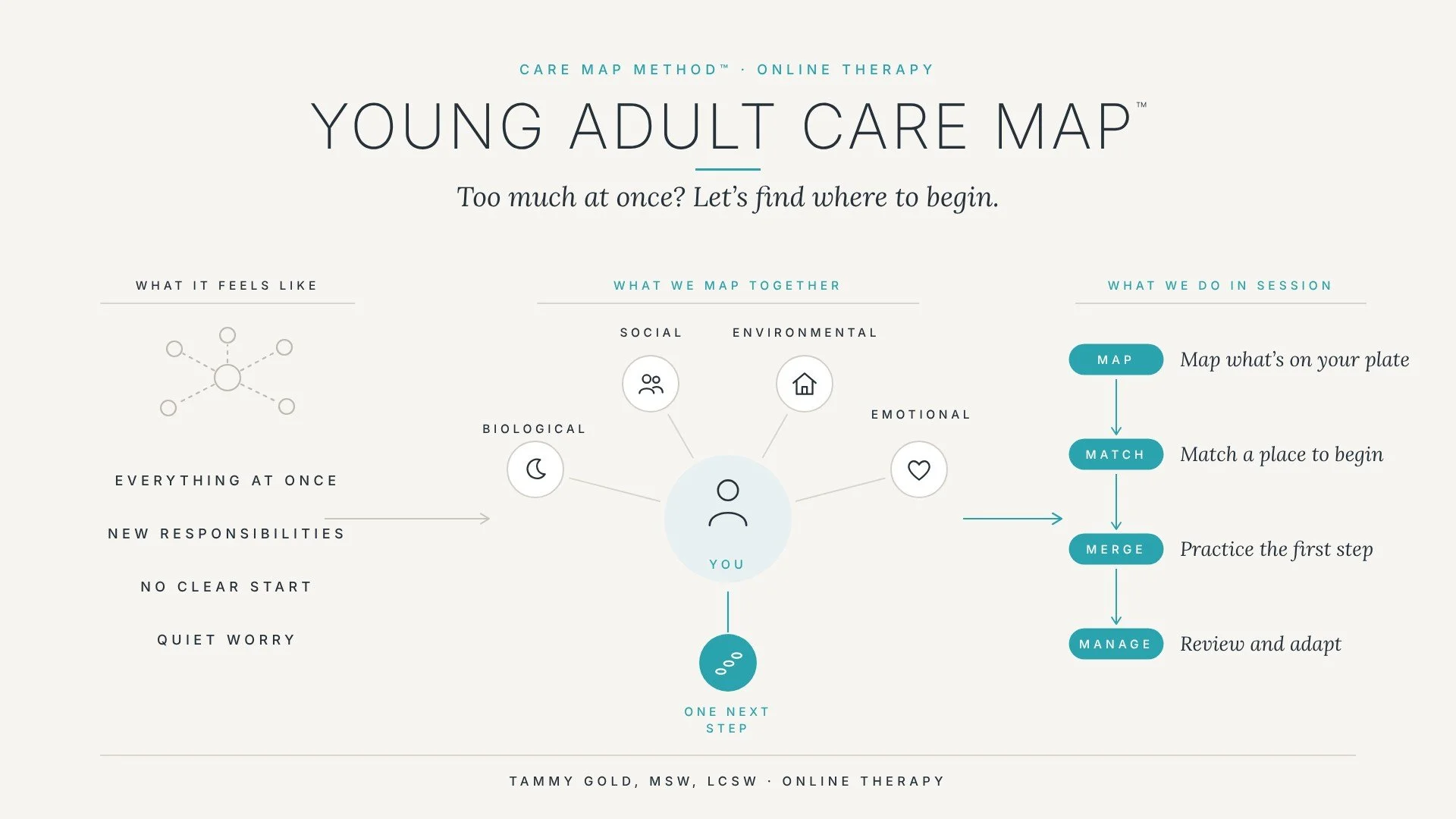
Online therapy for young adults gives you room to understand those feelings without having to present a polished explanation. You can bring work worries, friendship problems, family expectations or questions about your future into the same conversation. We can explore how those parts of your life affect one another and identify a manageable place to begin.
The concerns you can bring into therapy
Some young adults reach out because they cannot stop overthinking. Others are struggling to make friends, recover from a breakup, set boundaries with parents or feel comfortable in a new workplace. You might be comparing yourself with people online, saying yes when you want to say no, or avoiding decisions because you are afraid of choosing incorrectly.
We do not need to treat every difficult transition as a disorder. Part of our work is understanding the intensity, duration and impact of what you are experiencing. That includes looking at your sleep, relationships, concentration and daily functioning, as well as the practical pressures around money, housing, school and employment.
How our sessions can help
I offer a warm, structured space where we can connect emotional insight with changes you can try between appointments. We might notice a pattern of assuming other people are disappointed in you, examine what happens before you avoid a difficult conversation, or work on expressing what you need without a long apology. The direction depends on your priorities and clinical needs.
The Care Map Method™ is an organizing framework I use within individualized therapy. We MAP the pressures and patterns involved, MATCH the work to your needs, MERGE useful insights into everyday situations, and MANAGE what happens next. The framework supports assessment and treatment planning; it is not a separate guaranteed treatment or a promise that every concern has a quick solution.
An example of turning a large worry into a smaller task
Imagine you feel overwhelmed by a new job, a quieter social life and repeated questions from family about your future. Saying that everything is wrong can make it hard to know where to start. We might first separate the immediate work pressure from loneliness and family expectations. Each may need a different response.
One starting point could be preparing a question for your manager. Another could be choosing one repeatable social activity instead of trying to build an entire friend group. We would also make room for the emotions underneath those steps. A practical plan works better when it accounts for fear, grief, energy and the limits of your current circumstances.
What a first appointment is like
Our first conversation focuses on what brought you in, what feels most difficult and what you would like to change. I will ask about relevant history, current supports, health concerns and previous experiences with therapy. You can tell me when a question feels uncomfortable or when you need more time. We will also discuss privacy, fees, appointment arrangements and the fit between your needs and my services.
You do not need a diagnosis before asking about therapy. If another kind of care would better meet your needs, we can discuss that openly. Progress may involve understanding yourself more clearly, feeling less trapped by a familiar pattern or becoming more able to act on your own priorities.
Support that fits your real life
You may be working, studying, between jobs, living with parents or supporting other people. None of those situations makes you more or less deserving of support. Therapy can include the realities of a limited budget, a demanding schedule or a living arrangement you cannot immediately change.
My approach is collaborative. We can revisit the pace of therapy and whether the work is helping with the problems you identified. You are welcome to bring concerns about the sessions themselves. Feeling able to ask questions and disagree is an important part of building a useful therapeutic relationship.
About Tamara Gold
I am Tamara “Tammy” Gold, MSW, LCSW, CEC, a Columbia University-trained therapist, certified coach and author of Secrets of the Nanny Whisperer. My work with individuals and families informs a warm, collaborative approach that connects emotional understanding with practical next steps. Treatment is individualized to your needs; results and timelines vary.
Online appointments and insurance
Online appointments depend on your physical location at each session, clinical fit and current availability. Review my booking profiles to confirm whether I can serve you in your state. Selected insurance plans may be available through Headway or Alma. Coverage, medical-necessity requirements and your costs depend on your individual plan; a life problem alone does not establish insurance coverage.
Frequently asked questions
Is young adult therapy only for college students?
No. Young adults may be working, studying, parenting, looking for a job or figuring out what comes next. The focus is on your concerns and stage of life, not your enrollment status. We will discuss whether my services are a good fit for your age and needs.
What if I cannot explain exactly what is wrong?
You can begin with a feeling, a repeated situation or a change you have noticed. Feeling overwhelmed, disconnected or unlike yourself is enough to start a conversation. The initial assessment helps us understand what is happening and identify appropriate goals.
Can we discuss work, friendships and family together?
Yes. Those areas often interact. We can explore how family expectations shape career decisions or how work stress affects friendships, while keeping treatment focused enough to make the sessions useful.
Will you tell me what decisions to make?
I can help you examine options, understand emotional patterns and practice making decisions. I will not choose your career, partner or life direction for you. The aim is to support your judgment and agency.
Can I attend therapy while away at college?
Your physical location at each session matters. Tell me where you will be before an appointment, including during school terms, breaks and travel. Sessions can proceed only where I am authorized to provide care and other requirements are met.
How long does therapy take?
There is no single timeline. Your goals, symptoms, circumstances and preferences help determine the plan. We can review progress together and discuss frequency, adjustments or referrals when needed.
Take the next step
If this sounds like the kind of support you need, review current appointment options and check insurance eligibility through my Headway or Alma profile. You can bring questions about fit, fees and the process before scheduling. You do not need a perfect explanation of the problem to begin.