
7 Signs Your Aging Parent Needs Help with Activities of Daily Living (ADLs)
Many older adults begin needing help gradually. Learn the warning signs that your loved one may need assistance with Activities of Daily Living and discover how to assess their safety and independence.
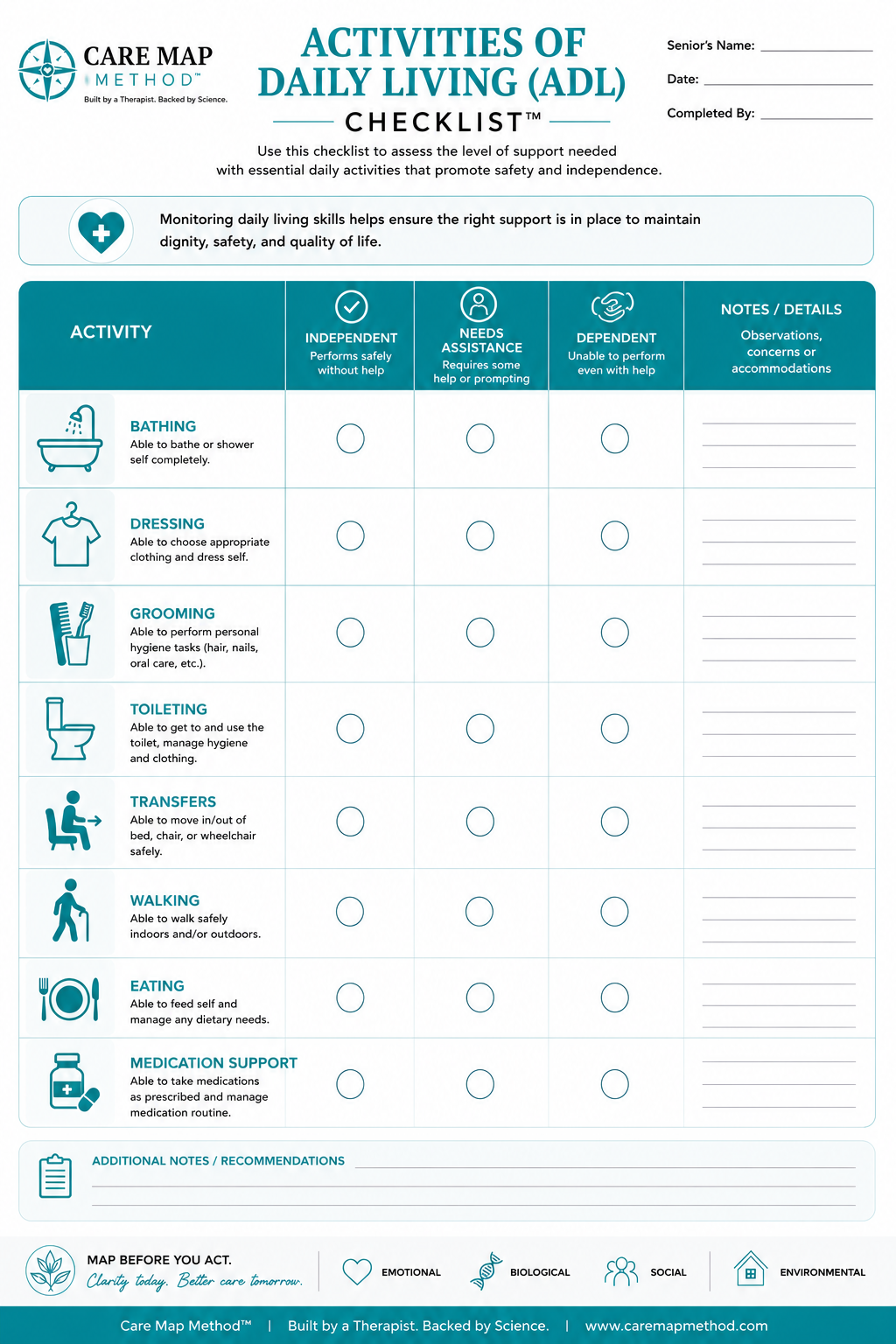
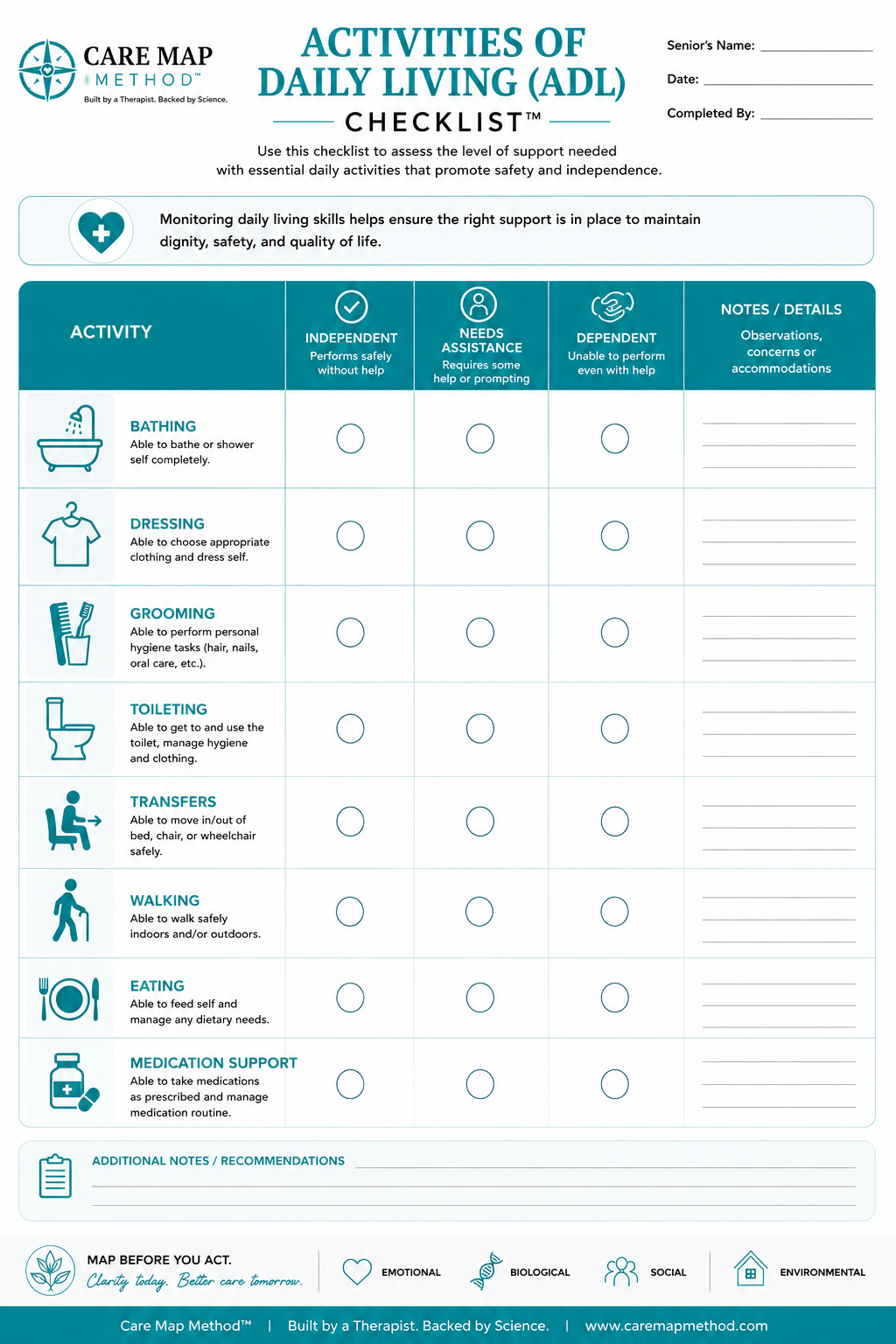
Activities of Daily Living (ADL) Checklist worksheet from Care Map Method™ helping families evaluate whether an older adult needs assistance with bathing, dressing, grooming, eating, mobility, toileting, transfers, and medication support.
7 Signs Your Aging Parent Needs Help with Activities of Daily Living (ADLs)
One of the hardest parts of caring for an aging parent is recognizing when small changes become signs that additional support is needed.
Many older adults want to remain independent, and families often hope they can continue living safely on their own. However, subtle declines in everyday functioning may increase the risk of falls, medication errors, malnutrition, hospitalization, and caregiver stress.
At Care Map Method™, we encourage families to Map Before They Act™. Assessing Activities of Daily Living (ADLs) provides a structured way to understand current abilities and identify where support may improve safety and quality of life.
What Are Activities of Daily Living?
Activities of Daily Living, commonly called ADLs, are the basic self-care tasks people perform every day to remain healthy, safe, and independent.
These include:
Bathing
Dressing
Grooming
Toileting
Walking and mobility
Transfers (getting in and out of bed or a chair)
Eating
Medication management
When one or more of these activities become difficult, it may be time to reassess your loved one's care needs.
1. Difficulty Bathing
Notice if your loved one:
Avoids showers
Appears unsteady in the bathroom
Has poor hygiene
Expresses fear of falling
Bathrooms are one of the most common places where older adults experience falls.
2. Wearing the Same Clothes
Difficulty dressing may include:
Wearing stained clothing
Difficulty with buttons or zippers
Dressing inappropriately for the weather
Needing assistance putting on shoes
These changes may indicate arthritis, weakness, balance problems, or cognitive decline.
3. Changes in Personal Grooming
Poor grooming often develops gradually.
Look for:
Unwashed hair
Long fingernails
Missed shaving
Declining oral hygiene
These changes can sometimes signal depression, memory changes, or physical limitations.
4. Trouble Walking or Getting Up
Watch for:
Holding onto furniture
Difficulty standing
Slower walking speed
Multiple near-falls
Trouble climbing stairs
Even one fall can significantly affect an older adult's confidence and independence.
5. Weight Loss or Poor Nutrition
Ask yourself:
Is food expiring in the refrigerator?
Have they lost weight?
Are they skipping meals?
Are they drinking enough water?
Nutrition plays a major role in strength, healing, and overall health.
6. Medication Mistakes
Medication concerns may include:
Forgotten doses
Duplicate doses
Confusion about prescriptions
Expired medications
Medication management becomes increasingly important as prescriptions become more complex.
7. Increasing Dependence on Family
You may notice yourself:
Driving to every appointment
Managing bills
Preparing meals
Picking up prescriptions
Helping with household tasks
While occasional assistance is normal, increasing dependence may indicate that additional planning is needed.
Download Our Free Activities of Daily Living Checklist™
(Insert your ADL Checklist worksheet image here.)
Our printable worksheet helps families evaluate daily functioning and identify areas where support may improve safety, independence, and quality of life.
Bring the completed checklist to healthcare appointments or use it during family caregiving discussions.
Why Early Assessment Matters
Recognizing changes early allows families to make thoughtful decisions rather than reacting during a crisis.
Early planning can help:
Reduce caregiver stress
Prevent falls
Improve communication among family members
Coordinate medical care
Delay unnecessary hospitalizations
Support aging in place when appropriate
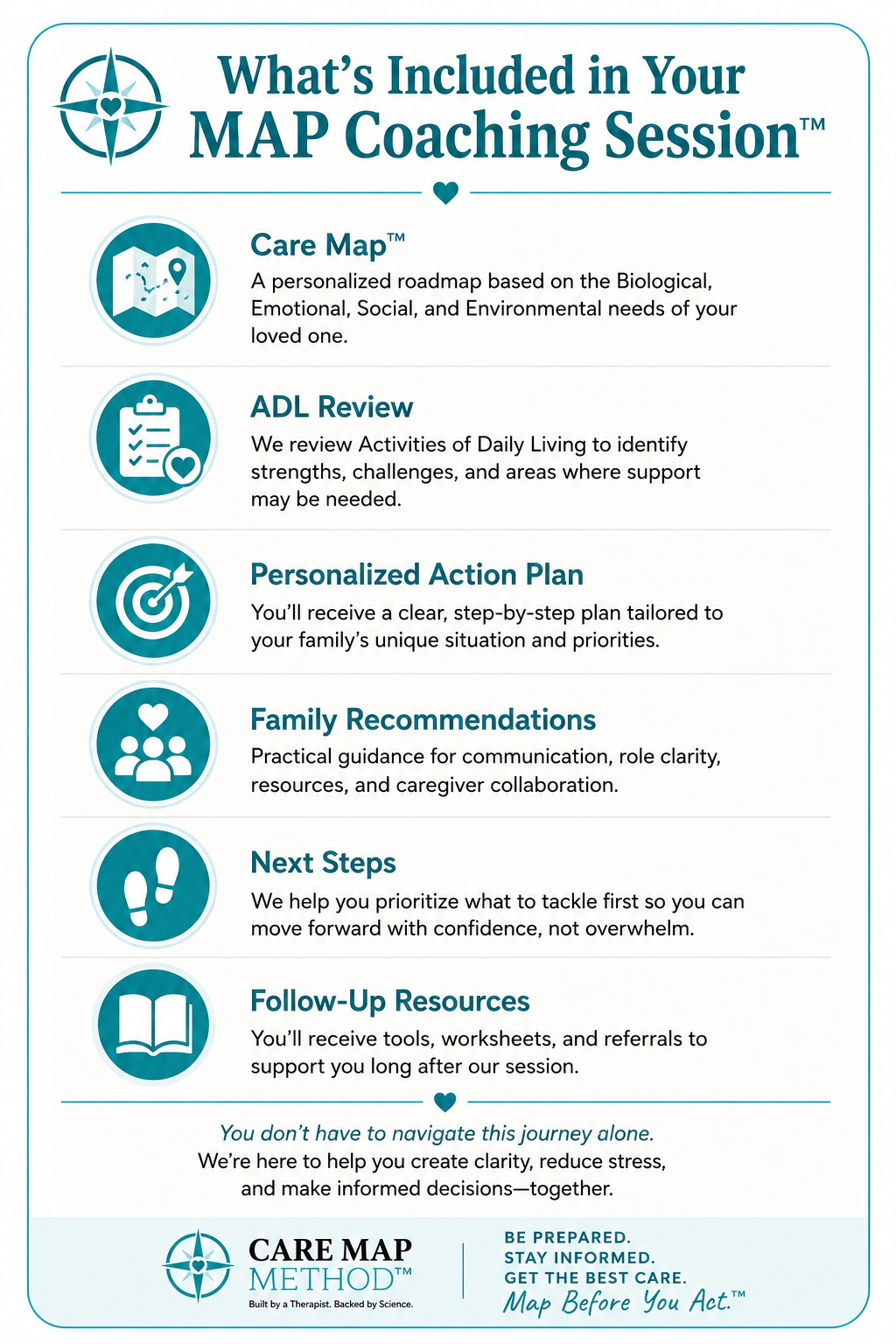
How a Care Map Method™ MAP Coaching Session Can Help
Many families know something has changed but aren't sure what to do next.
During a personalized Care Map Method™ MAP Coaching Session, we'll help you:
Assess Activities of Daily Living
Identify safety concerns
Review medical, emotional, social, and environmental needs
Prioritize next steps
Develop a personalized Care Map™
Create an action plan tailored to your family's situation
Our goal is to help families move forward with confidence instead of uncertainty.
Ready to Better Understand Your Loved One's Needs?
If you're wondering whether your parent can continue living independently—or what level of support is appropriate—you don't have to make those decisions alone.
A Care Map Method™ MAP Coaching Session provides expert guidance, practical tools, and a personalized roadmap based on your loved one's unique situation.
Book your Care Map Method™ MAP Coaching Session today and start planning before a crisis occurs.