

Sibling Conflict Over Aging Parents
When siblings disagree about an aging parent, old family roles can collide with urgent care decisions. Therapy can help you manage your own stress and communicate more deliberately.
Adult siblings around table reviewing parent-care notes/calendar
Therapy for Sibling Conflict Over Aging Parents
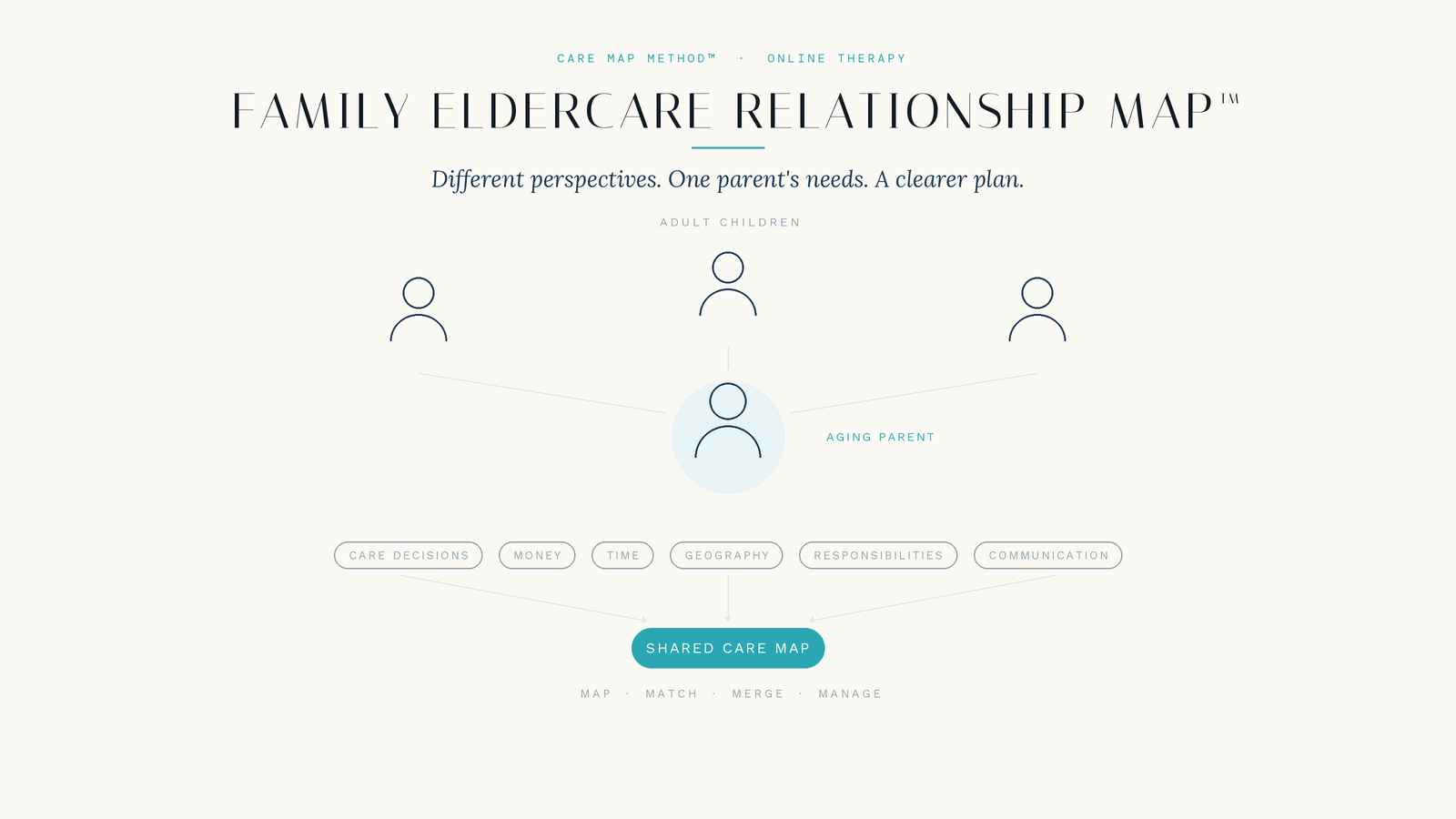
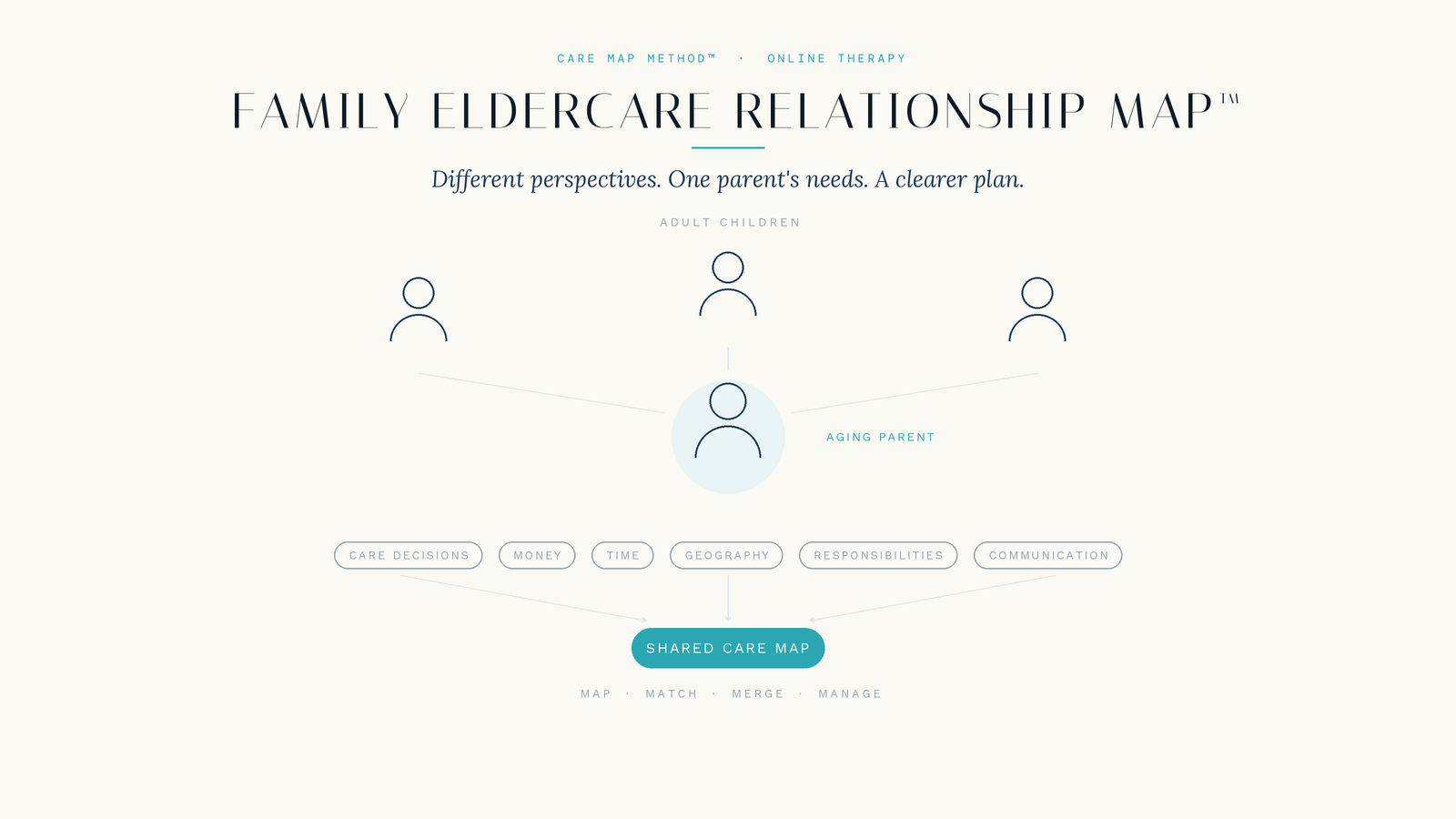
An aging parent’s needs can bring adult siblings back into roles they thought they had outgrown. One sibling may become the default caregiver, another may question every decision from a distance, and old resentments can suddenly become part of conversations about safety, money or care. Therapy can help you understand the family pattern while protecting your own emotional well-being.
Check Insurance Eligibility & Book Online Therapy → CLICK HEADWAY HERE
What You May Be Dealing With
One sibling is doing most of the caregiving and feels resentful.
Family members disagree about whether a parent needs more help.
Money, inheritance or care costs are intensifying conflict.
A sibling criticizes decisions without taking responsibility.
You feel pulled back into childhood roles around your siblings.
Your parent gives different information to different family members.
You dread family calls because every conversation becomes an argument.
You are trying to advocate for your parent without destroying sibling relationships.
How Therapy Can Help
Individual therapy cannot force siblings to cooperate, but it can help you regulate your own reactions, understand the history being activated, clarify your role and decide what boundaries are necessary. Therapy can also help you prepare for difficult conversations, tolerate disagreement and distinguish urgent care needs from longstanding family dynamics.
The Care Map Method™ in Therapy
Care Map Method™ is a structured way to organize the people, needs, stressors and choices involved in a complex real-life situation. In psychotherapy, it is used only as an organizing framework within individualized clinical care—not as a substitute for assessment, diagnosis or treatment planning.
MAP — Identify current care decisions alongside old sibling roles, resentments and communication patterns.
MATCH — Choose boundaries, communication approaches and coping strategies that fit your role and level of responsibility.
MERGE — Apply them to family calls, decision-making and caregiving tasks.
MANAGE — Adjust as the parent’s needs, sibling involvement and care setting change.
Why Work With Tammy Gold
Tammy Gold specializes in the intersection of family relationships and caregiving. Her Care Map Method™ can help clients organize the practical and emotional dimensions of eldercare conflict while therapy remains centered on the client’s own mental health and functioning.
Insurance & Online Therapy
Online therapy is available for clients located in states where Tammy is licensed and accepting clients. Selected insurance plans are accepted through Headway. Coverage, copays, deductibles, coinsurance and eligibility vary by plan and member.
Use the Headway booking link to check current insurance eligibility and available appointment times. Do not publish contracted reimbursement amounts on the website.
STATE-SPECIFIC HELP
Oregon: Providence Health Plan • Aetna • Regence BlueCross BlueShield of Oregon • Carelon Behavioral Health • Providence Medicare Advantage.
California: Providence Health Plan • Aetna • Carelon Behavioral Health • Anthem Blue Cross California.
New Jersey: Providence Health Plan • Aetna • Carelon Behavioral Health.
Always verify current participation before publishing.
Frequently Asked Questions
Can therapy help if my siblings will not participate?
Yes. Individual therapy can focus on your own emotions, boundaries, communication and decisions even if other family members do not attend.
Can you tell us what care our parent needs?
Psychotherapy is not a medical, legal or formal geriatric-care assessment. Therapy can help you manage the emotional and relational stress surrounding care decisions.
Why do sibling conflicts get worse when a parent ages?
Aging-parent decisions can reactivate old family roles, perceived inequities, unresolved resentment and differences in responsibility, geography or finances.
Can therapy help with caregiver resentment?
Yes. Therapy can help you process resentment without shaming it and examine what changes in boundaries, expectations or support may be needed.
Is insurance accepted?
Selected plans are accepted through Headway. Use the eligibility link to confirm current coverage and cost.
You may not be able to control how your siblings respond, but you can change how you participate in the conflict. Check insurance eligibility and book online therapy through Headway.
Info@CareMapMethod.com 818.308.1358 (TEXT)
Caregiver Burnout: When Caring for Everyone Else Is Costing You Your Health
Caregiver burnout can affect your health, relationships, concentration, and ability to provide care. Learn the warning signs and how therapy can help you create a more sustainable plan.
Caregiving often begins with love, urgency, or a sense of responsibility. You may start by attending one medical appointment, arranging groceries, or checking in more often. Over time, the role can quietly expand until you are coordinating medications, managing family conflict, handling emergencies, and trying to keep your own household and work life functioning at the same time.
Many caregivers do not recognize burnout until they are already depleted. They may tell themselves that their loved one has it worse, that no one else can help, or that resting would be selfish. Yet caregiving is not sustainable when the caregiver's physical health, emotional stability, and relationships are deteriorating.
What caregiver burnout actually looks like
Caregiver burnout is more than feeling tired after a difficult week. It is a state of ongoing physical, emotional, and mental depletion related to prolonged caregiving demands and insufficient recovery, support, or control.
Burnout may develop gradually. Because the caregiver keeps adapting to each new demand, the level of strain can begin to feel normal. The most important question is not whether you are managing to complete the tasks. It is whether the current arrangement is costing you more than you can continue to give.
Common warning signs
You may be approaching or experiencing caregiver burnout when several of the following patterns persist:
Constant fatigue that does not improve with one good night of sleep
Irritability, resentment, anger, or emotional numbness
Difficulty concentrating, making decisions, or completing ordinary tasks
Withdrawing from friends, activities, or relationships
Feeling trapped, guilty, or convinced that no one else can do the job correctly
Changes in appetite, sleep, headaches, muscle tension, or other stress-related symptoms
Frequent conflict with siblings, a spouse, paid caregivers, or the person receiving care
Losing patience and then feeling ashamed about it
Neglecting your own medical appointments, finances, work, or household needs
Why responsible caregivers are especially vulnerable
The people most likely to become overextended are often the most conscientious. They notice what needs to be done, anticipate problems, and step in before others ask. Those strengths are valuable, but without limits they can produce a role in which one person becomes the default manager of everyone else's needs.
Family systems can reinforce this pattern. One sibling may live farther away. Another may minimize the parent's decline. A spouse may assume you have the situation handled. The aging parent may resist outside help. You can end up carrying both the practical labor and the emotional burden of convincing everyone that change is necessary.
How burnout affects relationships
Caregiving stress rarely stays confined to the caregiving relationship. It can enter a marriage through arguments about time, money, privacy, and competing responsibilities. It can affect parenting when patience is low. It can create resentment between siblings when contributions feel unequal.
Burnout can also distort your relationship with the person receiving care. Love may still be present, but it becomes mixed with frustration, grief, obligation, and anticipatory loss. Therapy can provide a place to speak honestly about those mixed feelings without being judged.
A Care Map Method™ perspective
The Care Map Method™ begins by mapping the whole situation rather than reacting to the loudest immediate problem. For caregivers, that means assessing not only the loved one's needs but also the caregiver's capacity.
A useful map includes four areas: biological needs such as sleep, health, medication, and physical stamina; emotional needs such as grief, fear, anger, and guilt; social needs such as family cooperation, friendship, and respite; and environmental needs such as the home, transportation, safety, finances, and access to professional care.
When one area is ignored, the entire care plan becomes less stable. A plan that keeps an older adult safe but causes the primary caregiver to become ill is not a successful long-term plan.
Practical steps that reduce strain
Burnout rarely resolves through positive thinking alone. It usually requires changing the structure around the caregiver.
Write down every recurring caregiving task, including invisible tasks such as reminders, research, and emotional reassurance.
Separate tasks that only you can do from tasks another relative, professional, or service could handle.
Create one shared place for schedules, medical information, contacts, and updates.
Set a specific boundary rather than making a vague request. For example: “I can attend one appointment each week, but I cannot remain the only transportation plan.”
Schedule recovery time before you feel you have earned it. Recovery is part of maintaining the care system.
Ask the medical team, social worker, agency, or community program what respite and caregiver resources are available.
How therapy can help
Therapy for caregiver burnout is not simply a place to vent. It can help you examine the beliefs and relationship patterns that keep you overfunctioning, practice clearer boundaries, manage guilt, communicate with family members, and make decisions under stress.
It can also help you process grief. Caregivers often grieve many losses before a death: a parent's independence, a spouse's personality, the future they expected, or the relationship they once had. Naming those losses can reduce the pressure to pretend that everything is fine.
The goal is not to make you care less. It is to help you care in a way that is emotionally and practically sustainable.
When it is time to seek support
Consider reaching out when stress is persistent, your health or relationships are being affected, you feel unable to set limits, or you are making major care decisions while emotionally depleted. You do not have to wait until you are in crisis to deserve support.
A healthier care plan includes the caregiver. Your needs are not separate from the system; they are one of the conditions that determine whether the system can continue.
Ready for support?
If caregiving has left you depleted, resentful, anxious, or unsure how to set limits, therapy can help you build a more sustainable plan. Tammy Gold, MSW, LCSW, CEC, provides confidential virtual therapy for adults located in California, New Jersey, and Oregon.
Book through Psychology Today: https://www.psychologytoday.com/us/therapists/tamara-jill-gold-los-angeles-ca/1713403
Learn more: CareMapMethod.com
About Tammy Gold
Tammy Gold, MSW, LCSW, CEC, is the founder of Care Map Method™, a licensed clinical social worker in California, New Jersey, and Oregon, a certified coach, and the author of Secrets of the Nanny Whisperer. Her work centers on relationships, caregiving, burnout, parenting transitions, workplace stress, women’s midlife concerns, and practical support during major life changes.
Educational notice: This article is for general educational purposes and is not a substitute for individualized medical or mental health care. If you are experiencing an emergency or immediate safety concern, contact emergency services or an appropriate crisis resource in your area.
What are common signs of caregiver burnout?
Signs may include exhaustion, irritability, resentment, guilt, sleep problems, reduced concentration, withdrawal, health changes, hopelessness, and feeling unable to keep up with care demands.
How can therapy help caregiver burnout?
Therapy can help caregivers process emotions, identify unsustainable demands, set boundaries, communicate with family, ask for help, and develop a more realistic care plan.
Is it normal to feel resentful while caregiving?
Yes. Resentment can develop when responsibilities are excessive, support is limited, boundaries are unclear, or the caregiver’s own needs are repeatedly postponed. Feeling resentment does not mean you do not love the person.
What if my siblings will not help?
Therapy or coaching can help you clarify what you need, prepare a family conversation, define responsibilities, set limits, and decide what you can realistically continue providing.
How do I know when more professional care is needed?
Consider changes in safety, cognition, mobility, medication, nutrition, hygiene, isolation, wandering, falls, caregiver capacity, and whether current arrangements are sustainable.
Can I care for someone without losing myself?
That is a central goal. Sustainable caregiving requires support, boundaries, realistic expectations, shared responsibility where possible, and attention to the caregiver’s health and identity.
What Care Map worksheet pairs with caregiver burnout?
A Caregiver Burnout Snapshot, Family Capacity Assessment, Weekly Care Plan, Boundary Planner, or Biological-Emotional-Social-Environmental Care Map can help organize the situation.
When is caregiver burnout an emergency?
Seek urgent professional help when there is immediate danger, inability to provide safe care, abuse or neglect concerns, severe medical or psychiatric symptoms, or thoughts of harming yourself or someone else.