

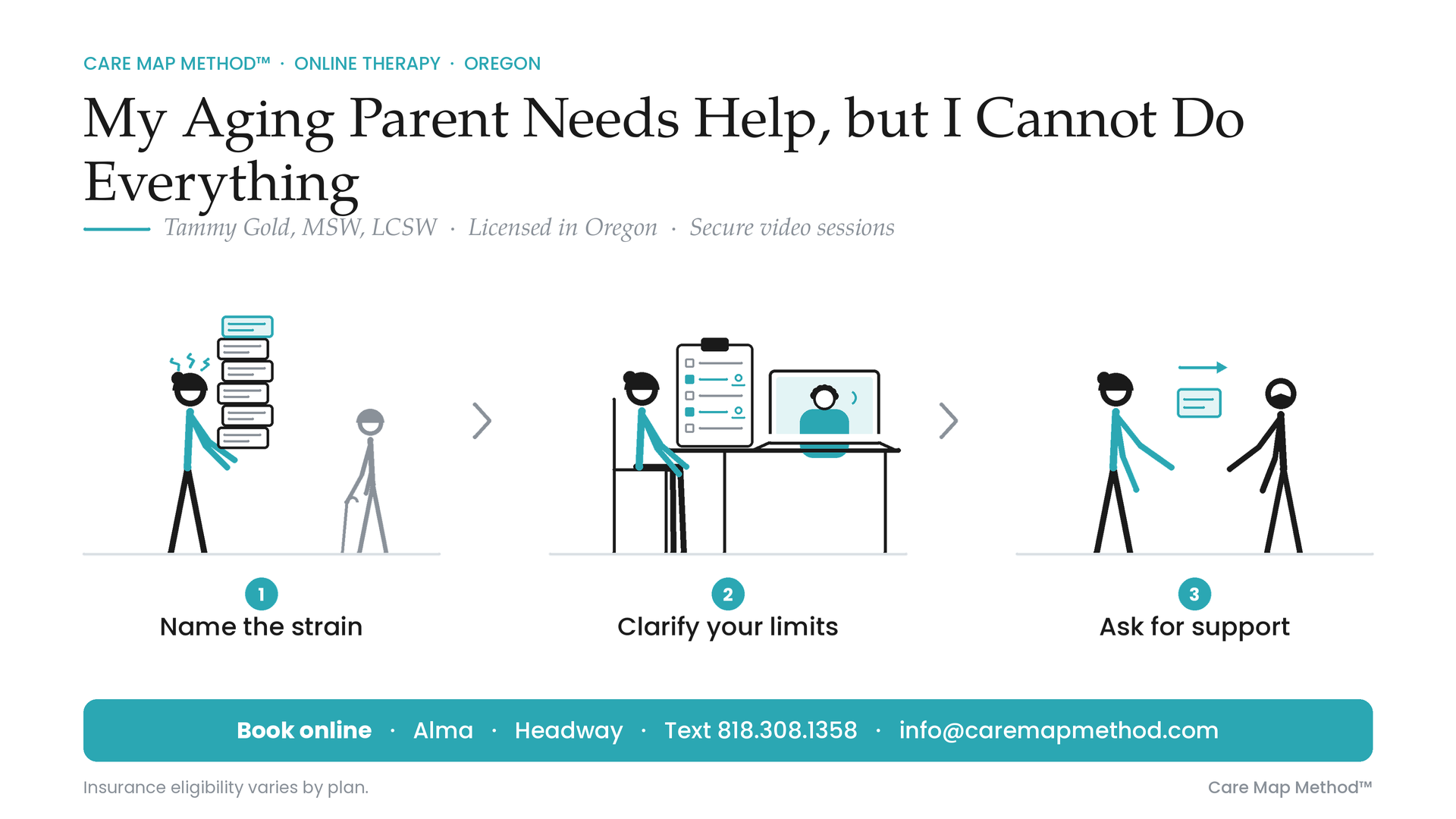
My Aging Parent Needs Help but I Cannot Do Everything
Your parent needs more help, and each new request seems to become your responsibility. You may be balancing work, children, medical calls, and worry while feeling guilty for wanting a break. In online individual therapy for adults in Oregon, we can explore the emotional weight of caregiving, clarify what you can sustain, and practice communicating limits and requests for support. The work addresses your well-being; it does not replace a medical or care-needs assessment for your parent. Eligible Providence Health Plan and Regence members can check their exact benefits and appointment options through my Headway profile.
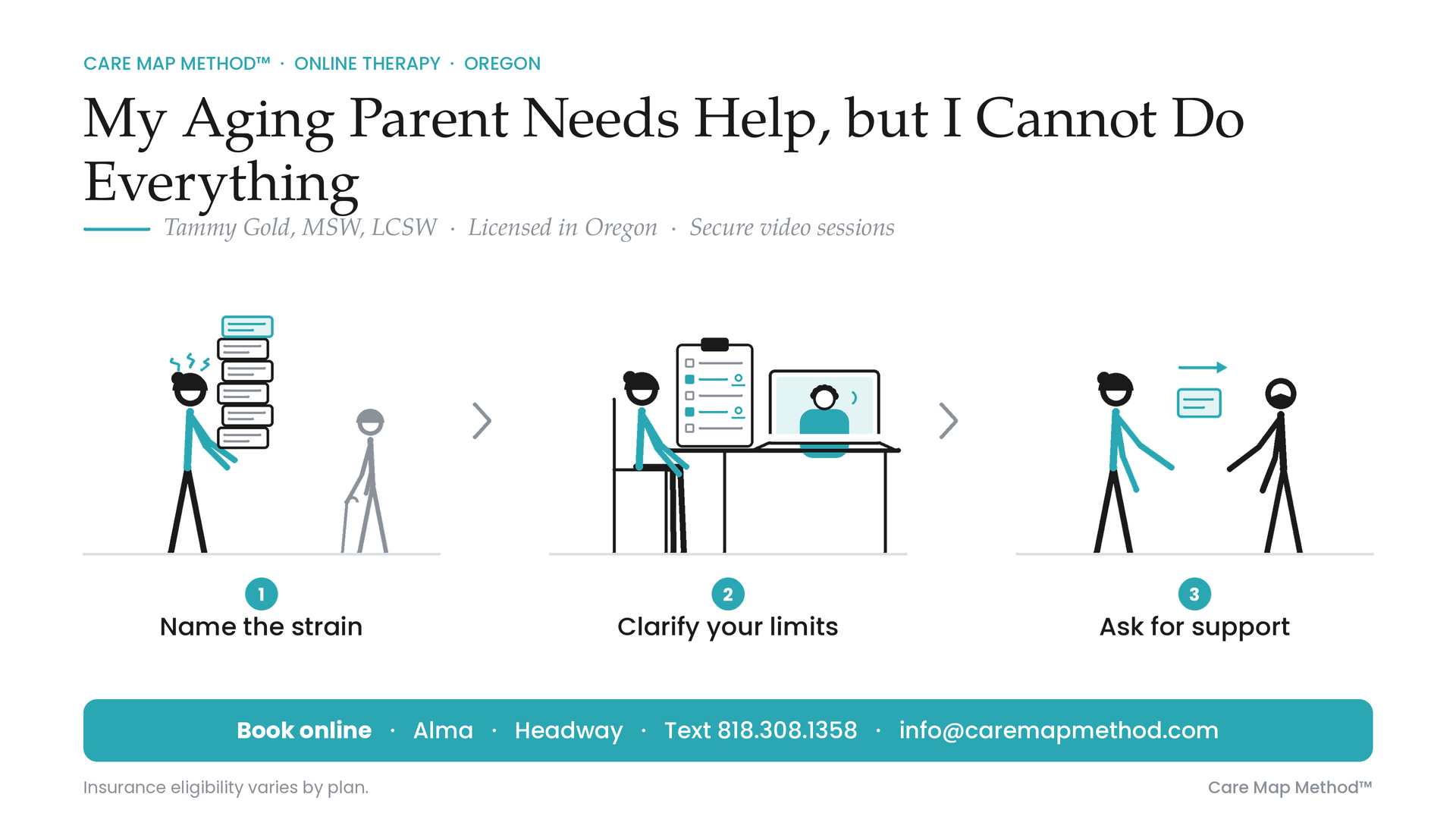
An adult caregiver reviewing a manageable responsibility list with a therapist on a laptop; some tasks are clearly marked as needing additional support.
When love and responsibility become difficult to separate
You answer one call and leave with five more tasks. If you help, you feel exhausted. If you say no, you feel guilty. You may worry that nobody else will notice what your parent needs, or that setting a limit makes you uncaring.
I am Tammy Gold, LCSW, and I provide online individual therapy for adults physically located in Oregon. We can explore the distress that comes with caregiving, including grief, resentment, anxiety, and family expectations. You do not have to wait until you feel completely depleted to seek support.
Understand what is yours to carry
We might separate practical responsibilities from the emotional meanings attached to them. Does saying no feel like abandonment? Does asking a sibling for help bring up years of unequal responsibility? Are you trying to preserve the relationship you had before your parent’s needs changed?
Sessions can involve preparing a request, clarifying a limit, grieving changes, or coping with uncertainty. We can also discuss the difference between a task that needs an immediate response and a pattern that needs a wider support plan. Psychotherapy focuses on your mental health and functioning; medical decisions, care placement, and legal authority require the appropriate professionals.
Use a map to make the strain more understandable
Care Map Method™ organizes the work alongside clinical assessment. Biological pressures can include your fatigue and health. Emotional pressures include guilt, grief, and fear. Social and Environmental pressures include family roles, available help, work schedules, distance, and financial constraints.
MAP the request that activates guilt or panic. MATCH the need with a coping strategy, boundary, or request for support. MERGE it into daily life by rehearsing the conversation and deciding what you can actually offer. MANAGE communication and responses by reviewing what happened and how your circumstances change. We cannot promise your parent or siblings will cooperate.
Practice a limit that describes what you can offer
A starting phrase might be: “I can make the calls on Tuesday. I cannot be the daily contact, so we need to identify another option.” We can explore whether this fits your circumstances, what responsibilities you already hold, and how you might respond to guilt or disagreement.
Before a session, consider listing what you are doing, what it costs you, and what help is missing. We can review progress through distress, rest, functioning, and your ability to communicate realistic limits. A sustainable plan may still involve sadness and difficult choices. Therapy gives those feelings a place while helping you make considered decisions.
Insurance and next steps
Eligible Providence Health Plan or Regence BlueCross BlueShield of Oregon members in Oregon can use my Headway profile to check their specific plan, estimated costs, and appointment options. Benefits and network participation vary. Coverage depends on clinical assessment and the service provided. This page describes individual psychotherapy; couples sessions, coaching, mediation, and other services require separate confirmation.
You do not need to have the whole situation figured out before reaching out. We can begin by understanding what is most difficult and deciding whether this service is a good fit.
Is it selfish to need a break from caregiving?
Needing rest or support does not mean you do not care. We can explore the feelings attached to taking a break and the practical realities involved. Any existing care responsibilities still need appropriate planning rather than being ignored.
Does my parent need to attend therapy?
No. This page describes individual psychotherapy for you as the adult caregiver. We focus on your distress, coping, relationships, and decisions. Assessment or treatment of your parent would be a separate service.
What happens at the first appointment?
We discuss your current responsibilities, symptoms, relevant history, supports, safety, and goals. You do not need complete medical records for your parent. We begin identifying what is most difficult for you and whether the service fits.
Can I use Providence or Regence insurance?
Eligible Oregon members can check their specific Providence Health Plan or Regence BlueCross BlueShield of Oregon coverage through Headway. Benefits, participation, clinical assessment, and the service matter. Private coaching and care-management consulting have separate payment arrangements.
Will you choose a caregiver or care facility?
Not as part of the psychotherapy described here. We can work on emotional distress and decision-related stress. Caregiver selection, placement, and organizational care planning are different services and should be discussed separately.
How do I book Oregon therapy?
Use “Check Insurance and Availability on Headway.” Confirm Oregon as the state where you will attend and enter your exact insurance details. If you want practical eldercare consulting instead, ask about that service before scheduling psychotherapy.
About Tammy Gold
Tamara “Tammy” Gold, MSW, LCSW, CEC, is a Columbia University–trained clinical social worker, University of Pennsylvania graduate, certified coach, and founder of Care Map Method™. She is the author of Secrets of the Nanny Whisperer and brings more than 20 years of direct family work. Her therapy style is warm, collaborative, and practical, with attention to emotions, history, and everyday functioning.