

Online Therapy in New Jersey Accepting Aetna, Horizon BCBS & Providence
Tammy Gold, LCSW offers online therapy in Oregon for adults, couples, parents, and caregivers navigating relationship stress, parenting strain, divorce, co-parenting, caregiver burnout, and major life transitions. Insurance may be available through Headway or Alma
If you are looking for online therapy in New Jersey and feel overwhelmed by relationship stress, parenting demands, divorce, co-parenting, work stress, caregiving responsibilities, or family conflict, therapy can help you feel less alone and more supported.
I am Tammy Gold, LCSW, a therapist, author, parenting and family therapy expert, and creator of the Care Map Method™. I support adults, couples, parents, and caregivers who are trying to understand themselves, their relationships, and the patterns creating stress in daily life.
Depending on your plan and eligibility, you may be able to use insurance through Headway or Alma, including plans such as Aetna, Horizon Blue Cross Blue Shield of New Jersey, Providence Health Plan, and Carelon.
View My Psychology Today Profile
My Psychology Today profile links to booking and insurance options through Headway.
Therapy for adults, couples, parents, and caregivers in New Jersey
Many people come to therapy because they are carrying too much. They may be managing parenting, marriage stress, divorce, co-parenting, work pressure, aging parents, childcare decisions, eldercare responsibilities, or complicated family dynamics.
You may feel anxious, resentful, disconnected, emotionally exhausted, or unsure how to communicate your needs without creating more conflict. Therapy gives you one safe, positive, supportive space to talk honestly without judgment, shame, or pressure.
What therapy can help with
Relationship conflict
Parenting stress
Divorce or separation
Co-parenting challenges
Family conflict
Work stress or boss/coworker stress
Caregiver burnout
Childcare or eldercare decision stress
Communication difficulties
Feeling emotionally overloaded or unsupported
My approach
Through the Care Map Method™, we look at emotional, biological, social, and environmental needs to get a clearer picture of what is happening in your life and relationships.
This approach helps us move beyond blame and shame. Instead of asking, “What is wrong with me?” or “What is wrong with them?” we look at what may be driving emotions, behavior, communication patterns, and stress.
My sessions are supportive and solution-focused. Clients can feel, process, release, understand, and also leave with practical language and tools for real life.
Insurance and booking
Insurance coverage depends on your specific plan, location, eligibility, and platform availability. Clients can review booking and insurance options through my Psychology Today and Headway profiles.
View My Psychology Today Profile
Online therapy in New Jersey
I offer online therapy for clients located in New Jersey. If you are looking for therapy for relationship stress, parenting stress, divorce, co-parenting, caregiver burnout, work stress, or family conflict, you can request a session through my Psychology Today profile.
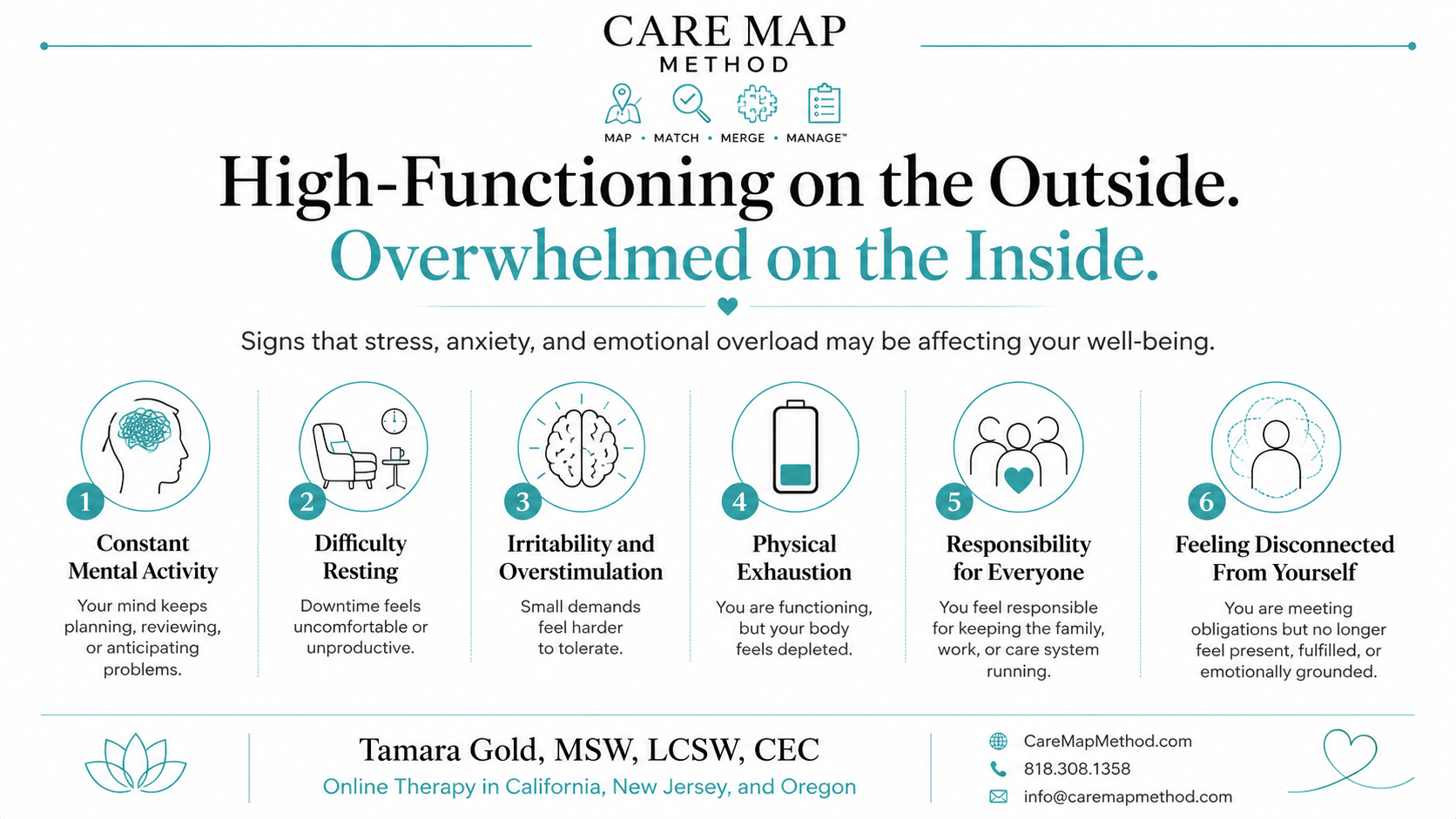
Why High-Functioning Adults Still Feel Anxious, Exhausted, and Overwhelmed
This should be the first therapy-focused blog because it aligns with the clients most likely to find you through Psychology Today and book through Headway: capable adults managing work, parenting, relationships, caregiving, and major life transitions while privately feeling depleted.
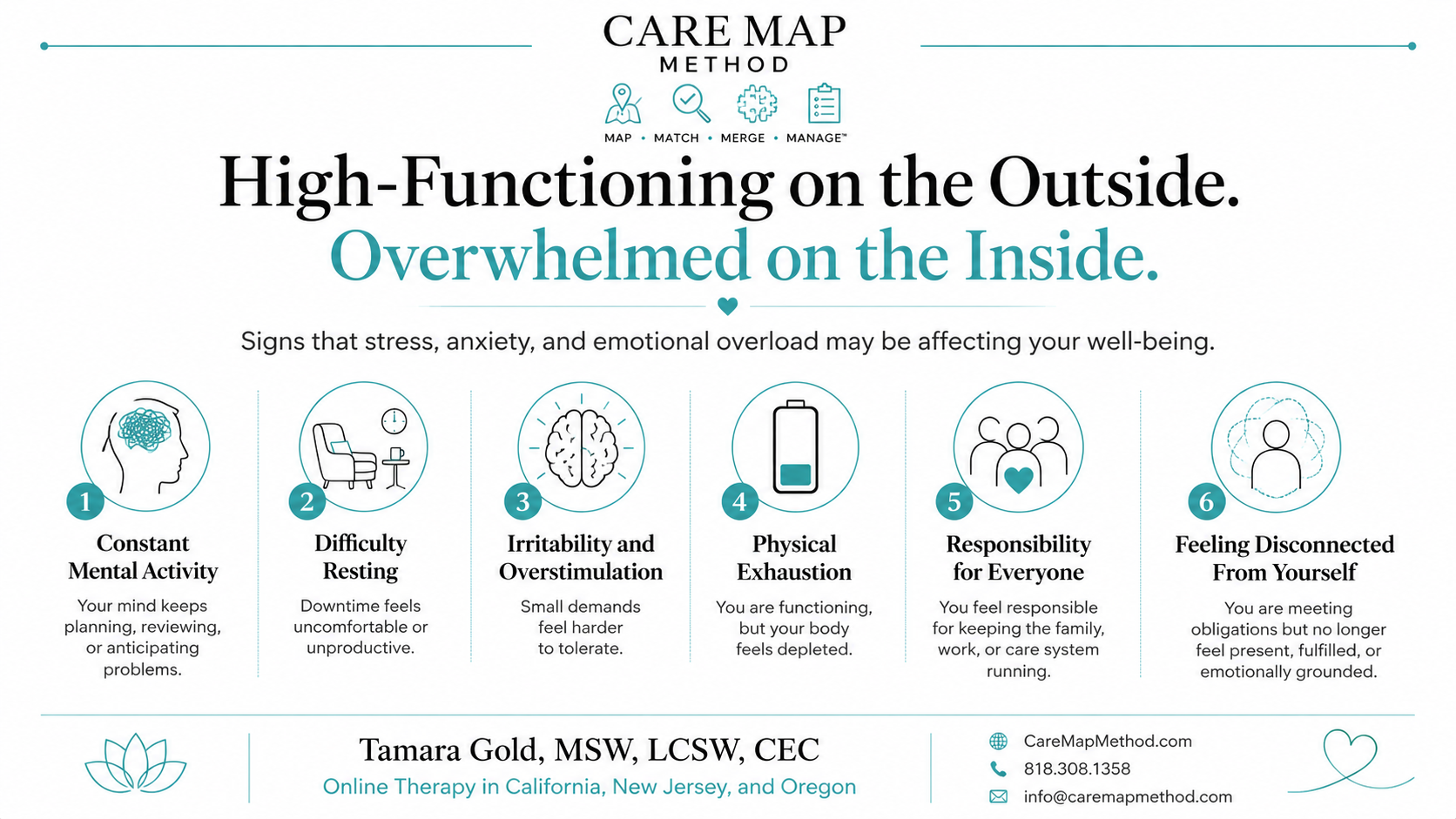
You may be meeting deadlines, caring for your family, managing appointments, answering messages, and keeping everyone else organized.
From the outside, you appear capable.
Inside, however, you may feel anxious, emotionally depleted, irritable, or unable to fully relax.
This experience is common among high-functioning adults. You may continue performing well even while your internal stress level keeps rising. Because your responsibilities are still being handled, other people may not recognize how overwhelmed you feel.
You may even question whether you are “struggling enough” to need therapy.
Therapy is not reserved for people who have stopped functioning. It can also help people who are functioning at a high level but paying an increasingly significant emotional and physical price.
What Does “High-Functioning Anxiety” Mean?
“High-functioning anxiety” is not a formal diagnosis. It is a phrase often used to describe people who appear organized, productive, or successful while experiencing persistent anxiety beneath the surface.
You may be:
dependable and responsible
highly prepared
sensitive to mistakes
uncomfortable disappointing others
constantly anticipating what could go wrong
reluctant to ask for help
unable to rest without feeling guilty
mentally reviewing conversations and decisions
functioning through exhaustion
These qualities may help you succeed professionally or manage a complicated family life. Over time, however, the same patterns can contribute to chronic tension, emotional fatigue, sleep problems, resentment, and burnout.
Why Capable Adults Often Miss the Signs
High-functioning adults are often accustomed to solving problems.
When stress increases, they may respond by becoming even more organized, productive, or controlling. They create more lists, work longer hours, take on additional responsibilities, and try harder to prevent mistakes.
This can temporarily create a sense of control.
But increased effort does not always address the underlying anxiety. It may instead reinforce the belief that everything will fall apart unless you personally manage every detail.
Because you continue functioning, it can be difficult to recognize that your coping system is becoming unsustainable.
Signs That Emotional Overload May Be Building
Stress does not always appear as panic or visible distress. It may appear through subtle patterns that gradually become your normal way of living.
1. Your mind is rarely quiet
You may constantly plan, rehearse, anticipate, or review.
Even when nothing urgent is happening, your mind may search for the next problem to solve.
2. You cannot fully enjoy downtime
You may sit down to rest but immediately think about unfinished tasks.
Rest may feel uncomfortable, undeserved, or unproductive.
3. Small demands feel disproportionately difficult
A text message, schedule change, interruption, or minor mistake may feel far more upsetting than it once did.
This does not necessarily mean you are overreacting. It may mean your nervous system is already carrying too much.
4. You feel responsible for everyone
You may believe it is your job to manage other people’s emotions, prevent conflict, remember every detail, and keep the family or workplace functioning.
This can leave little space for your own needs.
5. Your body feels exhausted even when you keep going
Chronic stress can show up as muscle tension, headaches, disrupted sleep, stomach discomfort, fatigue, restlessness, or difficulty concentrating.
You may still complete your responsibilities while feeling physically depleted.
6. You are becoming more irritable or emotionally distant
When your emotional resources are exhausted, you may become impatient, withdrawn, numb, or easily overstimulated.
You may care deeply about the people around you while feeling increasingly unable to engage with them.
7. You no longer feel like yourself
You may be accomplishing everything expected of you but feel disconnected from joy, creativity, confidence, or meaning.
Life may begin to feel like one obligation after another.
Why Parenting and Caregiving Can Intensify These Patterns
Parents and caregivers frequently manage both visible and invisible responsibilities.
Visible tasks include appointments, transportation, meals, work, school, medications, paperwork, and household logistics.
Invisible tasks include:
anticipating everyone’s needs
monitoring emotional well-being
preventing conflict
remembering deadlines
researching options
making difficult decisions
managing guilt
worrying about what may happen next
When you are the person everyone relies on, it can feel risky to slow down.
You may fear that asking for help will burden other people or expose areas where you do not feel fully in control.
Therapy can provide a private space where you are not required to care for, organize, or protect anyone else.
High-Functioning Anxiety Versus Burnout
Anxiety and burnout can overlap, but they are not identical.
Anxiety often involves:
persistent worry
fear of mistakes
overpreparation
difficulty tolerating uncertainty
physical tension
trouble turning off thoughts
Burnout often involves:
emotional exhaustion
reduced motivation
irritability
detachment
feeling ineffective
difficulty recovering between demands
Many people experience both.
Anxiety may drive you to keep performing, while burnout gradually reduces your emotional and physical capacity to continue.
How Therapy Can Help
Therapy can help you understand the patterns underneath chronic overwhelm rather than simply giving you another list of tasks to complete.
The work may include:
identifying triggers and recurring stress cycles
understanding perfectionism and over-responsibility
learning to tolerate uncertainty
reducing guilt around rest and boundaries
noticing physical signs of escalation
improving emotional regulation
changing unhelpful relationship patterns
developing more sustainable routines
separating your responsibilities from other people’s responsibilities
reconnecting with your own priorities and identity
The goal is not to make you less capable.
The goal is to help you use your strengths without sacrificing your health, relationships, or sense of self.
You Do Not Have to Wait Until Everything Falls Apart
Many people postpone therapy because they are still working, parenting, caregiving, or meeting their obligations.
But continued performance does not mean the current situation is sustainable.
You do not need to wait for a crisis, panic attack, relationship rupture, or complete exhaustion before seeking support.
Therapy can be useful when you notice that your current way of coping is becoming too costly.
Online Therapy for Anxiety, Overwhelm, and Life Transitions
I work with adults who may appear capable and composed while privately experiencing anxiety, parenting stress, caregiver strain, relationship stress, burnout, or major life transitions.
My approach is warm, practical, and collaborative. We work to understand what is creating distress, identify patterns that are no longer helping, and develop tools that fit your actual life.
Online therapy is available to clients located in:
California
New Jersey
Oregon
Ready to Begin?
You may not need to change everything at once.
A first therapy appointment can help you clarify what is happening, identify the areas creating the most strain, and determine what kind of support would be most useful.
Use the button below to review insurance options and request an appointment through Headway.