My Partner Will Not Go to Therapy Can I Come Alone
You want the relationship to feel different, but your partner will not attend therapy. You may be stuck between waiting for them to change and feeling unsure how to move forward alone. Individual therapy gives you a place to explore your own distress, understand recurring patterns, clarify needs, and prepare conversations or decisions. I offer online individual therapy for adults in California. We can practice what is within your control without making you responsible for repairing the relationship by yourself. Eligible Anthem Blue Cross and Aetna members can check their specific plan and estimated costs through my Headway profile.
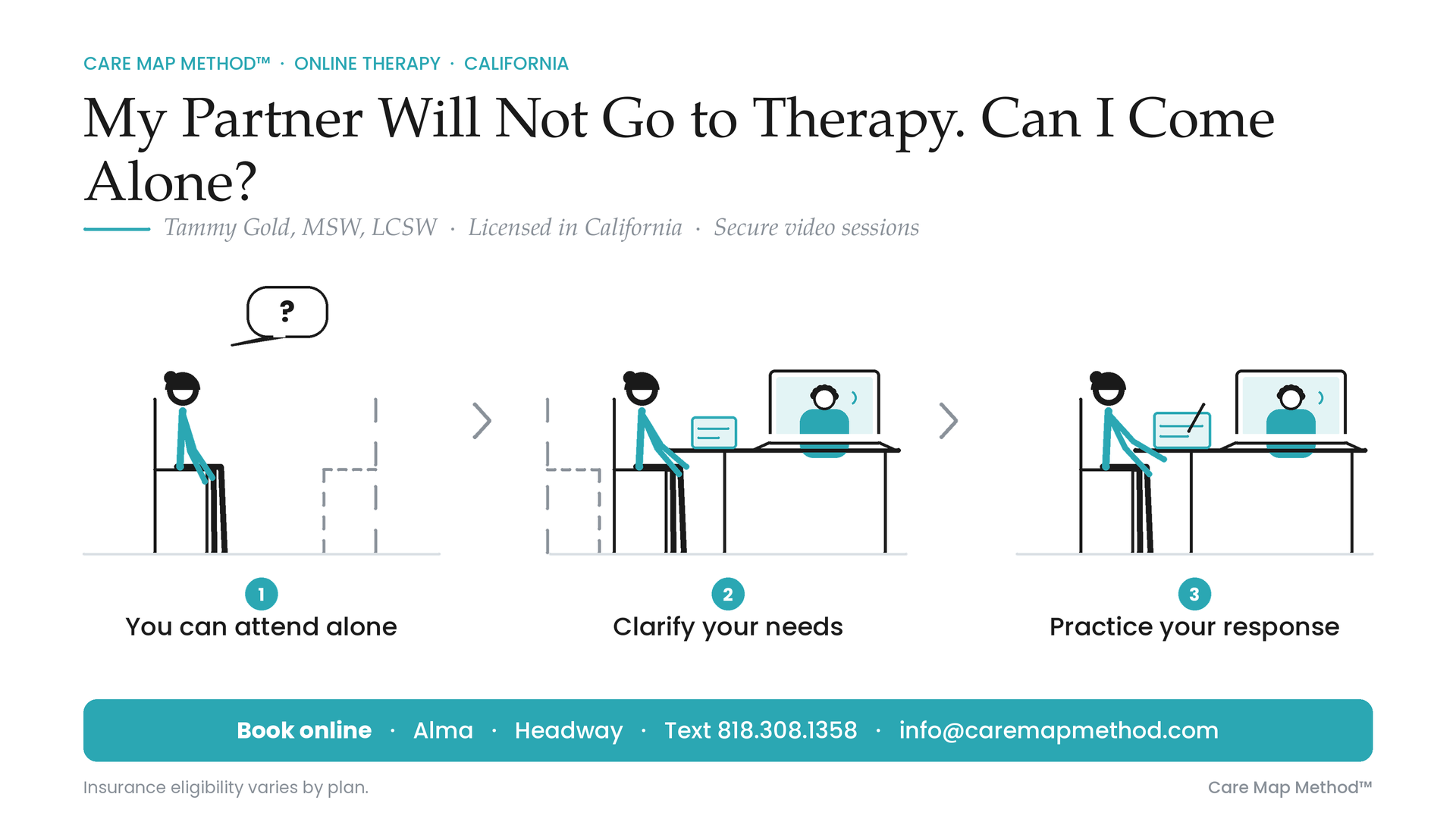
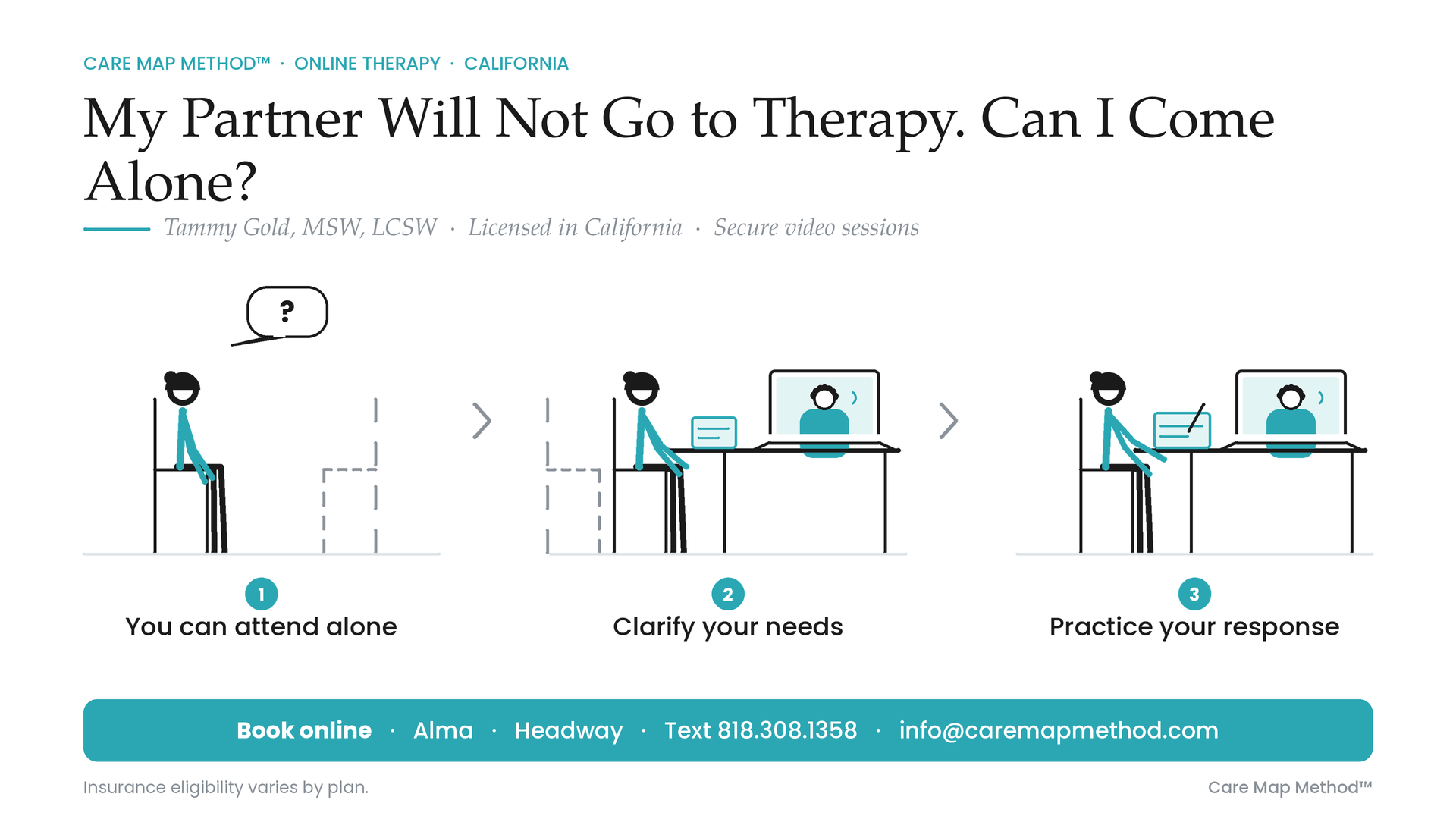
One adult meeting with a therapist on a laptop; an empty second chair is visible but the adult is engaged in their own work, writing a clear request.
You can begin without waiting for your partner
Yes, you can seek individual therapy for relationship concerns even if your partner does not attend. You might want support with anxiety after arguments, loneliness, resentment, difficulty expressing needs, or uncertainty about the future. Your well-being deserves attention in its own right.
I am Tammy Gold, LCSW. I provide online individual therapy for adults physically located in California. We can explore your experience without turning the session into a verdict about your partner or assuming you should stay or leave. We work toward understanding what you need and what choices are available.
What individual relationship work can include
We might slow down an interaction that keeps repeating. When did you begin feeling criticized, dismissed, or afraid of disconnection? What did you do next? How does the pattern affect your mood, concentration, sleep, or ability to be present elsewhere in your life?
From there, we can practice expressing a need without overexplaining, prepare a limit, or consider what evidence of change matters to you. We can also explore earlier experiences that make conflict especially painful. Individual therapy is not a way to make you better at tolerating harm or responsible for another person’s choices.
Using Care Map Method in individual therapy
Alongside clinical assessment, I use Care Map Method™ to organize the work. Biological, Emotional, Social, and Environmental factors help us consider fatigue, emotional injuries, relationship history, outside responsibilities, and the setting in which conflict happens.
MAP a recent trigger and your emotional response. MATCH the need with a strategy, such as a direct request or a boundary. MERGE the strategy into daily life by rehearsing words and considering timing. MANAGE your responses by reviewing what happened and what it tells you. We do not need your partner to participate to examine your experience, but we cannot guarantee the relationship will change.
Prepare one conversation without trying to solve everything
Try writing three sentences: “When this happens, I feel…” “What I need is…” “What I am asking for is…” Keep the request specific enough that you could recognize whether it happened. We can discuss whether the conversation is appropriate and how to respond if the answer is no.
If you fear retaliation or feel unsafe, we will consider safety and suitable support before encouraging a direct conversation. Over time, progress may include clearer decisions, less time replaying arguments, or improved ability to communicate and maintain limits. We review your distress and functioning, rather than judging therapy by whether your partner agrees.
Insurance and next steps
Eligible Anthem Blue Cross or Aetna members in California can use my Headway profile to check their specific plan, estimated costs, and appointment options. Benefits and network participation vary. Coverage depends on clinical assessment and the service provided. This page describes individual psychotherapy; couples sessions, coaching, mediation, and other services require separate confirmation.
You do not need to have the whole situation figured out before reaching out. We can begin by understanding what is most difficult and deciding whether this service is a good fit.
Frequently asked questions
Is this couples therapy if I attend alone?
No. This page describes individual psychotherapy with you as the client. A couples appointment is a different service requiring its own assessment and agreement. We can still discuss how relationship difficulties affect your emotional health.
Will you tell me to end the relationship?
We can explore your values, concerns, safety, and what you would need for the relationship to be workable. I do not begin with a predetermined answer. My role is to support informed reflection and decisions, not make the decision for you.
What happens in our first session?
We discuss the concern, symptoms, relevant relationship and personal history, current supports, safety, and your goals. You can ask about my approach. We will consider whether individual therapy fits what you need now.
Can I use Anthem Blue Cross or Aetna?
Eligible California members can check their exact plan through Headway. Coverage depends on participation, benefits, clinical assessment, and the service provided. A relationship concern does not automatically establish a covered diagnosis, and coverage is not guaranteed.
Will you contact my partner?
Individual treatment does not automatically involve your partner. We discuss confidentiality and any proposed involvement before taking that step, subject to applicable legal exceptions. We do not need to interview your partner to begin exploring your own experience.
How do I book?
Select “Check Insurance and Availability on Headway.” Enter the state where you will attend and your specific insurance details. If you are seeking couples therapy instead, ask about that service and its payment arrangements before booking.
About Tammy Gold
Tamara “Tammy” Gold, MSW, LCSW, CEC, is a Columbia University–trained clinical social worker, University of Pennsylvania graduate, certified coach, and founder of Care Map Method™. She is the author of Secrets of the Nanny Whisperer and brings more than 20 years of direct family work. Her therapy style is warm, collaborative, and practical, with attention to emotions, history, and everyday functioning.