

LOVE MY PARTNER. SO WHY AM I SO RESENTFUL?
Resentment is often a signal that something important has remained unspoken, unequal or unresolved.
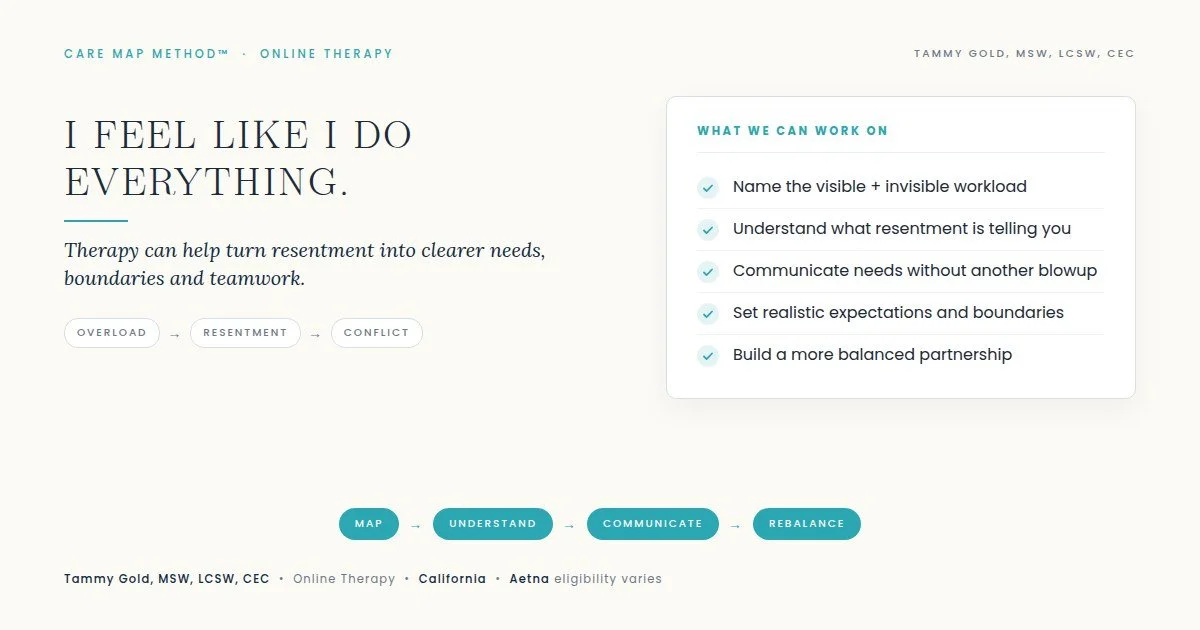
What therapy can help you work on:
• Identify what the resentment is protecting
• Separate current problems from accumulated history
• Make invisible labor and expectations visible
• Turn criticism into specific requests and boundaries
• Clarify what repair and shared responsibility would require
Resentment rarely starts as resentment
It often starts as helping, accommodating, waiting or telling yourself something is not worth an argument. Over time, the gap between what you give and what you feel you receive can become anger.
The argument may not be about the dishes
Housework, parenting, money, intimacy or schedules can become symbols for larger questions: Do you see what I carry? Can I rely on you? Do my needs matter too?
Therapy helps translate resentment
Instead of treating anger as the entire problem, we can identify the unmet need, injury, expectation or boundary underneath it. That creates something concrete to work with.
Care Map Method™
MAP where resentment appears and what it represents. MATCH each problem with a realistic request, boundary or repair conversation. MERGE those changes into daily life rather than one dramatic discussion. MANAGE setbacks, accountability and changing needs.
The goal is clarity, not forced forgiveness
You do not have to minimize what happened or manufacture warmth. We can work toward understanding, direct communication and decisions based on what actually changes.
What We Can Work On In Our Session:
Identify what the resentment is protecting
Separate current problems from accumulated history
Make invisible labor and expectations visible
Turn criticism into specific requests and boundaries
Clarify what repair and shared responsibility would require
Care Map Method™
MAP the problem and pattern. MATCH the needs with the right clinical strategies. MERGE insight into real conversations, boundaries and behavior. MANAGE what happens next and adjust as the situation changes.
Is resentment normal in a long-term relationship?
Resentment can occur in long-term relationships, especially when hurt, workload or unmet expectations accumulate. The clinically useful question is what the resentment is signaling and whether the underlying problem can be addressed.
Can resentment go away?
There is no guaranteed outcome, but resentment can change when the underlying issue is named, responsibility is clearer and behavior changes consistently enough to rebuild trust.
What if my partner says I am too critical?
We can examine both the content and delivery of what you are trying to communicate. Sometimes criticism is an ineffective expression of a legitimate need; sometimes both partners are caught in a defensive cycle.
Can I work on resentment in individual therapy?
Yes. Individual therapy can help you identify your needs, boundaries and communication patterns even if your partner does not attend.
What if the resentment is about unequal parenting or household labor?
We can make the workload visible, identify assumptions and define specific responsibilities rather than relying on vague promises to “help more.”
Does therapy mean I have to forgive my partner?
No. Therapy can help you understand what happened and decide what you need. Forgiveness is not a requirement for treatment or for making a clear decision about the relationship.
TURN RESENTMENT INTO A CLEARER PLAN BOOK YOUR SESSION TODAY Info@CareMapMethod.com 818.3081538
Check insurance eligibility and request an online therapy appointment. Therapy is available to eligible clients in California, New Jersey and Oregon; coverage and benefits vary by plan.