

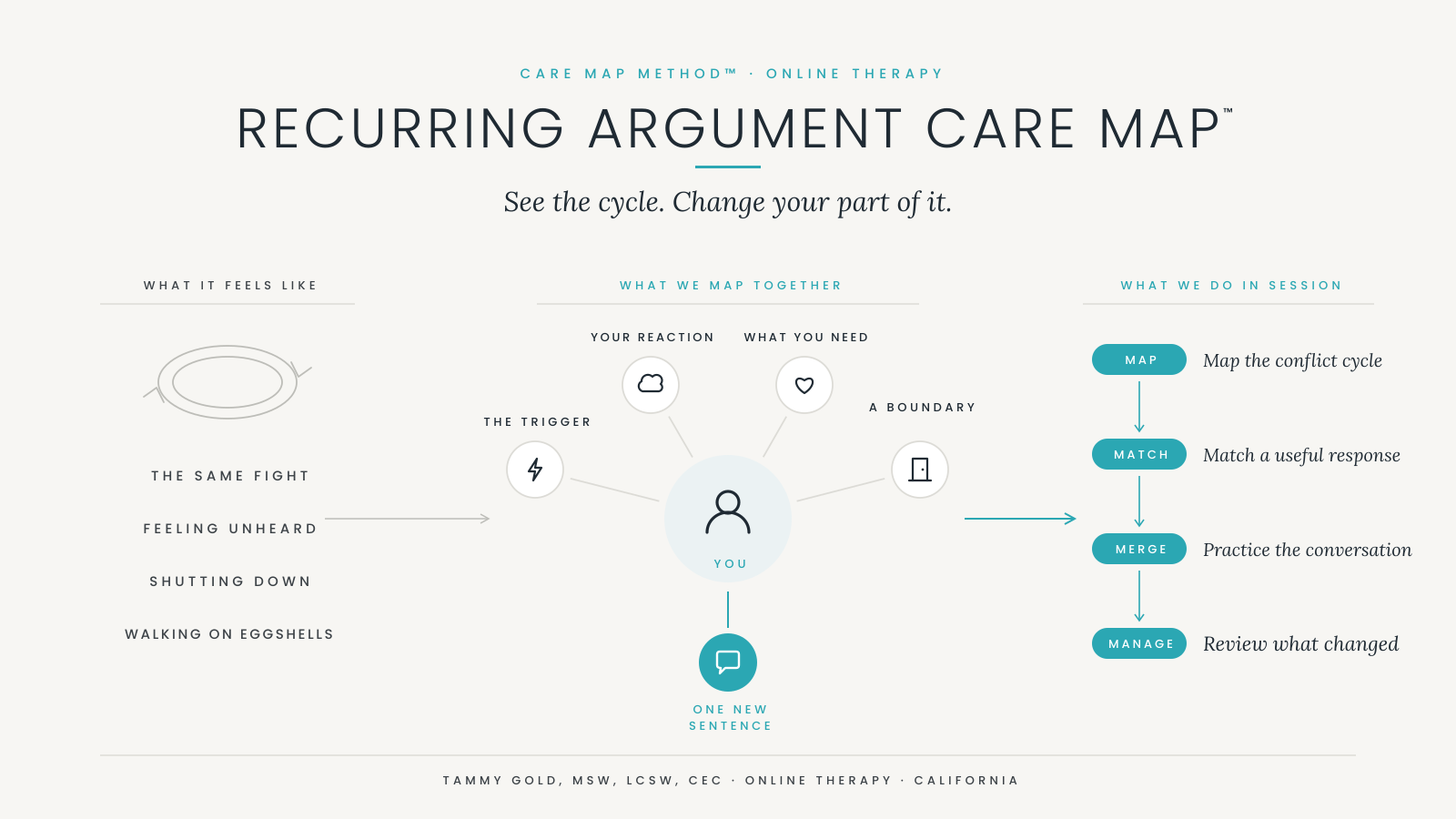
You start by talking about dishes, schedules or a text message. Within minutes, you are having the argument you know by heart. One person feels criticized, someone becomes defensive and the conversation ends with distance rather than understanding. You may spend the rest of the day wishing you had said it differently.
I’m Tammy Gold, LCSW. I offer individual online therapy for adults in California who are struggling with relationship stress and recurring conflict. We can explore your experience of the pattern, the needs underneath it and how you want to respond.
Check California Insurance and Availability On Headway Therapy Platform
When the topic changes but the argument feels familiar
The subject might be money one week and parenting the next. What feels familiar may be the sequence: trying to get heard, hearing a complaint, raising the intensity or withdrawing. You may feel frustrated that a conversation about one task becomes a much larger question about whether you matter.
We can examine a specific exchange with enough detail to understand it. That means considering what happened before the argument, what each statement meant to you and what you did next. We do not need to assume both people have the same experience or that one explanation fits every conflict.
Understand your part without taking all the blame
When you seek individual therapy for relationship problems, the focus is your mental health, needs and choices. That can include reflecting on responses you want to change while also recognizing behavior from others that hurts or confuses you.
You may notice that you defend yourself before understanding the request, stay silent until resentment builds or try to resolve everything when you are both exhausted. We can explore why a response makes sense to you in the moment and what happens afterward. Understanding your participation is different from accepting responsibility for the whole relationship.
What we might work on in a session
For example, we might explore a conversation about household tasks that shifted into criticism and withdrawal. You asked for help, heard yourself sounding sharper than intended and then felt dismissed. We could slow down the exchange and identify what you wanted the other person to understand.
After making room for those feelings, we might rehearse a more specific request or consider a different time to raise it. We could discuss how to name a pause without abandoning the subject, or how you want to respond if the conversation becomes unproductive. The practice is something to learn from, not a promise that the next conversation will go smoothly. Later, we can review what happened and what needs more attention.
Using MAP MATCH MERGE MANAGE in relationship work
Care Map Method™ helps organize Biological, Social, Environmental and Emotional factors. Fatigue, family roles, an overloaded schedule and past experiences may all shape a disagreement. We consider that context alongside your symptoms and treatment goals.
We MAP the interaction and the meaning it has for you.
We MATCH a possible approach to the need, such as a clearer request or boundary.
We MERGE it into real life through rehearsal and a manageable next step.
We MANAGE the plan by reviewing your experience and making adjustments. The framework supports individualized therapy rather than prescribing the same script to every relationship.
When your needs have become difficult to name
You may know you are upset without knowing what to ask for. “Help more” can carry a need for reliability, recognition, rest or shared responsibility. We can explore which of those matters in the moment and what a concrete request would sound like.
We can also discuss what happens when you make a request and nothing changes. You are allowed to consider your own needs even when another person disagrees. Therapy can help you reflect on options and consequences without deciding the future of your relationship for you.
Individual therapy when a partner does not attend
You can work on your own distress and relationship participation without requiring your partner to join. The first appointment can include your concerns, relevant history, current symptoms and how the conflict affects daily life. We can discuss goals and whether this approach fits.
Couples or family therapy would involve a separate assessment and arrangement. This page describes individual psychotherapy. Insurance participation for individual care should not be taken as confirmation of coverage for a joint service. We can clarify the type of support you are seeking before you begin.
About Tammy Gold and California appointments
I’m Tammy Gold, MSW, LCSW, CEC, a licensed therapist, certified coach and author. I earned my MSW at Columbia University and my BA at the University of Pennsylvania. My work includes relationships, parenting, caregiving and family stress.
Review my Headway or Alma profile for current California appointments and exact-plan participation. Confirm estimated costs before scheduling. During a California online appointment, plan to be physically located in California and somewhere you can speak privately.
Frequently asked questions
Can I come alone if my partner will not attend?
Yes. Individual therapy can focus on your distress, needs, reactions and choices within a relationship. You do not need a partner's participation to discuss those concerns. Joint treatment would require a separate conversation about the service and arrangements.
Will you decide which of us is right?
Our work can explore what happened, its impact and your part in the pattern without becoming a verdict about the relationship. Context and differences matter. We can examine responsibility and needs without assuming one person explains every part of the conflict.
What if I shut down during arguments?
We can explore what you notice before withdrawing, what the moment means to you and what happens afterward. Depending on your needs, we might practice language for expressing overwhelm, requesting a pause or returning to a topic. The approach is individualized.
Can we practice a difficult conversation?
Yes. We can rehearse words, timing and possible responses in a hypothetical conversation. We will also consider how the language feels to you and what remains outside your control. A rehearsed request cannot guarantee agreement from another person.
What if communication tips have not helped before?
We can look at why a suggestion was difficult to use, what the situation required and whether a different focus is needed. More information is not always the missing piece. Your emotional experience and the actual relationship context belong in the discussion.
Is this couples therapy?
This page describes individual psychotherapy. Couples therapy involves a different treatment arrangement with joint participation and its own assessment. If that is the service you want, clarify availability, fit and payment before scheduling rather than assuming it is the same appointment.
Can I use Aetna or BCBS Massachusetts in California?
Check current participation for your exact California plan through my Headway or Alma profile. Platform networks can differ, and plans with similar names are not interchangeable. Benefits and assessed clinical needs determine coverage. Confirm the estimated cost before booking.
How do I arrange a California online appointment?
Use my provider profiles to check current availability and insurance information. Plan to be physically located in California and able to speak privately. You can bring a recent disagreement or a recurring concern as a starting point for the first session.
Take the next step
You can review current California appointment options and your exact insurance plan through my provider profile. Confirm estimated costs before scheduling. We can begin with the situation you want help understanding.