

You finish something and immediately notice what could have been better. A small mistake stays with you long after other people have moved on. Even when you are doing well, resting may feel uncomfortable because there is always something else to improve.
I’m Tammy Gold, LCSW. I offer individual online therapy for adults in New Jersey who struggle with perfectionism, self-criticism and fear of getting things wrong. We can explore the pressure you put on yourself, what it protects you from and how you want to relate to your work, relationships and responsibilities.
Check New Jersey Insurance and Availability
When your standards leave little room for you
You may spend too long preparing a message, delay a task because you cannot see how to do it well enough or feel embarrassed asking for help. Perhaps you keep meeting expectations while privately feeling that you are falling short.
This can appear in parenting, work, caregiving and relationships. You might expect yourself to remain patient through every difficult moment or feel personally responsible for a family member’s disappointment. Therapy gives us space to examine those expectations and their effect on your well-being.
Understand what happens after a mistake
Imagine receiving a small correction at work. You know what needs changing, but your thoughts move quickly to “I am not good at this” or “They should not have trusted me.” You work late to compensate and avoid asking a question the next day.
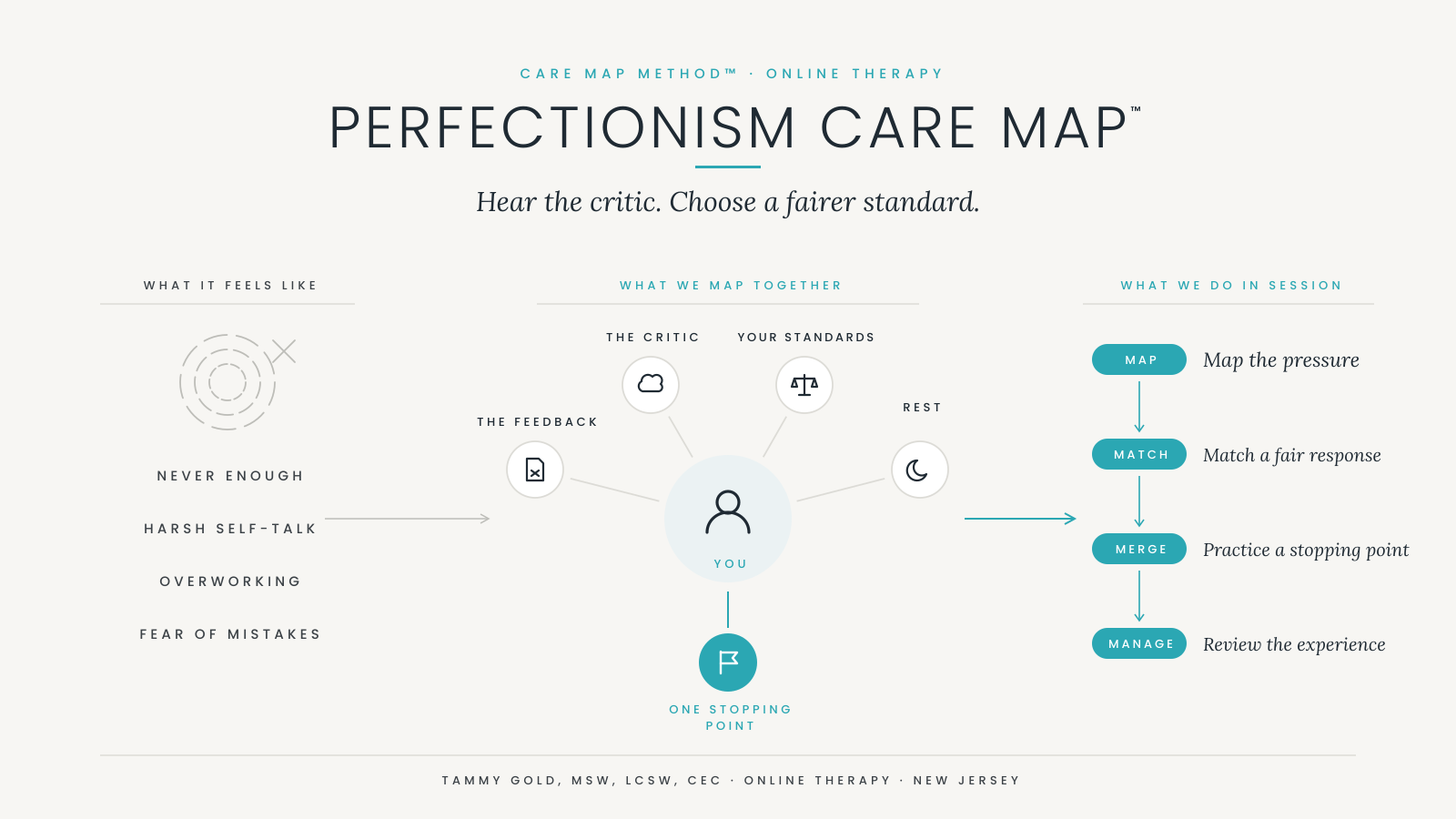
In a session, we might separate the specific feedback from the larger judgment about yourself. We can explore the feelings it brings up and consider a response that addresses the task without turning one correction into an account of your worth. That could include clarifying the feedback or deciding when the revision is complete.
Keep what matters while examining the pressure
You may worry that easing self-criticism means becoming careless, letting people down or losing the motivation that has helped you succeed. We can take that concern seriously. Your values and ambitions belong in the conversation.
We might explore whether the way you push yourself is helping you complete the task or keeping you trapped in preparation. We can also consider whose expectations you are trying to satisfy. The work should reflect your goals, rather than replace one rigid standard with another rule about being relaxed.
Practice a response that fits real life
A manageable experiment could be asking for clarification before trying to anticipate every preference, setting a stopping point for a routine task or making a direct request for help. We would discuss the worry involved and review the experience afterward.
For a parent, the starting point might be what happens after losing patience during a hard evening. We can look at accountability, repair and realistic expectations without spending the whole session judging whether you are a good parent. One difficult interaction deserves context and attention, rather than a verdict about your entire relationship.
Bring the whole situation into focus
Care Map Method™ helps us organize Biological, Social, Environmental and Emotional factors. We may consider fatigue and health, family expectations, work demands, available support and the emotional history of making mistakes. The same standard can feel very different depending on what else you are carrying.
We MAP the pressure and its context, MATCH suitable support, MERGE changes into your routines and MANAGE the plan through review. Within individual therapy, the framework helps us stay connected to your circumstances and treatment goals. Progress does not have to become another performance you judge.
Your first appointment
We can start with a situation you keep criticizing yourself about. We will also discuss relevant history, symptoms, daily functioning and previous experiences with support. Together, we can consider whether my approach fits and what you would like therapy to help you understand or change.
About Tammy Gold
I’m Tamara “Tammy” Gold, MSW, LCSW, CEC, a licensed clinical social worker, certified coach and author. I earned my MSW at Columbia University and my BA at the University of Pennsylvania. My work includes relationships, parenting, caregiving and the pressure of feeling responsible for everyone around you.
New Jersey appointments and insurance
Individual online appointments are available through my participating platforms, subject to current scheduling and treatment fit. Review my Headway and Alma profiles with your New Jersey location and exact insurance information. The plans available can differ between platforms.
Confirm benefits and estimated costs before scheduling. During a New Jersey appointment, you need to be physically located in New Jersey. Our first conversation can begin with the situation that made you think it might be time for support.
Frequently asked questions
Can I work on perfectionism without giving up my goals?
Yes. We can explore the goals and values you want to keep while examining the distress around meeting them. The focus may include how you respond to feedback, decide when something is finished or ask for help. Your ambitions can remain part of treatment.
Why do small mistakes feel so personal?
That is something we can explore in the context of your experiences, relationships and current pressures. A correction may bring up fear of rejection, shame or older expectations, but we would not assume the explanation in advance. Your assessment helps us understand the pattern.
Can perfectionism include putting things off?
You may find that fear of doing something inadequately makes it difficult to begin or finish. We can examine what happens with a particular task and consider manageable next steps. Procrastination alone does not tell us the cause or establish a diagnosis.
Can we talk about guilt when I rest?
Yes. We can explore what you believe rest means, whose needs you feel responsible for and what happens when you pause. The aim is to understand the guilt and your choices within real responsibilities, rather than assign another schedule you must follow perfectly.
Do I need to have an anxiety diagnosis before contacting you?
No. You can ask about an appointment without having a diagnosis. We will assess symptoms, history and functioning to clarify treatment fit. If you plan to use insurance, coverage depends on your benefits, current participation and the clinical service identified through assessment.
Is this productivity coaching?
This page describes individual psychotherapy focused on your mental health and functioning. We may discuss tasks or work patterns when they relate to treatment, but the service is not a productivity program. Coaching would require a separate discussion about goals, scope and payment.
Can I use Aetna or BCBS Massachusetts in New Jersey?
Check your exact plan and current New Jersey participation through my Headway or Alma profile. These platforms may offer different networks. Coverage depends on your benefits and the assessed clinical service. Confirm estimated costs before scheduling rather than relying on the insurer name alone.
How do online sessions work in New Jersey?
Review current availability through the booking links and choose a private place where you can talk comfortably. Plan to be physically located in New Jersey during your appointment. We will discuss your concerns, assess fit and work together on goals relevant to your life.
Take the next step
You can review current New Jersey appointment options and your exact insurance plan through my provider profile. Confirm estimated costs before scheduling. We can begin with the situation you want help understanding.