

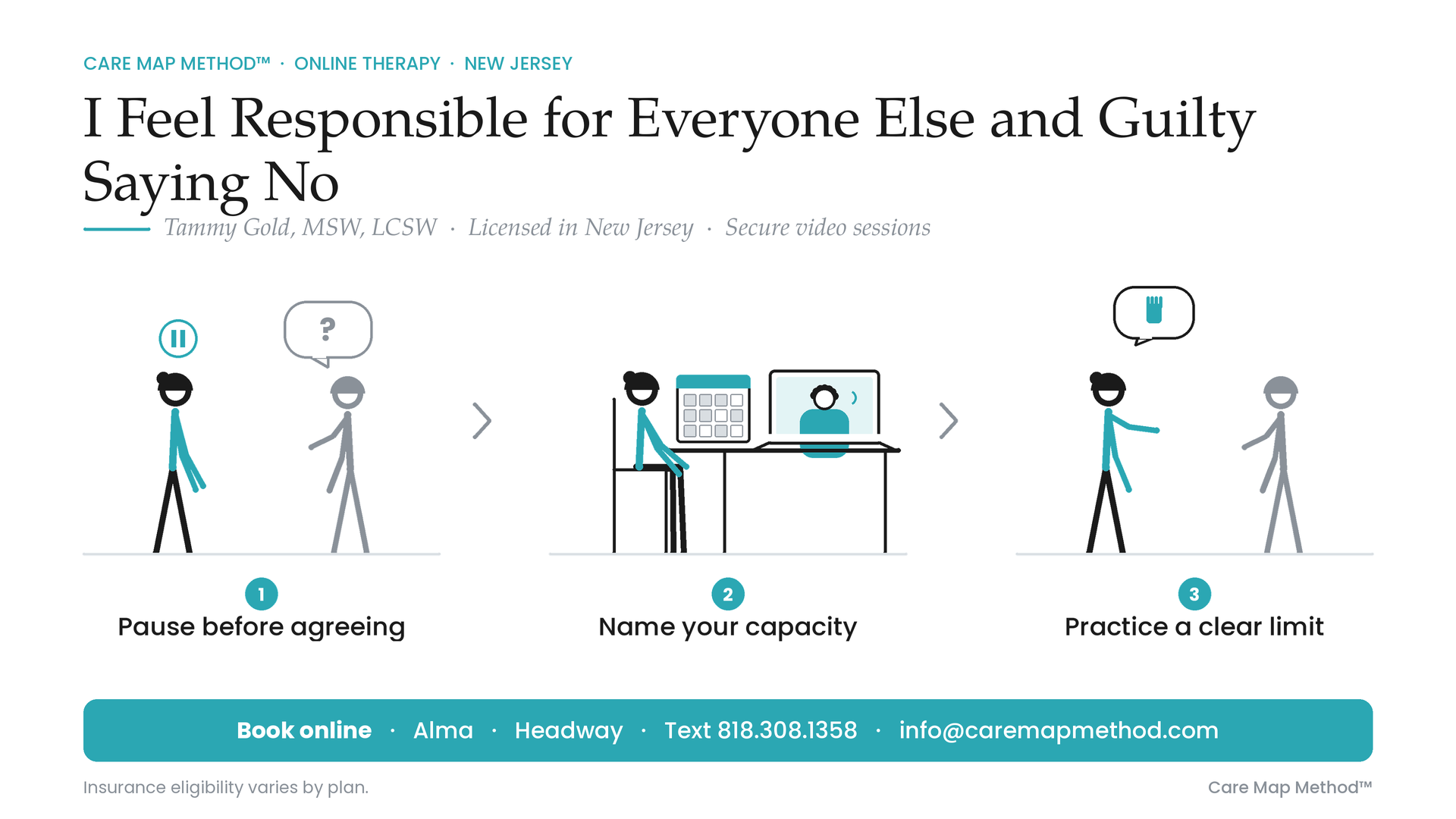
An adult receiving a request, pausing to check a calendar, and rehearsing a brief response with a therapist; the final scene shows a clear but calm limit.
When keeping everyone happy leaves you overwhelmed
You notice the change in someone’s tone and immediately wonder what you did wrong. You rearrange your plans, soften your request, or say yes to prevent disappointment. By the end of the day, there may be little energy left for your own needs.
I am Tammy Gold, LCSW. I offer online individual therapy for adults physically located in New Jersey. We can explore the distress behind people-pleasing, including worry, resentment, self-doubt, and difficulty tolerating conflict. Being considerate and having needs of your own can exist together.
Button: Check Insurance and Availability on Headway
Understand what saying no seems to threaten
We might examine what you expect will happen if you disappoint someone. Will they withdraw, become angry, think you are selfish, or stop relying on you? We can consider where those expectations came from and how they operate in current relationships.
Sessions may involve separating another person’s feelings from your responsibility, identifying preferences before agreeing, or exploring why a simple request feels dangerous. We can practice a boundary while also addressing the fear underneath it. The work is not to become indifferent to others, but to make choices with more awareness of your own capacity and values.
Map the moment you automatically agree
Care Map Method™ helps organize the pattern alongside clinical assessment. Biological, Emotional, Social, and Environmental factors can include exhaustion, fear or guilt, learned family roles, and demands at work or home.
MAP the request and the reaction that follows. MATCH the need with a strategy, such as delaying your answer, making a clear request, or setting a limit. MERGE the strategy by practicing it in a situation that feels manageable. MANAGE communication and responses by reviewing the discomfort, the outcome, and any adjustments needed. We can begin with a small change rather than your hardest relationship.
Practice making space before you answer
Try a sentence such as: “Let me check what I can manage and get back to you.” That pause can give you time to notice what you want and what you can realistically do. We can then practice the actual answer, including a brief no that does not become a long defense.
Guilt may still appear. We can work on tolerating it, examining the beliefs behind it, and deciding whether your boundary fits the circumstances. Progress may include fewer automatic commitments, more direct requests, and less time trying to repair ordinary disappointment. If setting a boundary could expose you to retaliation, we will consider safety and context before recommending a conversation.
Insurance and next steps
Eligible Aetna members in New Jersey can use my Headway profile to check their specific plan, estimated costs, and appointment options. Benefits and network participation vary. Coverage depends on clinical assessment and the service provided. This page describes individual psychotherapy; couples sessions, coaching, mediation, and other services require separate confirmation.
You do not need to have the whole situation figured out before reaching out. We can begin by understanding what is most difficult and deciding whether this service is a good fit.
Is people pleasing a diagnosis?
People pleasing describes a pattern, not a diagnosis by itself. We assess symptoms, history, functioning, and context to understand what is happening and whether psychotherapy is appropriate. We do not assume a label based only on saying yes often.
Can I work on boundaries without my family attending?
Yes. Individual therapy can focus on your emotions, decisions, communication, and coping. We cannot guarantee the other person will respond well, but we can prepare for possible reactions and consider what is within your control.
What happens at the first session?
We discuss the situations that are difficult, relevant history, symptoms, relationships, supports, safety, and goals. You can ask about my style and confidentiality. We begin deciding what you would like to work on first.
Does Aetna cover this therapy?
Eligible New Jersey members can check their exact Aetna plan through Headway. Coverage depends on network participation, benefits, clinical assessment, and the service. A pattern such as people pleasing alone does not guarantee an insurance-covered diagnosis.
Will I stop feeling guilty if I learn the right words?
A script may help you communicate, but it may not remove the emotion. We can explore the guilt and practice responding to it while evaluating whether the limit is realistic, respectful, and appropriate to your circumstances.
How do I get started?
Use “Check Insurance and Availability on Headway” and select New Jersey. You can bring one recent example of agreeing when you wanted to say no. We can use it as a starting point without expecting a perfect explanation.
About Tammy Gold
Tamara “Tammy” Gold, MSW, LCSW, CEC, is a Columbia University–trained clinical social worker, University of Pennsylvania graduate, certified coach, and founder of Care Map Method™. She is the author of Secrets of the Nanny Whisperer and brings more than 20 years of direct family work. Her therapy style is warm, collaborative, and practical, with attention to emotions, history, and everyday functioning.