

A young adult writing a message at a quiet café table with an unreadable phone screen.
You may be working, studying or managing daily responsibilities while missing the easy contact you had with people before. Friends have moved, schedules no longer match and a free evening can feel more isolating than restful.
I’m Tammy Gold. I offer individual online therapy for adults physically located in Oregon. We can explore the loss of connection after college or a move and how it is affecting your mood, confidence and daily life.
Understand what changed around you
College often provides repeated contact without requiring a plan every time. When that structure disappears, the effort involved in maintaining a friendship can change. We can look at your actual circumstances rather than assume that difficulty connecting means you have failed socially.
Perhaps you feel embarrassed reaching out, compare your social life with what you see online or avoid invitations because you expect to feel out of place. We can discuss those experiences alongside any symptoms that need assessment.
Work with one moment of disconnection
Imagine wanting to message a friend but deciding they probably do not want to hear from you. We might explore the evidence for that conclusion, what a response would mean to you and whether a small invitation fits the relationship.
We can also make space for disappointment when a friendship changes. Therapy does not require treating every connection as recoverable or every lonely evening as a task to fix.
Make room for connection that suits your life
Possible work includes expressing interest more directly, managing the feelings after an unanswered message or identifying settings where repeated contact is realistic. We will consider energy, money, transportation and other constraints rather than make a generic list of activities.
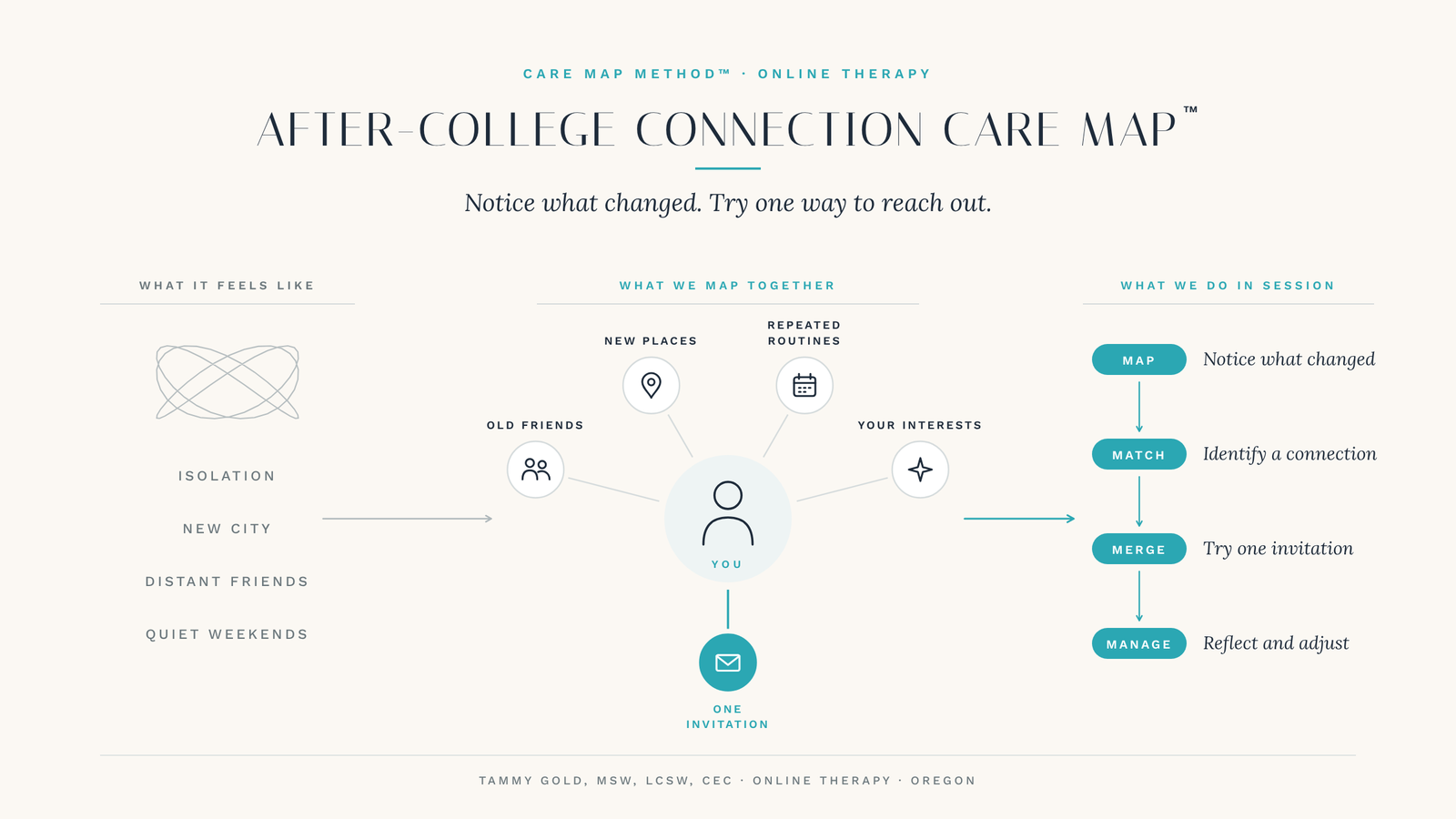
My Care Map Method™ organizes Biological, Emotional, Social and Environmental needs. We map the pattern, match a support or strategy, merge one manageable practice into your routine and manage what you learn over time.
Start with what feels hardest
The first session can include your recent transition, relationship history, symptoms and support. We will assess whether my approach fits your needs and choose goals together. Those goals might concern avoidance, self-criticism or a clearer way to reach out, rather than a promised number of friends.
Questions about starting therapy
Do I need to have attended college? No. A similar transition can happen after leaving a program, moving or entering work. We can assess whether the concern fits this service.
Is this a social anxiety specialty service? No specialty claim is made here. Assessment helps determine whether general transition support or specialized treatment is appropriate.
Can therapy guarantee that I will make friends? No. We can work on your feelings, patterns and choices; other people’s responses are outside our control.
Can I discuss a friendship breakup? Yes, when the effect on your mental health fits individual treatment. We can explore the loss and what you need next.
Can I attend while traveling? Confirm your physical location before each visit. Care must occur where I am authorized to practice.
Can I use insurance in Oregon? Verify current participation, your exact plan, assessed clinical service and estimated session costs before scheduling.
Ask about current availability, clinical fit and payment options. Confirm the state where you will be located before scheduling.