How to Choose the Right Caregiver for Your Aging Parent: 10 Questions Every Family Should Ask
Hiring a caregiver is about much more than filling an open position.
You're inviting someone into your loved one's home, daily routine, and life.
The right caregiver can improve safety, independence, confidence, and quality of life.
The wrong caregiver can create stress, confusion, poor communication, and unnecessary turnover.
At Care Map Method™, we believe the best outcomes begin with the right match.
Why Matching Matters
Families often focus on credentials alone.
Experience is important—but it isn't everything.
A successful caregiving relationship also depends on:
Personality
Communication style
Patience
Reliability
Flexibility
Family expectations
Medical needs
Emotional compatibility
Finding someone who fits all of these areas requires more than a résumé.
10 Questions Every Family Should Ask
1. Tell me about your caregiving experience.
Listen for specific examples rather than general answers.
2. Have you worked with someone who has similar medical needs?
Examples include:
Dementia
Parkinson's disease
Stroke recovery
Diabetes
Mobility limitations
3. How would you handle an emergency?
You're looking for calm decision-making and sound judgment.
4. How do you communicate with families?
Good caregivers communicate clearly, consistently, and respectfully.
5. Tell me about a difficult caregiving situation.
Past experiences often predict future performance.
6. How do you encourage independence?
Great caregivers support rather than take over.
7. Are you comfortable assisting with Activities of Daily Living?
Examples include:
Bathing
Dressing
Transfers
Toileting
Meal preparation
8. What does excellent caregiving mean to you?
This question reveals values more than skills.
9. Why are you interested in this position?
Look for genuine compassion rather than generic responses.
10. What questions do you have for us?
Excellent caregivers usually ask thoughtful questions.
Don't Forget References
Always verify:
Employment history
Reliability
Attendance
Communication
Strengths
Areas for growth
References often reveal details that interviews do not.
Watch for Red Flags
Be cautious if a caregiver:
Speaks negatively about previous employers
Cannot explain gaps in employment
Avoids answering questions
Arrives late without explanation
Has inconsistent references
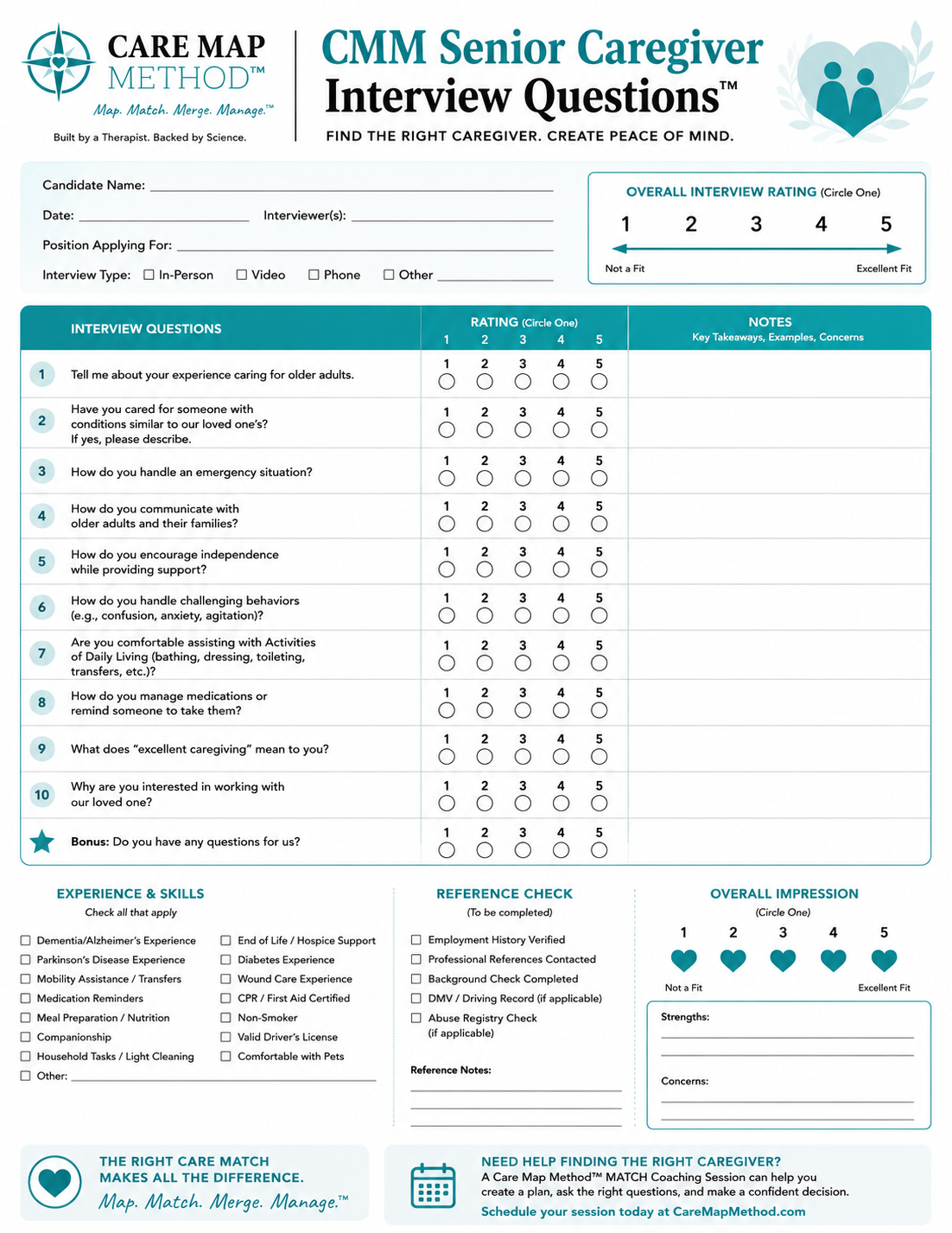
Download Our Caregiver Interview Questions™ Worksheet
(Insert your worksheet here.)
Our printable worksheet helps families compare candidates objectively, take organized notes, and feel more confident during the hiring process.
How a Care Map Method™ MATCH Coaching Session Can Help
Choosing a caregiver can feel overwhelming.
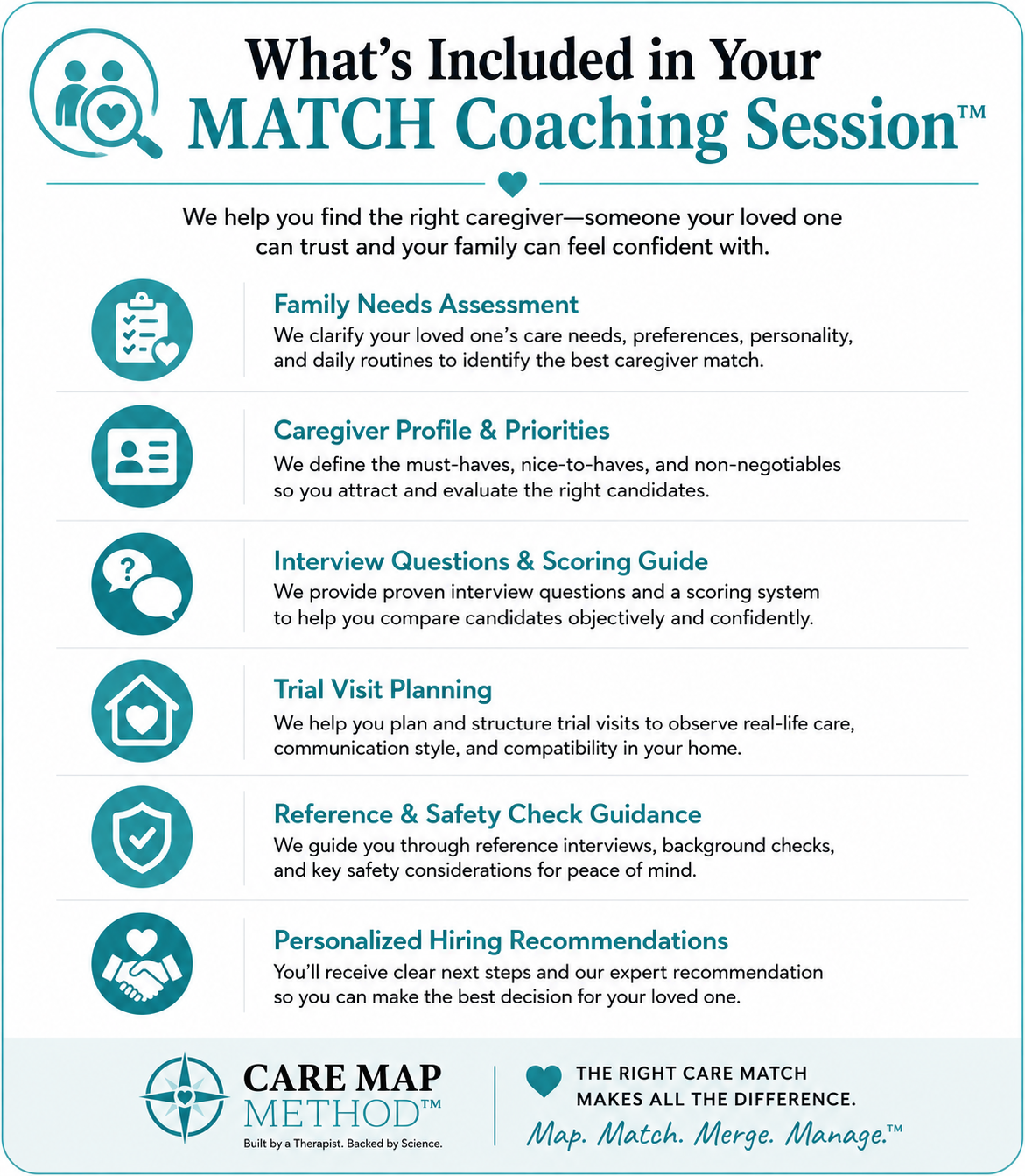
During your personalized MATCH Coaching Session™, we'll help you:
Clarify your family's care needs
Create the ideal caregiver profile
Prioritize must-have qualifications
Review interview questions
Plan trial visits
Evaluate references and safety considerations
Compare candidates objectively
Make a confident hiring decision
Our goal is to help you find the caregiver who best fits your loved one's needs—not simply the first available applicant.
Ready to Find the Right Caregiver?
The right caregiver can make daily life safer, calmer, and more fulfilling for your loved one—and for your entire family.
If you're preparing to hire in-home care, our Care Map Method™ MATCH Coaching Session provides expert guidance to help you make an informed decision with confidence.
Book your MATCH Coaching Session today.