

An adult and partner calmly reviewing a calendar at a table without visible personal information. Revise to match the actual asset; remove this instruction before publishing.
Dreading the next family visit in Maine
The holiday invitation arrives and you are already calculating travel, expectations and who will be disappointed. You may be worried about a relative’s comments or about another argument with your partner over whose family comes first.
I’m Tammy Gold. In individual online therapy for adults in Maine, we can explore the emotional strain surrounding family visits and prepare choices you can realistically carry out.
Understand what you are anticipating
The invitation may bring up more than a scheduling problem. You might feel responsible for preventing disappointment, fear being judged as selfish, or expect to defend choices that relatives repeatedly question.
We can identify what you are expecting, what has happened before and how those experiences affect you now. Cultural traditions, distance, finances and a relative’s health can all influence what is possible. Therapy can help you consider those factors without losing sight of your own limits.
Make the agreement before the visit
Rather than rehearsing every possible conflict, we might begin with a private conversation with your partner: “I want us to agree on how long we will stay and how we will respond if the comments start.”
We can explore what makes that request difficult, how to state your concern and what you can do if the conversation does not produce agreement. A boundary describes your participation; it does not guarantee another person’s approval.
Plan for what happens afterward
You may be able to get through a visit and still spend the next day replaying it. We can work on the meaning you attach to a comment, decide whether follow-up is useful and consider how much time you want to devote to reviewing the event.
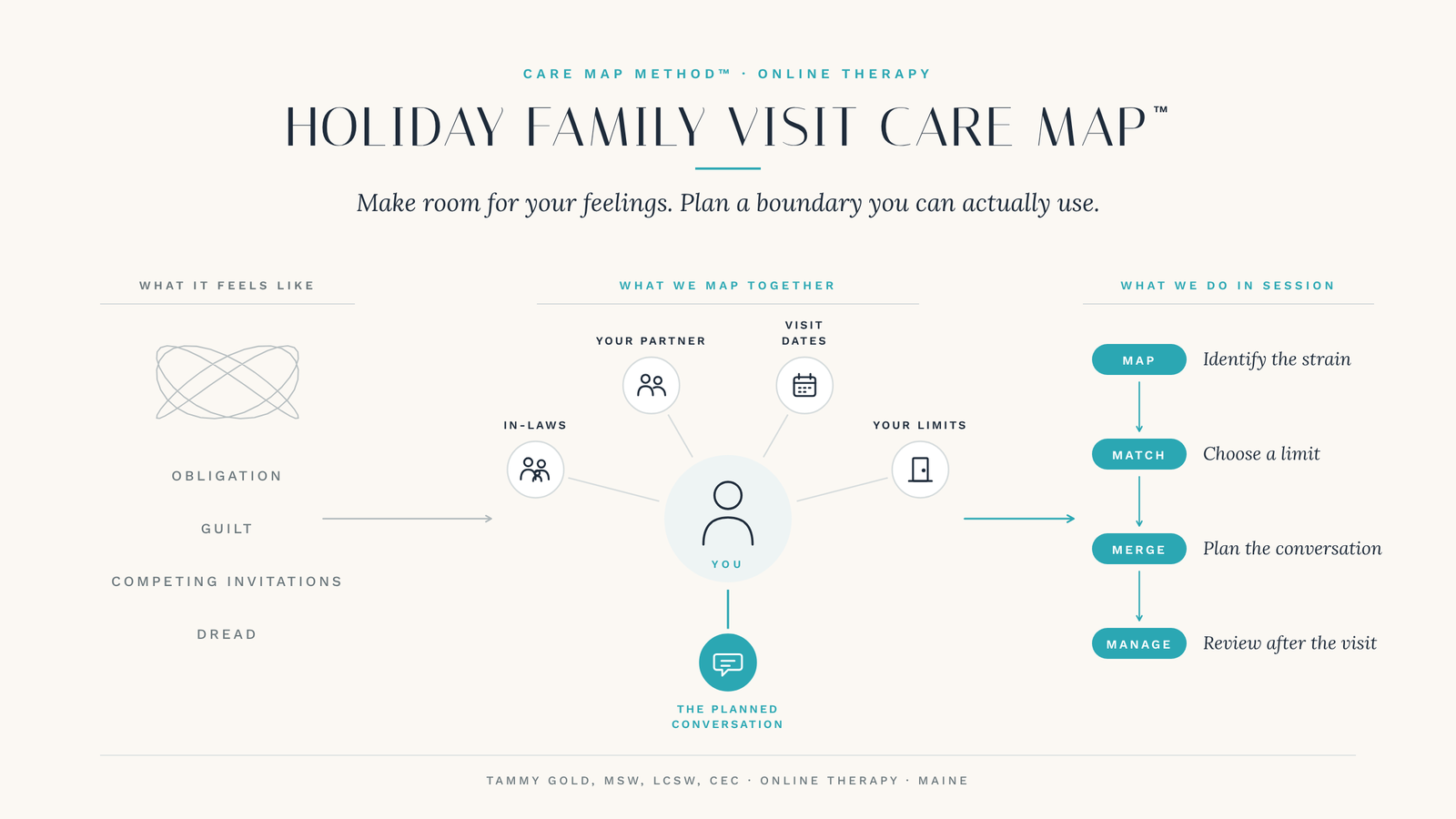
My Care Map Method™ organizes Biological, Emotional, Social and Environmental pressures. We map the interaction, match a response to your needs, merge it into an actual visit plan and manage what you learn afterward. That may include rest and privacy as well as words to use.
Begin with the visit that worries you most
In a first session, we will discuss the concern, its effect on your mental health and relevant relationship history. You do not need relatives to participate in order to begin individual therapy. Our goals will concern your well-being and choices, rather than diagnosing or changing family members who are not clients.
Questions about starting therapy
Can I attend without my partner? Yes. Individual therapy can focus on your distress and decisions without requiring your partner to participate.
Will you tell me to stop seeing my in-laws? There is no preset outcome. We can explore options consistent with your circumstances, values and safety.
What if I feel guilty about saying no? We can explore the guilt and what it means to you, while considering the responsibilities you actually want to accept.
What if there are threats or intimidation? Tell your therapist. Safety and appropriate support take priority over practicing a standard boundary script.
Is this family mediation? No. This page describes individual psychotherapy, not mediation or a process for making agreements among relatives.
Does insurance cover holiday stress? A holiday concern alone does not establish coverage. Eligibility depends on assessed clinical needs, your plan and active provider participation.
Ask about current availability, clinical fit and payment options. Confirm the state where you will be located before scheduling.