

Adult reflecting on a keepsake while considering support after a loss.
After someone dies, the world can look almost the same while your daily life feels changed. You may miss the person, the conversations you used to have, or the role they played in your family. Some days you may feel sad; on other days you may feel numb, busy, relieved, angry, or surprised by a moment of laughter.
I’m Tammy Gold, LCSW. I offer individual online therapy for adults navigating grief, caregiving, anxiety, family stress, and major life changes. We can make room for what this loss means to you and consider how you want to move through the days ahead.
There is no single way to grieve
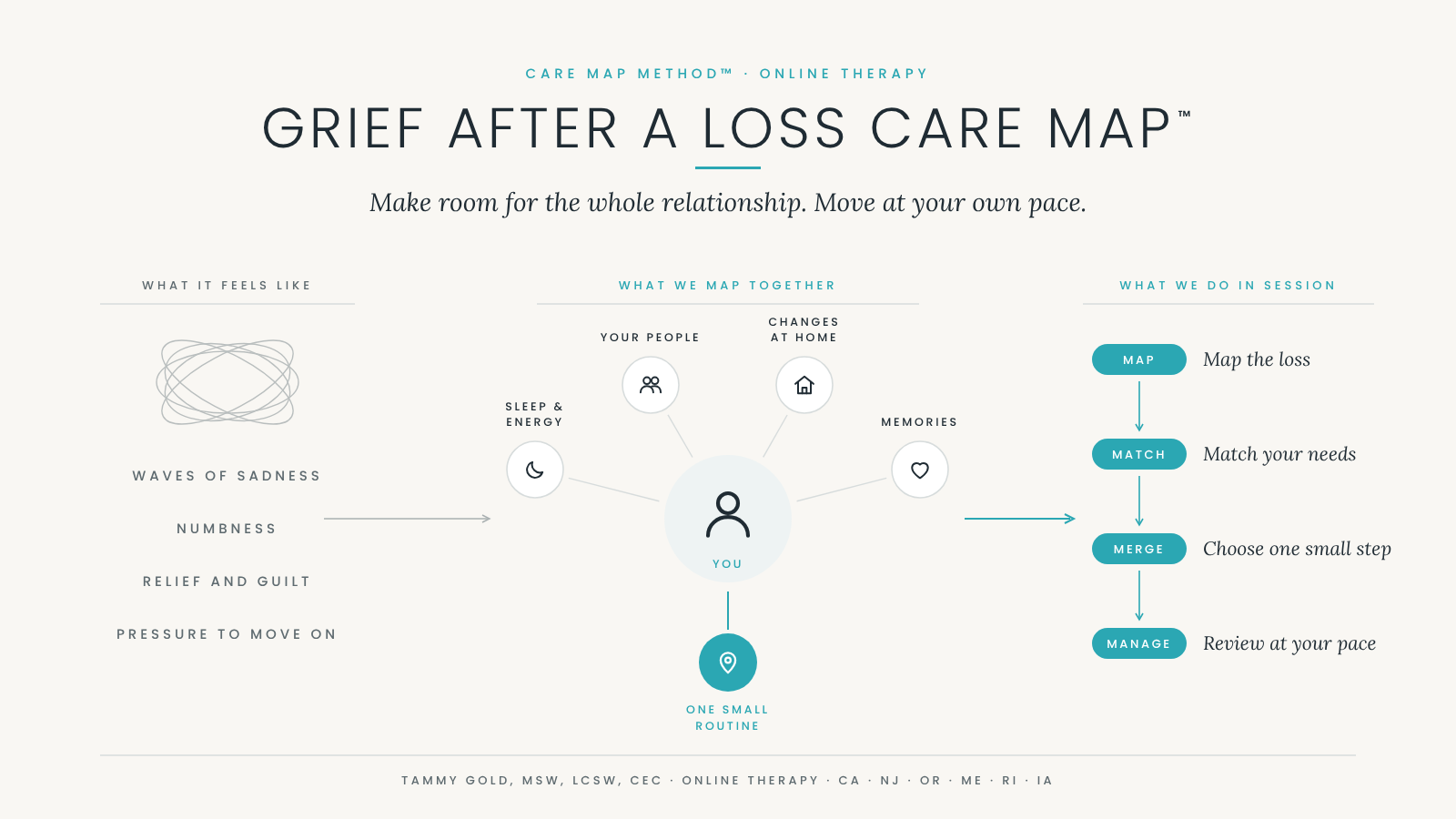
Grief can come in waves. A familiar song, an empty chair, a medical appointment, or a family gathering may bring the loss close again. You may find yourself thinking about the person throughout the day, or feel as if you are functioning automatically. You might feel pressure to return to normal before you are ready.
People grieve differently, and the relationship itself may have been complicated. You may miss someone and also remember painful parts of the relationship. You may feel relief after a long period of caregiving and then feel guilty for being relieved. Mixed feelings do not cancel each other out.
Talk about the parts that are hardest to say out loud
You do not have to present a tidy story of the loss. In therapy, we can talk about a specific moment: the first holiday without the person, sorting belongings, answering other people’s questions, or feeling alone after the visitors have gone home.
We can explore what the moment brings up and what support you want. Maybe you want to talk about a memory. Maybe you want help telling a family member that you cannot take on every responsibility. Or maybe you need space to say that you do not know how you feel yet. The conversation can begin wherever you are.
When caregiving and grief overlap
If you cared for someone before they died, the loss may include a long period of worry, appointments, and decisions. You may miss the person and the role you had in caring for them. There may be memories of exhaustion, family disagreements, or questions about whether you did enough.
We can look at those experiences without turning therapy into a trial of your decisions. We may discuss what was within your control, what support you had, and what you want to remember about your relationship. If the person is still living and you are grieving changes related to illness or decline, that is anticipatory grief and may fit better with my existing page on that topic.
Consider the practical changes after a loss
A death can alter routines, roles, and relationships. You may be the person everyone calls, or the one who used to call the person who died. You may have to manage paperwork, family communication, or changes in your household while trying to understand what has happened.
Therapy can help you notice which tasks feel urgent, which can wait, and where you might ask for support. We can discuss a boundary, prepare for a difficult conversation, or choose one small routine that gives the day some structure. The goal is not to rush grief but to help you care for yourself while you live through it.
Use Care Map Method to make space for the whole experience
My Care Map Method considers Biological, Social, Environmental, and Emotional factors that may be relevant. During grief, that might include sleep and energy, the people who can offer support, practical changes at home, and the feelings connected to the person who died.
We MAP the loss and its effects,
MATCH support to your needs,
MERGE a small step into your day if it is useful, and
MANAGE the plan through review.
The framework helps us organize the conversation. It does not prescribe a timetable for grief or promise a particular outcome.
When grief feels hard to carry
You may want support if grief is affecting relationships, work, sleep, or daily responsibilities, or if you simply want a place where you do not have to manage other people’s reactions. A therapist can discuss your experience and help determine whether individual therapy fits your needs. If you have urgent safety concerns, contact emergency services or a crisis resource.
What the first session can include
We can talk about who died, what the relationship meant to you, what has been hardest lately, and what kind of support you want. You do not have to share every detail at once. You can ask questions and decide whether you feel comfortable continuing.
I offer online therapy to adults physically located in California, New Jersey, Oregon, Maine, Rhode Island, and Iowa, subject to current openings. Check Headway or Alma for your state, plan, and appointment options. Rhode Island is a current live practice state; use the appropriate active profile route when checking availability.
Frequently asked questions
How long does grief last?
There is no single timetable that applies to everyone. People may notice changes in their grief over time, and important dates or reminders can bring strong feelings back. Therapy can focus on your current experience rather than setting a deadline.
Is it normal to feel relief after a loved one dies?
Some people feel relief, especially after a long period of illness or caregiving. That feeling can exist alongside sadness or love. We can talk about what it means to you without judging it.
What if my relationship with the person was complicated?
You can bring the whole relationship into therapy, including closeness, conflict, unanswered questions, or mixed feelings. There is no requirement to describe the person or the loss in one simple way.
Can therapy help with guilt after caregiving?
We can explore what you were responsible for, what was outside your control, and what support you had. The work is not about putting you on trial; it is about understanding how the experience affects you now.
Is grief after a death different from anticipatory grief?
Anticipatory grief can arise while someone is still living, often in the context of illness or decline. Bereavement follows a death. The experiences may overlap, but the current page should speak to the loss that has occurred.
Can I use insurance for grief therapy?
Coverage depends on your plan, eligibility, clinical needs, and current provider participation. Check the exact plan and expected cost through Headway or Alma.
What if other people expect me to be over it?
We can discuss the pressure you are feeling, what you want others to understand, and how you want to respond. You do not need to follow another person’s timetable.
Do I need to know what I want from therapy?
No. You can begin by describing what feels hardest. We can work together to understand what support may fit.
If you want a place to talk about the loss, check current state availability and insurance through my Headway or Alma profile.