

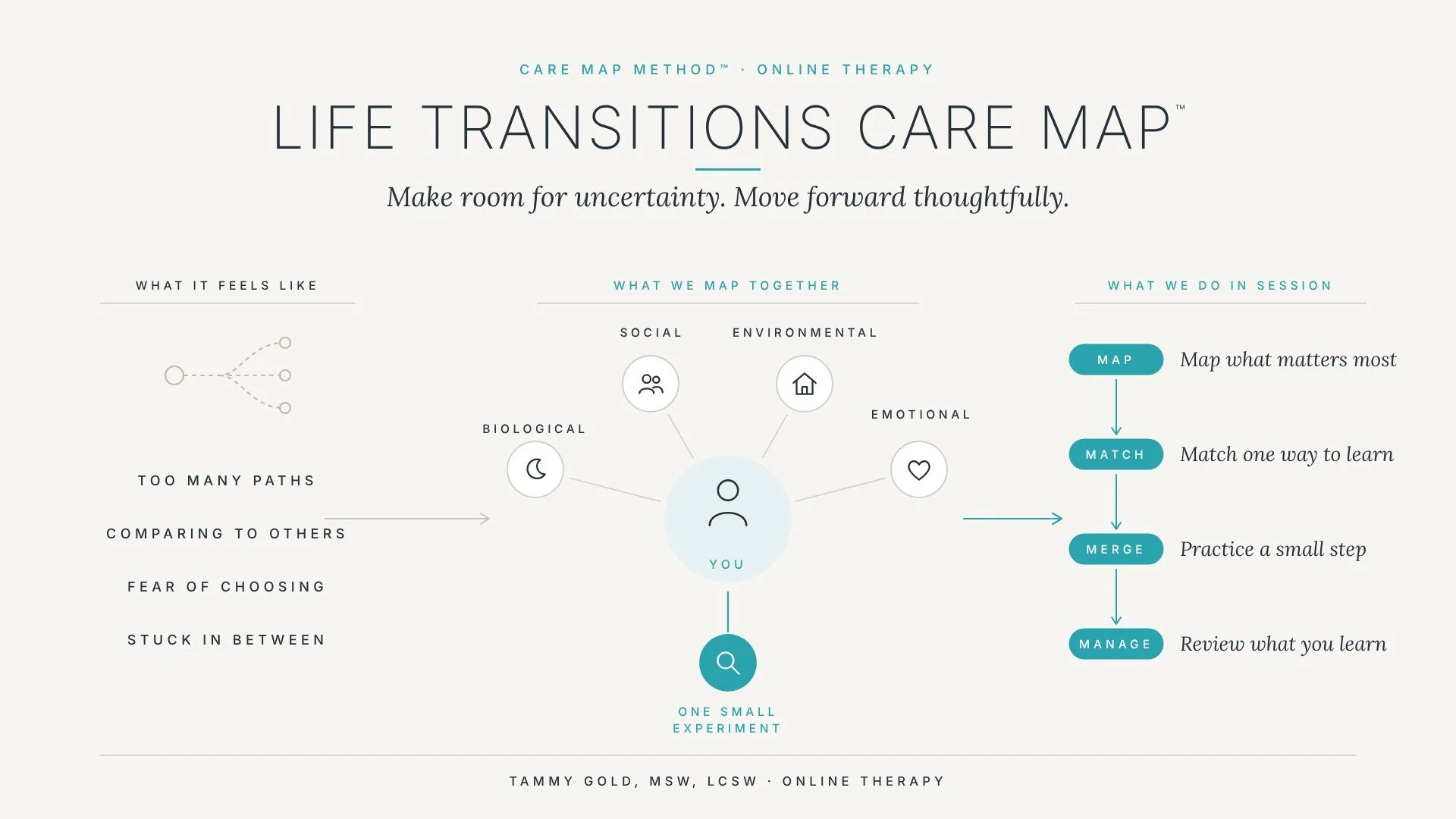
When choosing a direction becomes emotionally consuming
You may know that a job is not working for you and still feel unable to make a change. Or you may have several reasonable options and feel anxious that one decision will determine the rest of your life. Questions about work can become questions about who you are, whether you are successful and what other people expect of you.
Therapy for career anxiety focuses on the emotional and behavioral patterns around those decisions. We can address worry, avoidance, grief, perfectionism and self-doubt while acknowledging practical constraints. This is psychotherapy, not a service that selects a profession, places you in a job or promises a more successful career.
The pressure of being in your twenties or thirties
You may have expected to feel settled by now. Seeing friends announce promotions, homes or major relationships can make your own uncertainty feel like failure. A period sometimes called a quarter-life crisis may include questions about identity, values, work and belonging. That phrase describes an experience; it is not itself a clinical diagnosis.
We can examine the timeline you believe you should meet and where it came from. Family culture, financial needs, social comparisons and earlier achievements may all influence what feels acceptable. Understanding those pressures can help you distinguish a meaningful personal goal from a standard you have been trying to satisfy for someone else.
Understanding what keeps you stuck
Avoidance sometimes looks like doing nothing, but it can also look like endless researching, repeatedly asking other people what to do or waiting to feel completely confident. You may move between wanting a dramatic change and convincing yourself that you should simply be grateful. Both reactions can leave the underlying concern unexplored.
In therapy we can identify the feared outcome, the cost of staying in the current pattern and the information you actually need. We can also assess whether anxiety, low mood or other symptoms are affecting your ability to decide. If vocational testing or specialized career services would help, we can discuss adding those supports.
How the Care Map Method can organize the work
We can MAP the decision, including the emotions, relationships and practical conditions around it. We MATCH the therapeutic work to the barriers we identify, whether that involves tolerating uncertainty, responding to criticism or separating your values from others' expectations. We MERGE insights into manageable actions and MANAGE what happens as you gather more information.
For example, you might begin by speaking with someone in a field you are considering rather than committing to a new degree. That action is not a prescription for everyone. It is an illustration of how we can make a large decision more approachable while continuing to address the emotional meaning attached to it.
Making room for loss and mixed feelings
Even a wanted change may involve grief. Leaving a job can mean losing colleagues, status, routine or a long-held picture of yourself. Losing work unexpectedly may bring anger, shame or fear. Therapy can help you acknowledge those responses without making them the only basis for what you do next.
We can also explore how to discuss uncertainty with a partner or family member. You may need to communicate what kind of support is helpful, what financial boundaries matter and which decisions are yours to make. The conversation can include both emotional support and the realities of your responsibilities.
Decisions without a promise of certainty
No process can guarantee that a choice will feel right forever. A useful goal may be becoming able to make a thoughtful decision with the information available, notice the results and adjust when needed. That can be different from waiting for anxiety to disappear completely.
We will review the goals you bring into therapy and whether the work is helping. Sometimes the next step is a change in role; sometimes it is a change in boundaries or in how you relate to achievement. The direction should follow your assessed needs and priorities rather than a formula about ambition or success.
About Tamara Gold
I am Tamara “Tammy” Gold, MSW, LCSW, CEC, a Columbia University-trained therapist, certified coach and author of Secrets of the Nanny Whisperer. My work with individuals and families informs a warm, collaborative approach that connects emotional understanding with practical next steps. Treatment is individualized to your needs; results and timelines vary.
Online appointments and insurance
Online appointments depend on your physical location at each session, clinical fit and current availability. Review my booking profiles to confirm whether I can serve you in your state. Selected insurance plans may be available through Headway or Alma. Coverage, medical-necessity requirements and your costs depend on your individual plan; a life problem alone does not establish insurance coverage.
Frequently asked questions
Is this the same as career counseling?
This service focuses on mental health, emotional patterns and functioning related to career concerns. It does not include vocational testing, résumé writing, recruitment or job placement. We can discuss whether a separate career professional would complement therapy.
Can therapy help if I feel lost after college?
Yes. We can explore the transition in routine, identity, relationships and expectations, as well as any symptoms affecting your wellbeing. You do not have to know your next step before beginning.
Is a quarter-life crisis a diagnosis?
No. It is an informal phrase for uncertainty or distress around early-adult transitions. A clinical assessment considers your symptoms and functioning rather than using that phrase as a diagnosis.
Can we work on fear of choosing the wrong job?
Yes. We can examine how you evaluate risk, seek reassurance and respond to uncertainty. We can also distinguish useful information gathering from repeated checking that keeps you from making a decision.
Will you tell me to leave my current job?
No. We will consider your circumstances and options together, including finances, responsibilities, health and preferences. Decisions about employment remain yours.
Will insurance pay for career advice?
Do not assume that it will. Psychotherapy coverage depends on the plan and clinical requirements; general career advice or coaching may not qualify. Verify benefits and discuss the nature of the service before booking.
Take the next step
If this sounds like the kind of support you need, review current appointment options and check insurance eligibility through my Headway or Alma profile. You can bring questions about fit, fees and the process before scheduling. You do not need a perfect explanation of the problem to begin.