

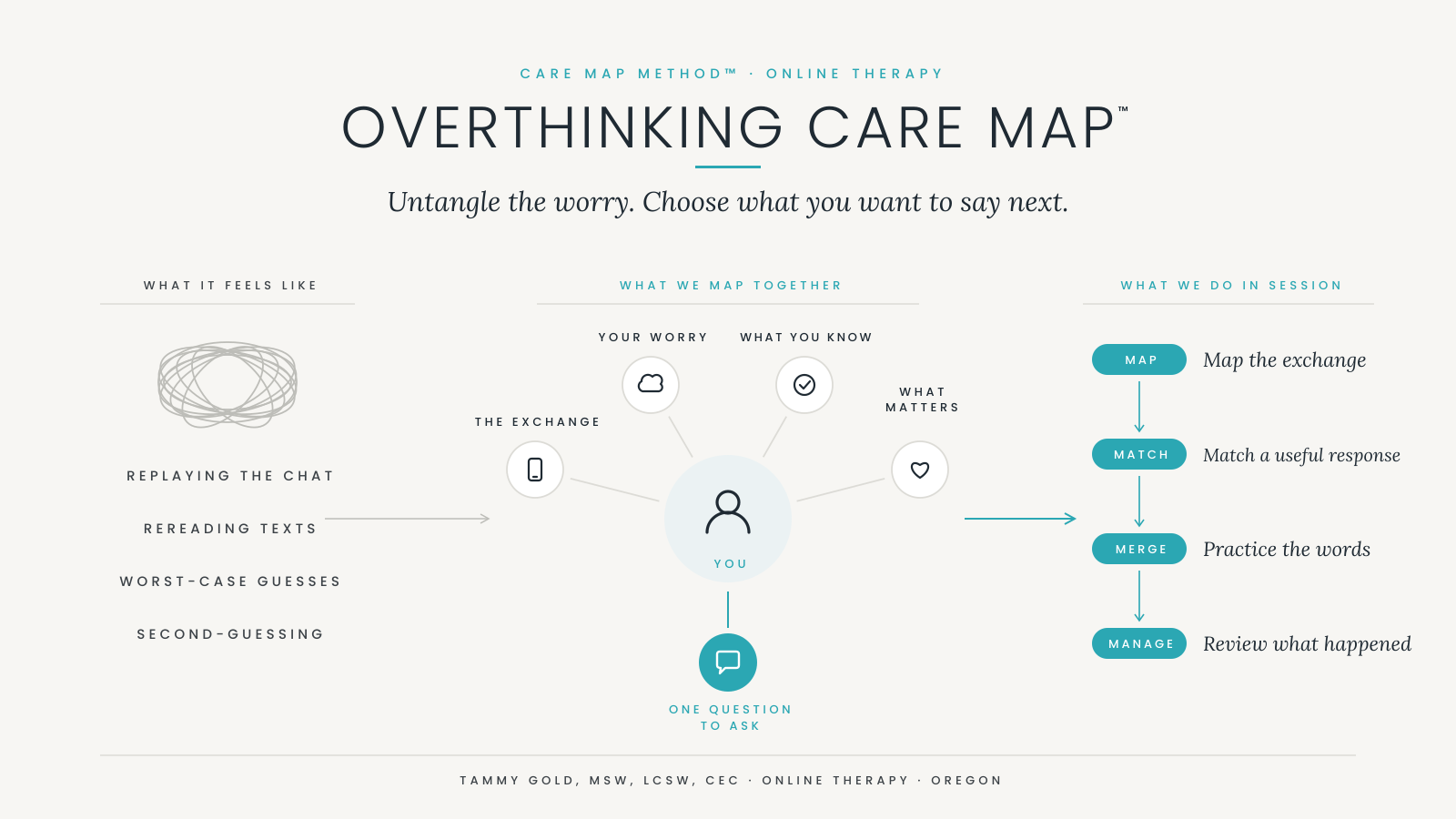
Four illustrated steps for exploring an anxious conversation and practicing a response.
The conversation ended hours ago, but you are still going over it. You wonder whether you sounded rude, missed something important or should send another message. Even when nothing is happening, your mind may be preparing for the next problem.
I’m Tammy Gold, LCSW. I offer individual online therapy for adults in Oregon who want help understanding anxiety and patterns of overthinking. We can look at what keeps pulling you back into worry, how it affects your relationships and daily life, and where a different response might become possible. Click Link Below To Check Options on Headway:
Check Oregon Insurance and Availability
When thinking stops bringing clarity
You may spend a long time deciding what to say, ask several people for reassurance or check a message repeatedly. For a moment, that may feel useful. Then a new question appears and you begin again. You can be capable and dependable while feeling exhausted by the work happening in your head.
In therapy, we can examine your particular pattern without assuming that all worry has the same cause. Current pressures, earlier experiences and uncertainty in a relationship may each play a part. We will also assess symptoms and functioning to understand what kind of care fits.
Start with one moment that keeps returning
Imagine receiving a short reply from someone you care about. You decide they must be upset. You reread the exchange, draft an explanation and put off something else while waiting for reassurance. In session, we might separate what you observed from what you feared it meant.
We can explore the feeling underneath the checking and consider a response you are willing to try. That might involve asking a clear question, returning to a planned activity or noticing the urge to seek another opinion before acting on it. The aim is to understand your choices while allowing room for genuine uncertainty.
Make space for the concerns underneath the worry
Sometimes overthinking gathers around a fear of disappointing people, making a mistake or losing a relationship. You may believe that reviewing every possibility will keep something painful from happening. We can consider where that expectation came from and how it serves you now.
You do not have to defend how much the situation matters. We can take the concern seriously while examining whether your current response gives you the information or relief you need. If there is a practical problem to address, we can distinguish that task from questions that have no clear answer yet.
Work on responses you can use in daily life
Our work may include recognizing the point where reflection becomes repetition, practicing how to express a need or exploring what happens when you leave a small question unanswered. We can choose a manageable situation and review the experience together.
For example, you might practice saying, “I want to check what you meant,” instead of writing a long apology based on an assumption. Or we might discuss how to end an evening of rereading work messages. The next step should fit your circumstances, comfort and treatment goals.
Look at the whole picture with Care Map Method
Care Map Method™ helps organize Biological, Social, Environmental and Emotional factors in our conversations. We may consider your energy and health, the people around you, the pressures of your day and the feelings that make a particular situation difficult. Medical questions remain with the appropriate health professional.
We MAP the pattern, MATCH suitable therapeutic support, MERGE changes into your actual routines and MANAGE the plan through review. This structure supports individual clinical care; it does not require you to complete a perfect plan before you are allowed to feel better.
Meet Tammy Gold
I’m Tammy Gold, MSW, LCSW, CEC. I earned my MSW at Columbia University and my BA at the University of Pennsylvania. My work with adults and families includes anxiety, difficult relationships, parenting stress and caregiving. I bring a warm, practical approach and an interest in understanding the situation before deciding what to change.
Online appointments and insurance in Oregon
You can review my Headway and Alma profiles for current Oregon appointments and exact plan participation. Headway may offer options such as Providence, Regence, Aetna and Carelon, depending on the product and eligibility. Confirm benefits and estimated costs before booking.
During an Oregon appointment, you need to be physically located in Oregon. A private place where you can speak comfortably can help you use the session. We can begin with the worry or recent situation that prompted you to reach out.
Frequently asked questions
Can therapy help when I cannot stop replaying conversations?
We can examine what starts the replaying, the meaning you attach to the exchange and what you do next. Treatment can focus on your symptoms, relationships and responses. Your assessment and goals will guide the work rather than a single rule for stopping thoughts.
Is overthinking the same as an anxiety disorder?
Overthinking describes an experience, rather than establishing a diagnosis by itself. We would discuss the thoughts, associated symptoms, history and impact on daily life. That assessment helps determine whether there is a clinical condition and what treatment or other support may be appropriate.
Will you tell me to stop caring what people think?
We can explore why another person’s response matters and how you want to participate in the relationship. Caring about people can remain important to you. Our conversations can focus on the distress and habits around uncertainty, along with communication that reflects your needs.
What if I understand the pattern but keep repeating it?
Knowing the pattern gives us information, but it does not mean the next response will be easy. We can look at the moment it repeats, choose a smaller step and review what got in the way. Difficulty is something to understand together.
Can we work on relationship and workplace worries?
Yes. You may bring concerns involving a partner, parent, friend, coworker or boss. We will consider your experience and functioning, including what is within your control and what depends on others. The work remains centered on your own treatment goals.
What happens during the first session?
We will discuss your concerns, relevant history, current symptoms and the effect on daily life. You can ask questions and describe previous experiences with therapy. We will begin assessing fit and possible goals; you do not need to arrive with a diagnosis or organized explanation.
Can I use insurance for anxiety therapy in Oregon?
Coverage depends on your exact benefits, current provider participation and assessed clinical service. Check my Headway or Alma profile using your Oregon location and member information. Confirm any deductible, copay or coinsurance before scheduling, even if your insurer appears on a general list.
How do I arrange an online appointment?
Use the Headway or Alma link to review current Oregon availability and insurance options. Plan to attend from a private space while physically located in Oregon. If you have questions about the service or estimated cost, clarify those before confirming the appointment.
Take the next step
You can review current Oregon appointment options and your exact insurance plan through my provider profile. Confirm estimated costs before scheduling. We can begin with the situation you want help understanding.