

An adult caregiver resting beside a notebook in a calm living room with baby supplies in the background.
You may appreciate that relatives want to help and still feel overwhelmed by visits, advice or decisions made without asking you. When you are adjusting to a new baby, another conversation about who gets to come over can feel like too much.
I’m Tammy Gold. I offer individual online therapy for adults in California. We can explore the emotional strain around extended family involvement and work on how you want to participate in those relationships.
Distinguish help from another responsibility
One person’s idea of help may be different from what you need. You may find yourself hosting, explaining routines or managing someone else’s disappointment while trying to understand your own adjustment.
In therapy, we can identify the specific situation that leaves you feeling crowded or unsupported. We will also discuss mood, functioning and support needs, including whether a specialist perinatal referral would be appropriate.
Prepare a request you and your partner can discuss
An example might be, “I want visits arranged with us in advance, and I need us to agree who will communicate that.” We can explore what makes the request difficult, what you can control and how to respond if relatives do not agree.
We can also discuss the meaning you attach to your partner’s response. Feeling unsupported may involve more than the visit itself. Individual therapy gives you room to consider that experience without requiring your partner or relatives to attend.
Keep parenting health decisions with the right clinicians
Feeding, sleep safety, infection precautions and other medical questions should be discussed with your pediatric or prenatal care team. Therapy can help with the emotions and communication surrounding those recommendations; it does not replace that guidance.
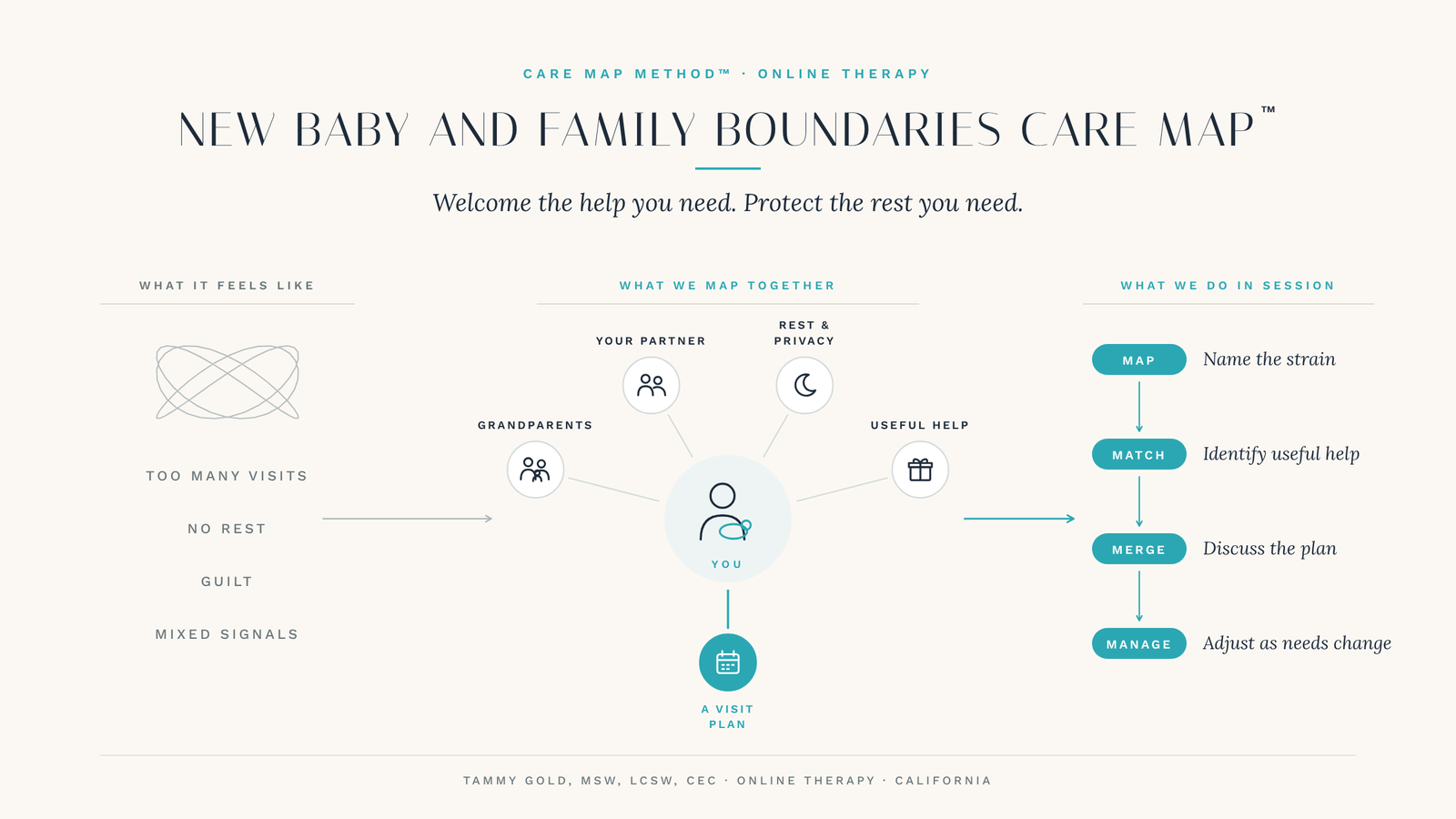
My Care Map Method™ organizes Biological, Emotional, Social and Environmental pressures. We map the concern, match support and boundary options, merge a small agreement into the family routine and manage the plan as the baby’s needs and your own needs change.
Decide what would make the next week more manageable
We might begin with one visit, one recurring comment or one conversation with your partner. At intake, we will assess clinical fit and agree on goals grounded in your well-being. Persistent or worsening mood symptoms deserve discussion with your health care team as well as an appropriate mental health assessment.
Questions about starting therapy
Can I be grateful and still need fewer visitors? We can explore both feelings and the practical choices available, without requiring you to dismiss either one.
Will you tell me who can visit my baby? No. We can work on your needs, choices and communication; family and medical decisions remain with the appropriate people.
Is this postpartum depression treatment? This page concerns adjustment and relationship stress. Assessment determines whether specialized perinatal treatment or another referral is needed.
Can a non-birthing parent attend? Yes, when their own mental health needs fit individual treatment.
Do you offer baby medical advice? No. Ask the baby’s clinician about feeding, safe sleep, illness precautions and other health questions.
Can I use insurance? Confirm assessed clinical needs, your exact California plan, active participation and estimated costs before booking.
Ask about current availability, clinical fit and payment options. Confirm the state where you will be located before scheduling.