Why Good Elder Care Still Fails: What Families Miss When Choosing Senior Care
Even when families do everything right—hiring help, managing medications, and staying involved—elder care can still feel stressful or incomplete. This article explains what most families miss when choosing senior care and how the Care Map Method™ helps create a clearer care plan.
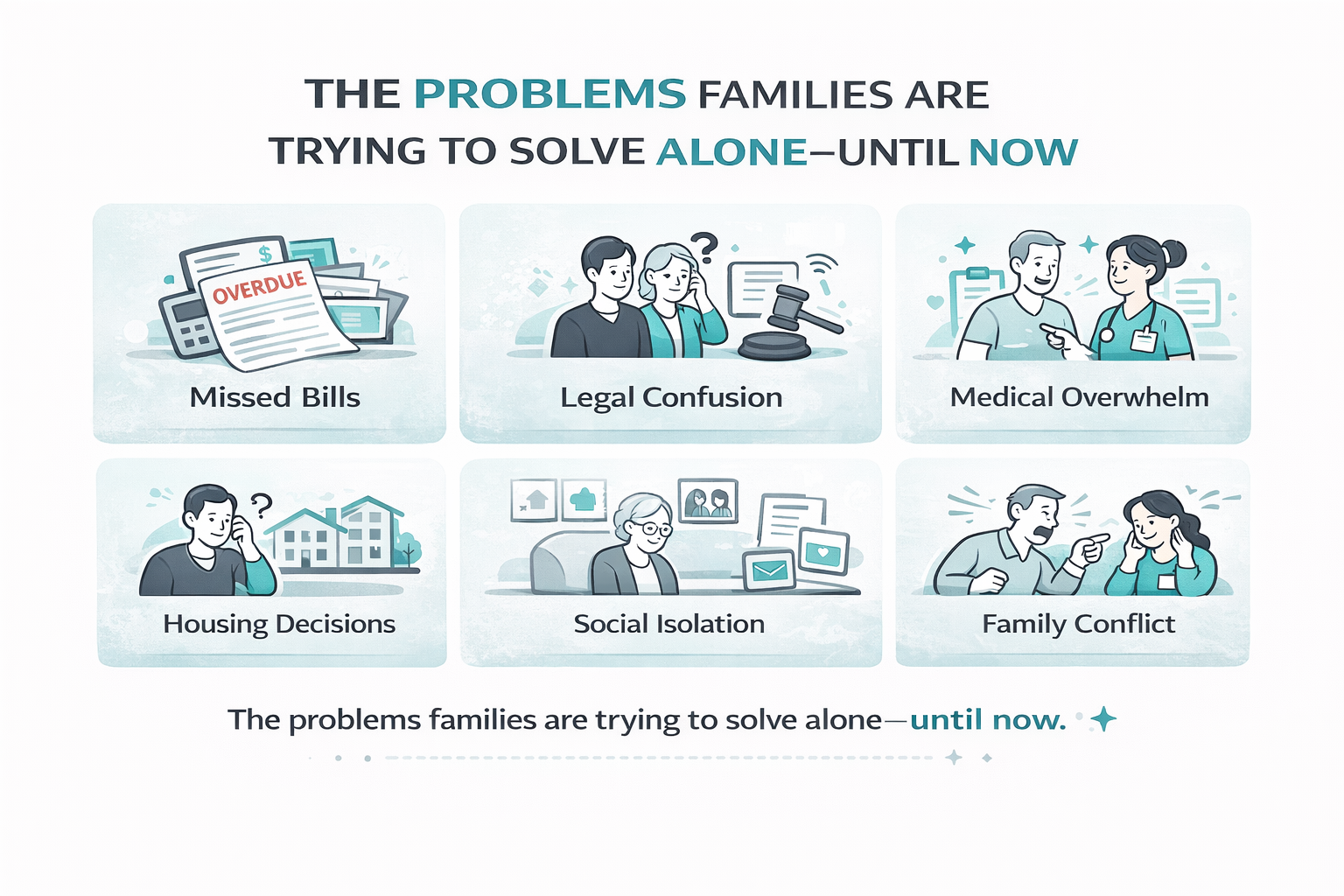
The stress and problems seniors and their family caregivers face from not matched eldercare
Why “Good” Elder Care Still Fails (And What Families Miss)
Choosing senior care for an aging parent is one of the most important and overwhelming decisions families face. Whether you are hiring an in-home caregiver, evaluating assisted living, or coordinating care across multiple providers, many families struggle to know what actually determines good elder care.
Even when care looks adequate on paper—meals, medication reminders, and transportation—something can still feel off. Families often sense that their loved one is not truly thriving, but they cannot identify why.
This is where most elder care decisions fail.
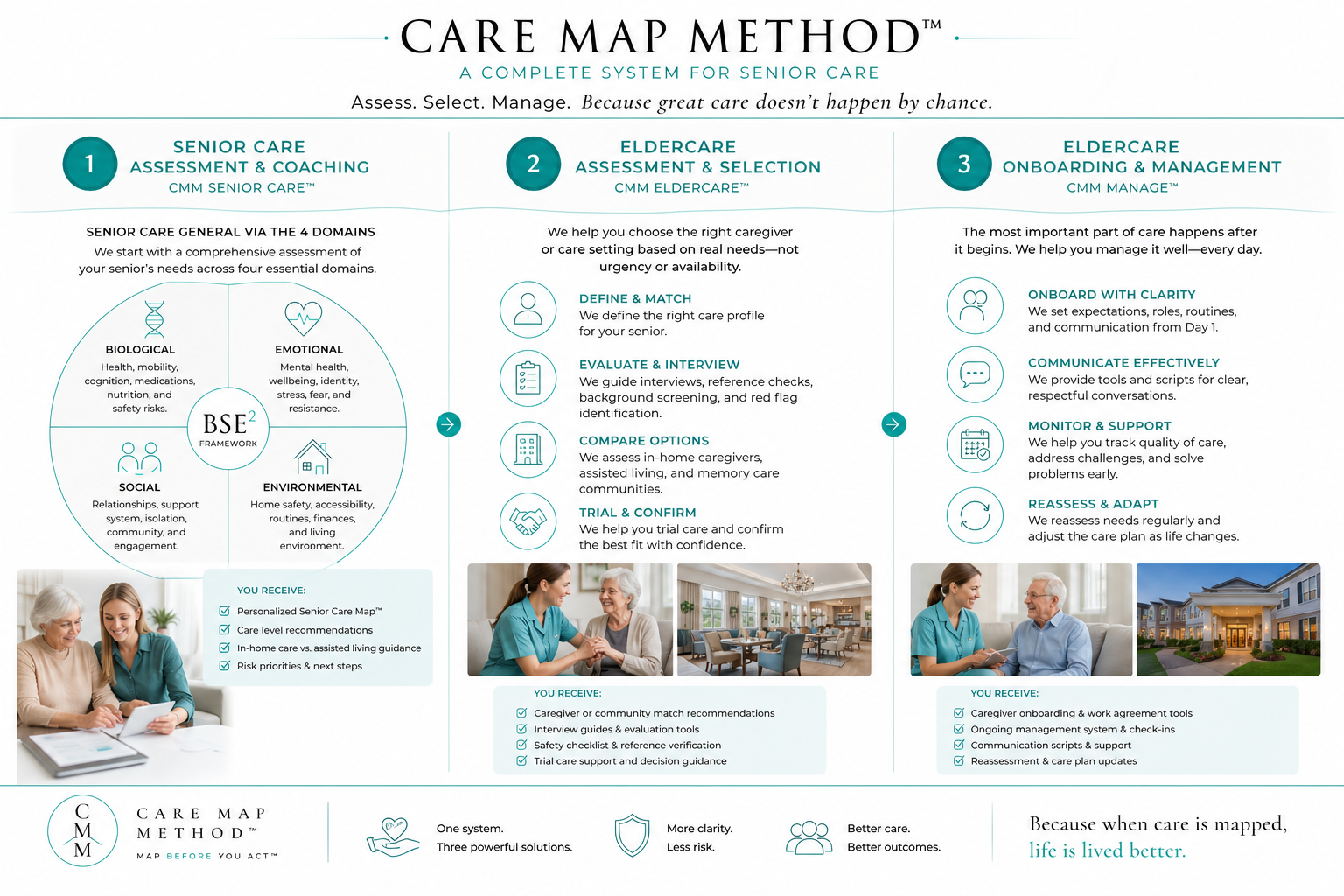
The problem is not effort. It is a lack of a clear, structured system for assessing what seniors actually need across emotional, biological, environmental, and social domains.
The Hidden Problem in Senior Care Decisions
Most families make elder care decisions based on what is visible and measurable.
They look at:
credentials
availability
cost
logistics
These factors matter—but they are not what determines whether care actually works.
The real issue is that most care decisions ignore how well the caregiver, environment, and structure align with the senior’s deeper needs.
Without that alignment, even “good” care can fail.
What Most Families Focus On in Elder Care (And Why It’s Not Enough)
When choosing childcare or elder care, families are often forced to make quick decisions under stress.
They focus on:
who is available
who seems nice
who has experience
what fits the schedule
But these decisions are reactive.
They do not answer the most important question:
👉 Is this the right fit for this specific person?
Without a structured way to assess needs, families are left guessing—and that guesswork leads to inconsistent outcomes, caregiver turnover, and ongoing stress.H2: The Hidden Problem in Elder Care Decisions
What Actually Determines High-Quality Senior Care
High-quality elder care is not defined by tasks alone.
It is defined by how well care supports the full human experience of the senior.
This includes:
Emotional Needs
feeling safe
feeling understood
maintaining dignity
connection and companionship
Biological Needs
health management
medication adherence
nutrition
sleep and physical comfort
Environmental Needs
home safety
routine and structure
ease of daily living
Social & Developmental Needs
communication
engagement
purpose
cognitive stimulation
When these areas are aligned, care works.
The Care Map Method™ for Choosing Elder Care
The Care Map Method™ is a therapist-developed system designed to bring structure and clarity to caregiving decisions.
Instead of guessing, families follow a clear process:
1. MAP
Assess the senior’s full needs across emotional, biological, environmental, and social areas.
2. MATCH
Choose the right caregiver or care setting based on those needs—not just availability.
3. MERGE
Onboard care properly with clear expectations, routines, and communication.
4. MANAGE
Monitor care over time, adjust as needed, and ensure long-term success.
This structured approach transforms caregiving from reactive decision-making into a proactive, evidence-based system.
The Missing Variable: Emotional Fit
A caregiver can be competent—and still fail—if emotional alignment is missing.
Many seniors struggle when:
they do not feel understood
communication styles do not match
routines feel disruptive
autonomy is not respected
What looks like resistance is often misalignment.
And without addressing emotional fit, families often cycle through multiple caregivers, increasing stress and instability.
A Better Way to Choose Senior Care
Good elder care is not just about services—it is about alignment.
When families use a structured system to assess and manage care:
stress decreases
outcomes improve
caregivers stay longer
seniors feel more secure and supported
The Care Map Method™ was designed to bring clarity to one of the most complex decisions families face.
Because better care does not happen by chance.
It happens by design.